
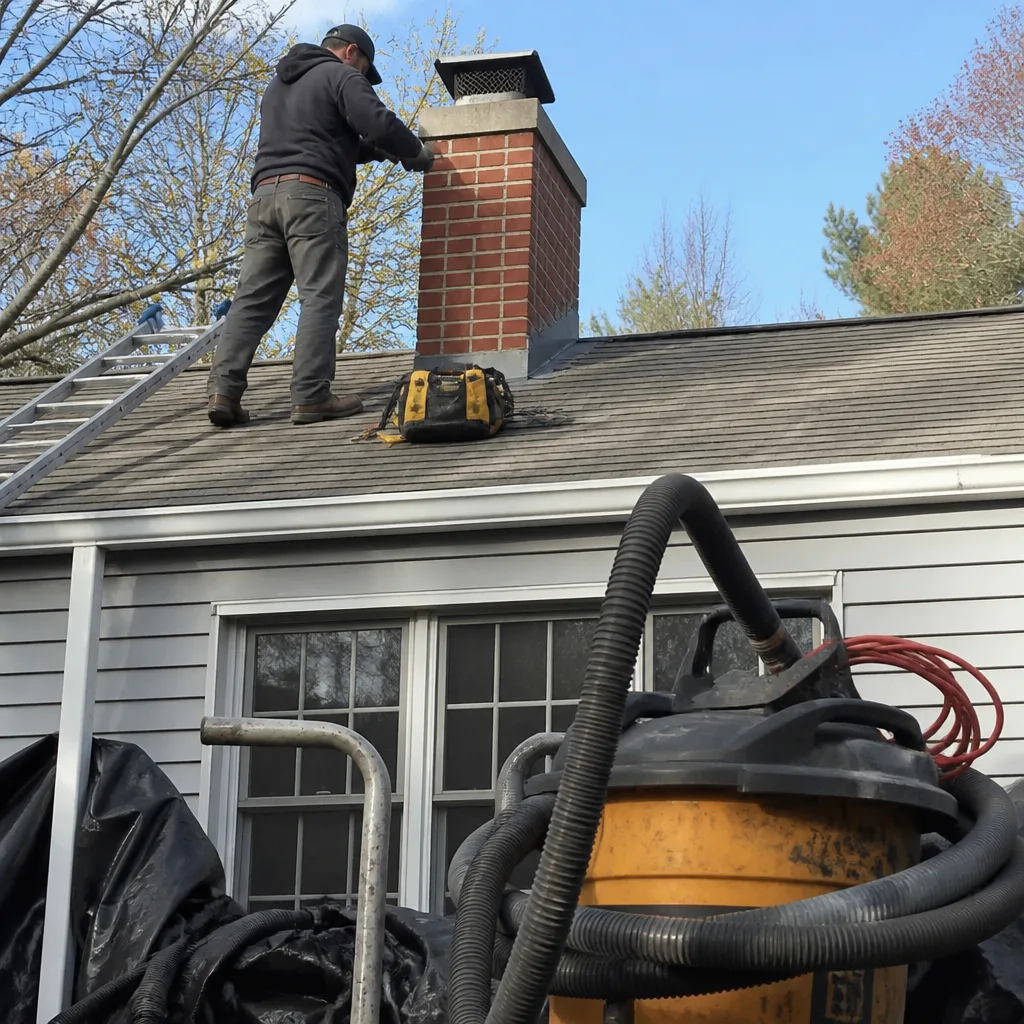
Level 1 sweep and inspection to the NFPA 211 annual standard - flue, crown, cap, and flashing checked and photographed
Chimney sweep logs do not sweep chimneys. They loosen some creosote - which then falls where a brush and vacuum still have to collect it.
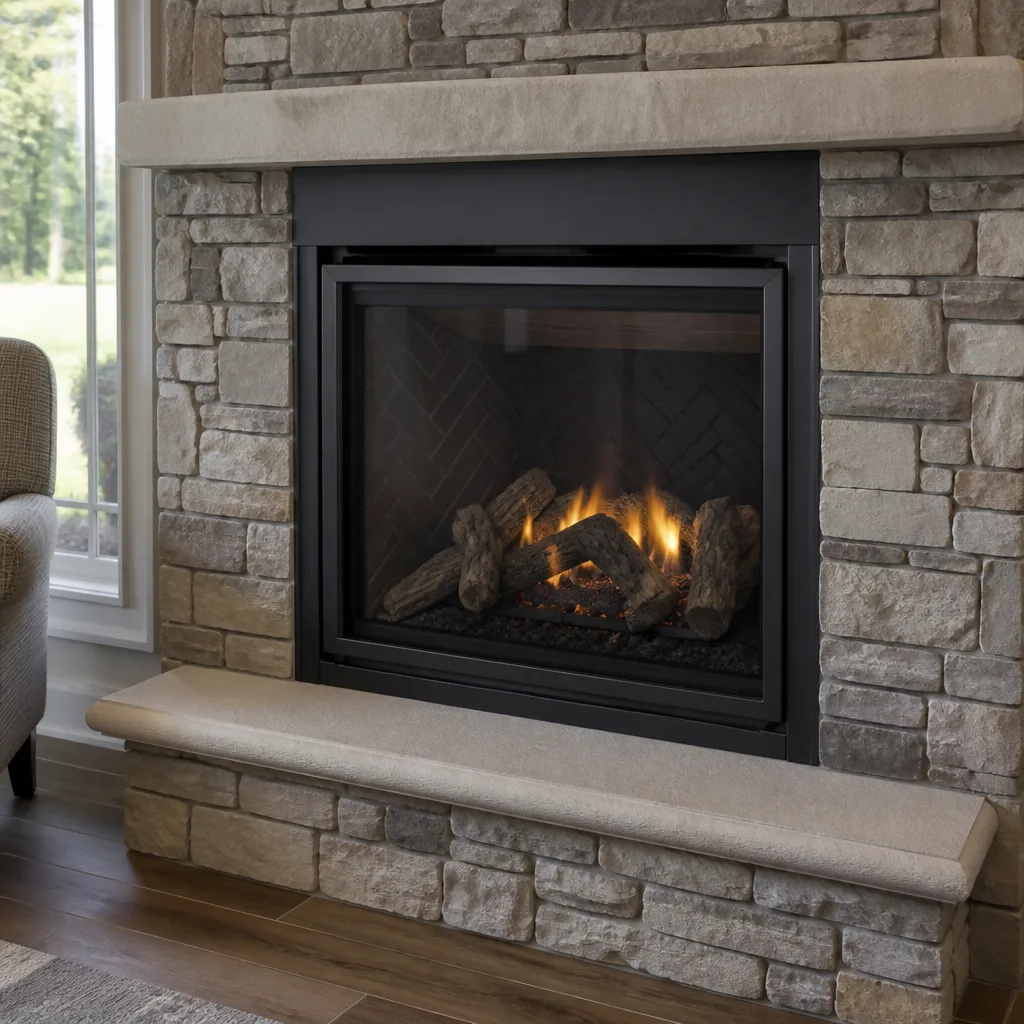
 Before
 After
After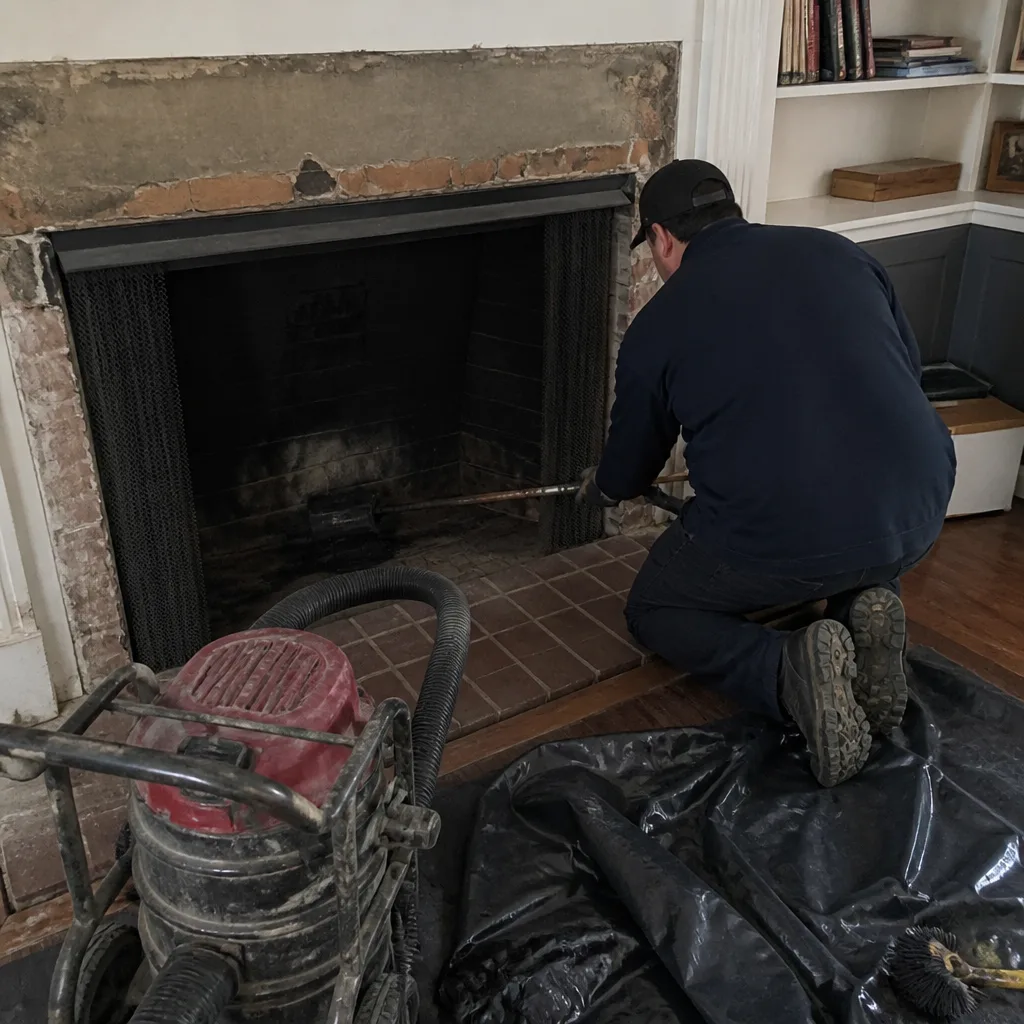 Before
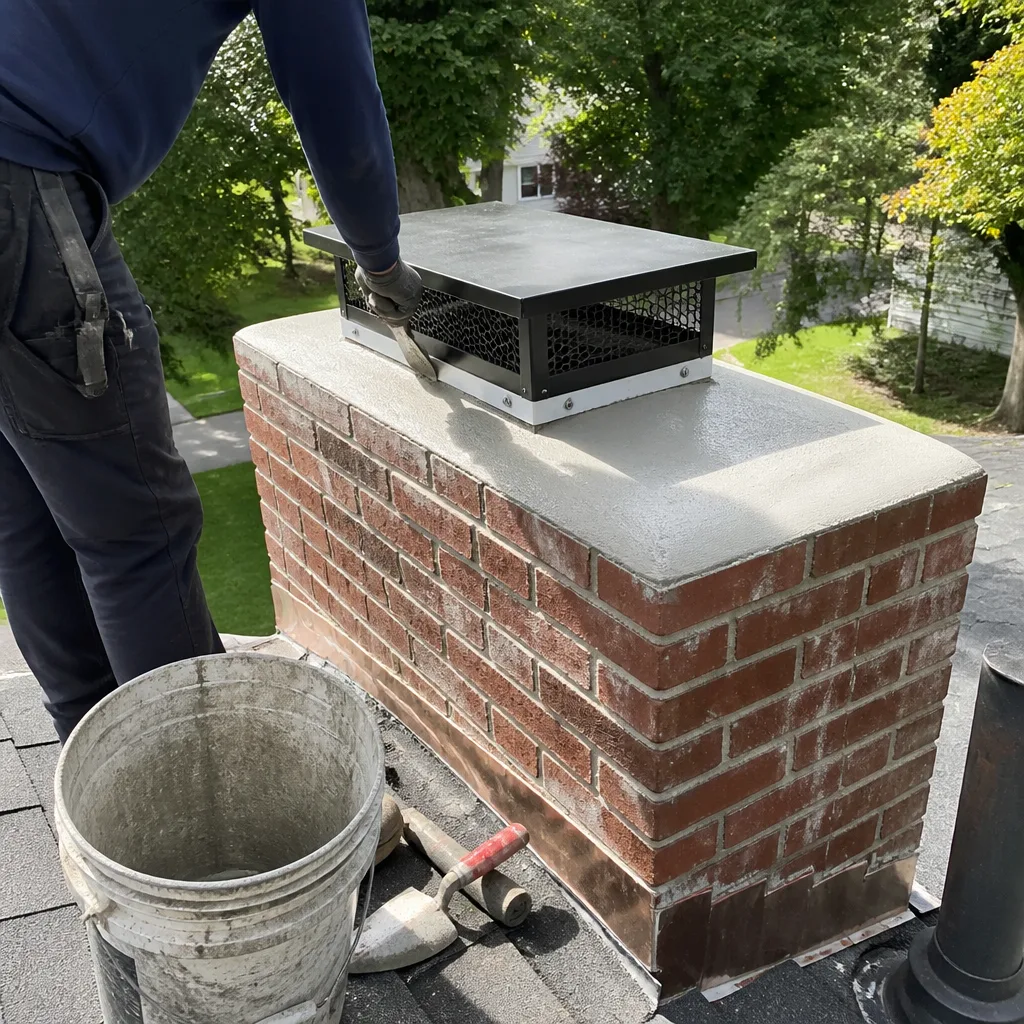 After
After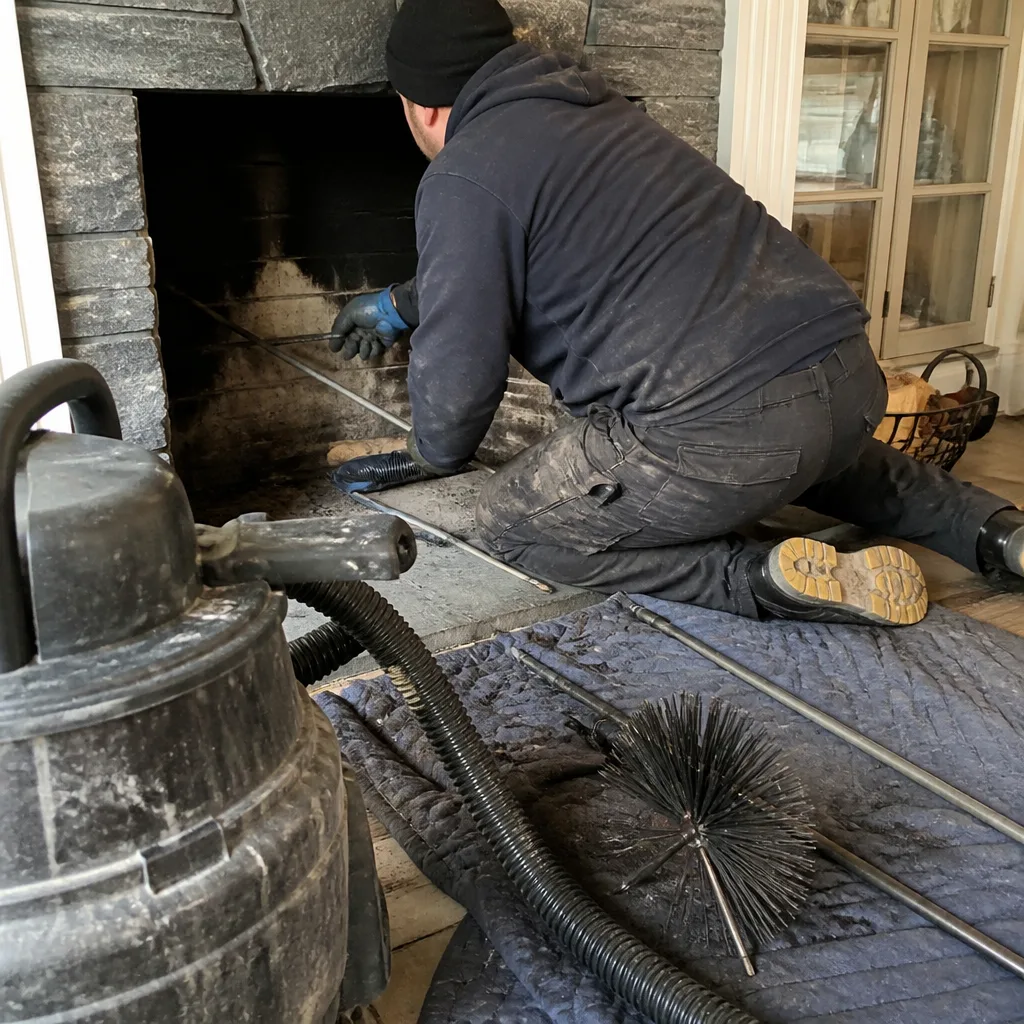 Before
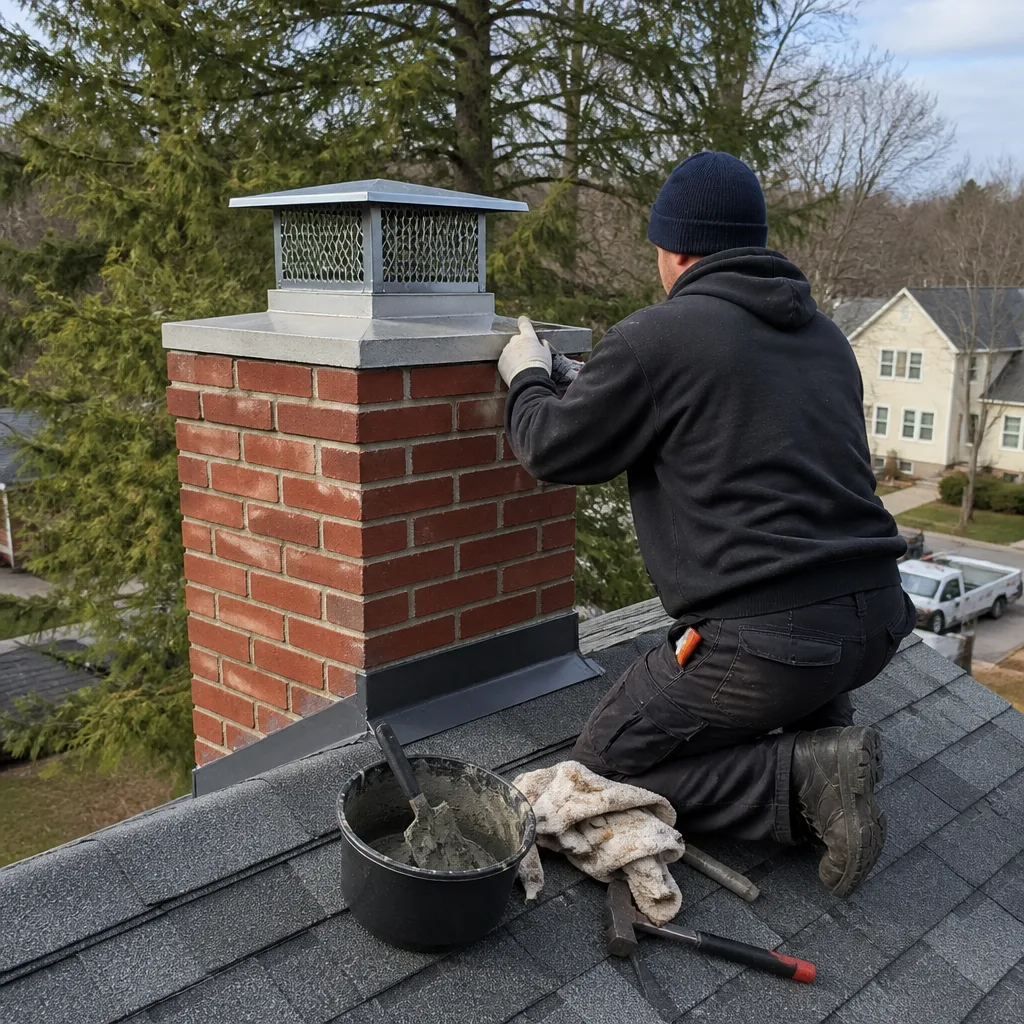 After
AfterAnnual Sweep in Haverhill, MA
An annual chimney sweep in Haverhill, MA typically costs between $179 and $349, covers the full flue from firebox to cap, and is completed in a single visit with a written price confirmed before the technician starts. Most Haverhill homeowners with a wood-burning fireplace or stove need this service once a year; those burning seasoned hardwood through a long New England heating season may need it twice. If your chimney hasn’t been swept since last spring, this page tells you exactly what happens during the visit, what it costs, and what documentation you walk away with.
Level Two Chimney Haverhill has been doing this work since 2009. Every annual sweep includes a camera-scan inspection of the flue liner under NFPA 211 Level 2 standards, a documented photo record, and a written scope and price before anyone picks up a brush. If you want the short version, call (351) 444-9705 – a live person picks up, not a voicemail. Or keep reading and see whether this visit makes sense for your home right now.
The annual sweep is the core of what we do under our broader Chimney Cleaning & Sweep in Haverhill service, and it’s where most customers start. From that first visit, we build a documented history of your chimney’s condition – liner photos, creosote readings, crown and cap status – so every future visit has something real to compare against.
When You Need an Annual Sweep
The NFPA 211 standard recommends a chimney inspection and cleaning at least once per year for any appliance in regular use. In Haverhill specifically, a few things push that timeline forward:
- You burned wood last season and haven’t had the flue swept since. Creosote – the tar-like byproduct of combustion – accumulates on flue liner walls every time you burn. Even a modest season of two to three fires a week produces enough buildup to warrant a sweep before you light the first fire of the new season.
- You’re seeing smoke spillage into the room. If smoke is pushing back into the living space instead of drawing cleanly up the flue, a partial blockage or significant creosote buildup is often the cause. In older Haverhill neighborhoods like the Bradford district and the Washington Street corridor, chimneys serving converted multi-fuel appliances can develop this problem faster than average.
- You notice a persistent smoky or oily smell, even when the fireplace isn’t in use. This is almost always a sign of Class II or Class III creosote sitting in the flue. Class III creosote is the most hazardous – it’s a glazed, concentrated deposit that is both highly flammable and difficult to remove without the right equipment. We describe the class in writing on every sweep report so there’s no ambiguity about what we found.
- It’s been more than 12 months since the last documented sweep. If the only record you have is a verbal “we cleaned it” from a prior owner or a company that doesn’t produce written reports, that doesn’t meet the NFPA 211 standard and won’t satisfy most homeowner insurance carriers in Massachusetts.
- You’ve switched fuel types or installed a new insert. Haverhill sees a consistent pattern of homeowners retrofitting wood stoves or pellet inserts into older masonry fireplace openings. Each fuel type produces a different combustion chemistry and a different creosote profile. The flue needs to be swept and inspected before it’s pressed into service with a new appliance.
- A recent storm brought debris into the chimney. The Merrimack Valley gets real weather. Ice damming, wind-driven debris, and freeze-thaw cycles that crack crowns can all introduce blockages. If a major storm came through and the chimney hasn’t been checked since, that’s a sweep-and-inspect situation regardless of when the last annual was done.
Our Annual Sweep Process
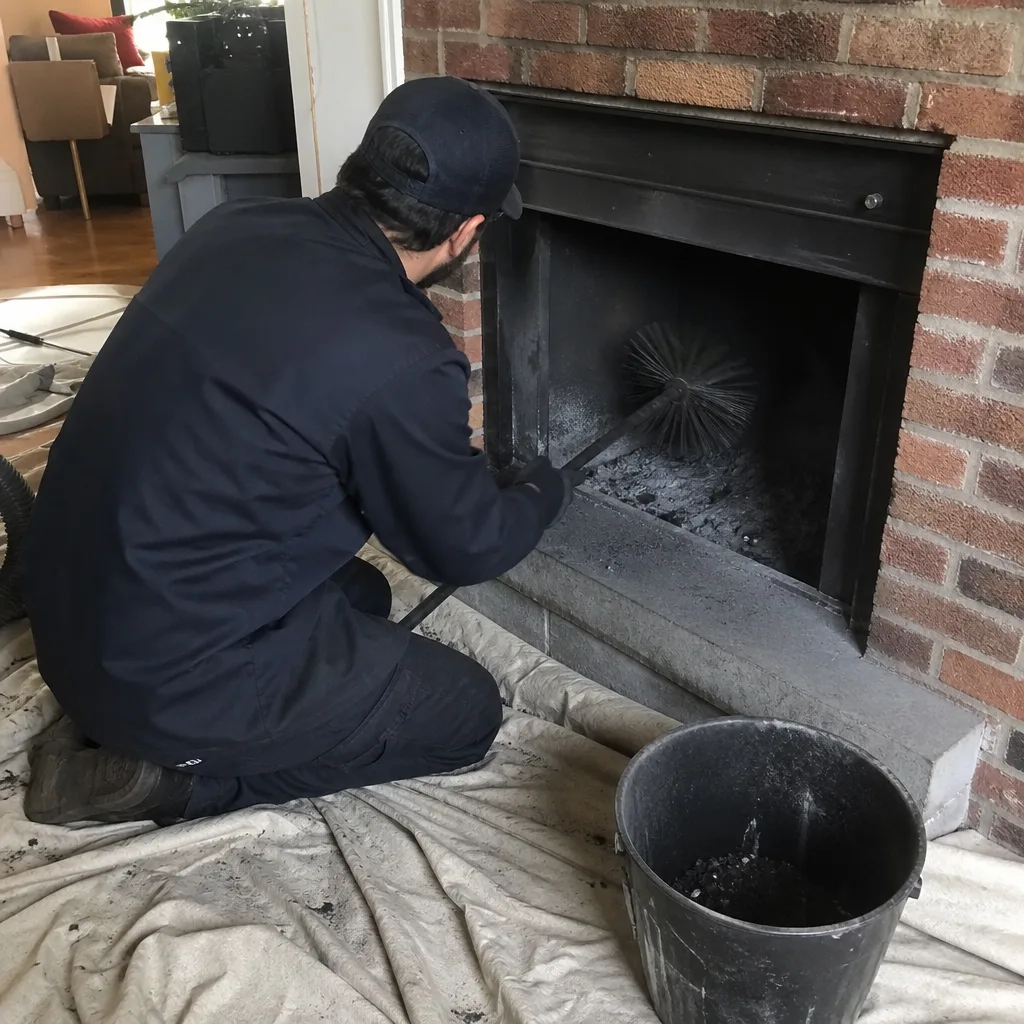
Every annual sweep follows the same documented sequence. Nothing gets skipped to save time, and the written price you receive before we start reflects the full process – not a stripped-down version.
- Written price and scope confirmed before we arrive. Under Haven Standard Clause 1, no work starts without a written price, written scope, and written warranty in the customer’s hands. You’ll have those before the technician is ever in your home. This is not a formality – it’s the policy that prevents the “add-on after access” pricing model that’s common in this trade.
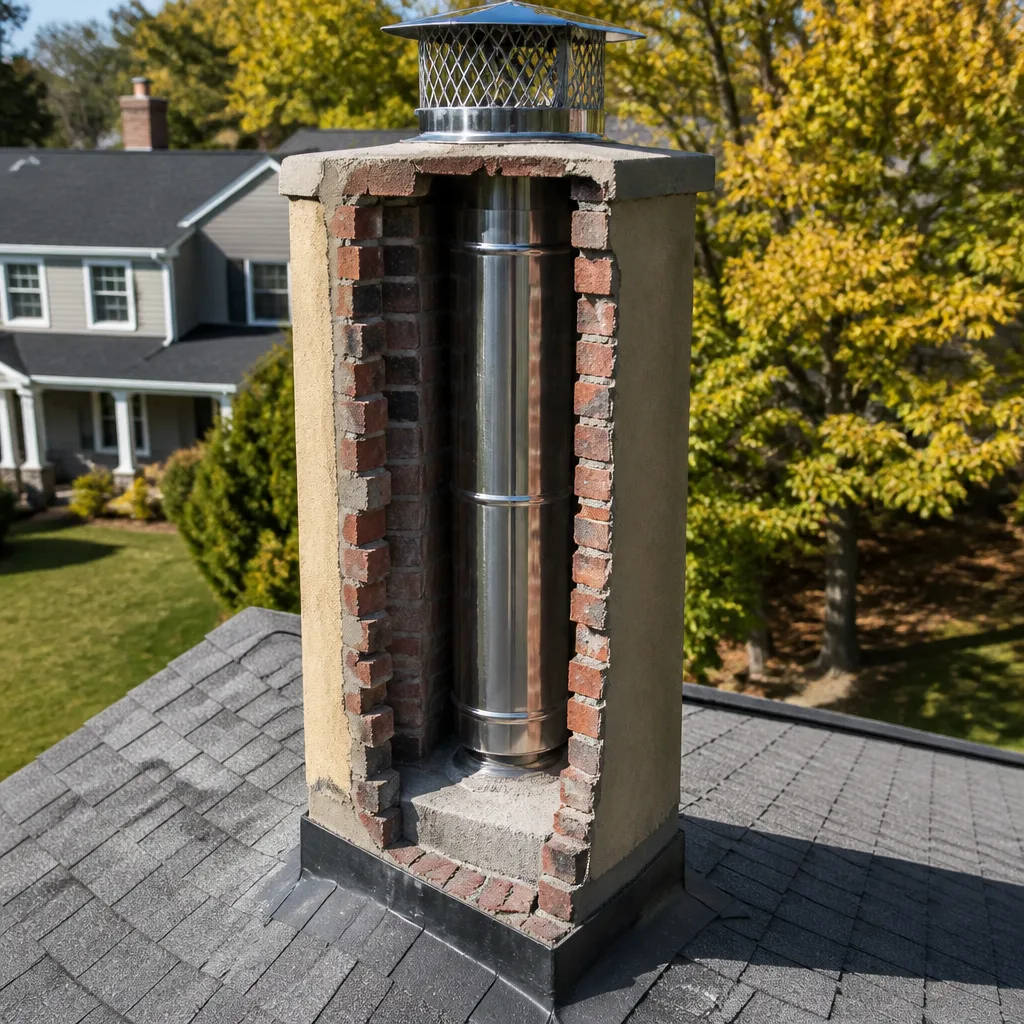
- Pre-sweep inspection at the firebox and smoke chamber. The technician examines the damper, smoke shelf, and the lower visible sections of the smoke chamber before any cleaning begins. This establishes a baseline and identifies anything that needs to be flagged before the camera goes in. The smoke chamber – the funnel-shaped area above the firebox that transitions to the flue – is one of the first places deterioration appears in Haverhill’s older clay-tile-lined chimneys.
- Camera-scan of the full flue liner (NFPA 211 Level 2). A continuous camera run from firebox to cap documents the liner’s condition – tile joints, cracks, creosote class, and any obstructions – before the sweep begins. This is Clause 4 of the Haven Standard and has been the default on every Level Two visit since 2009. The photos are yours. You leave with them.
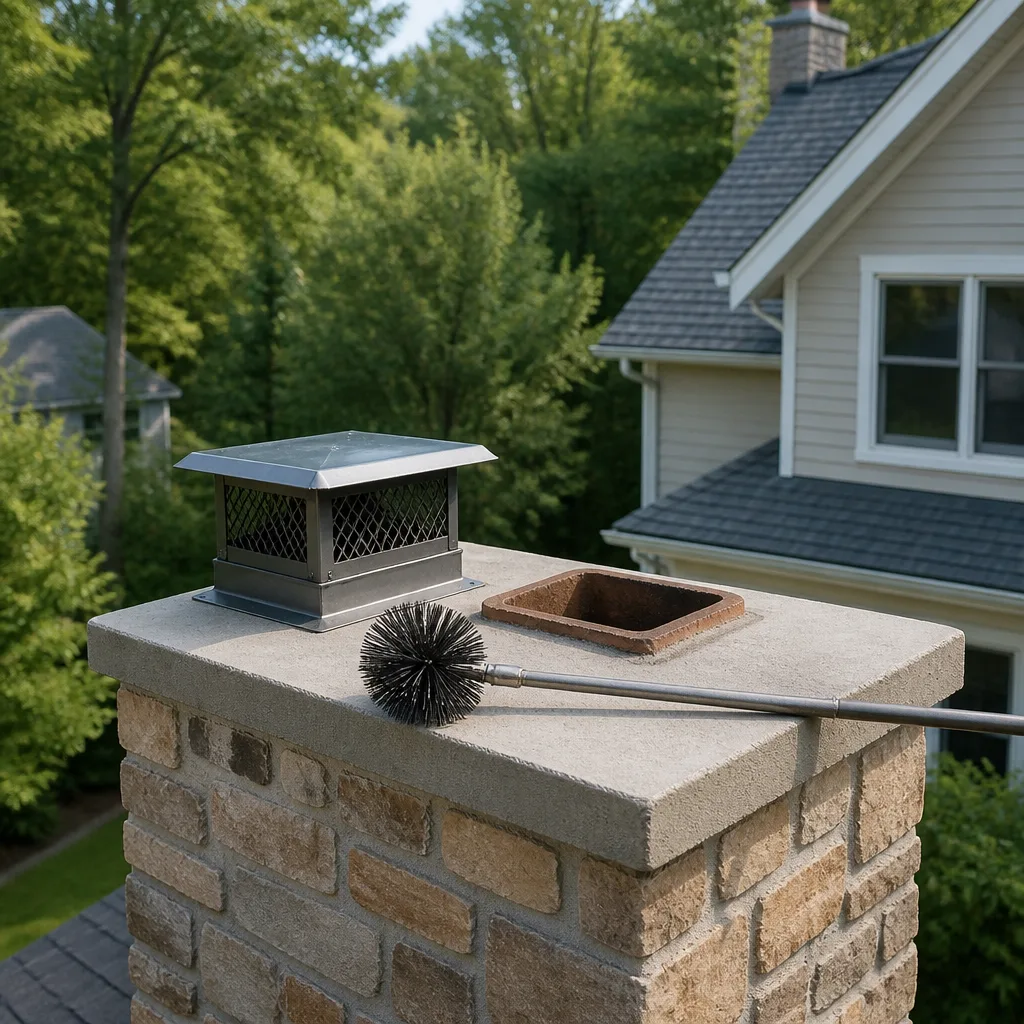
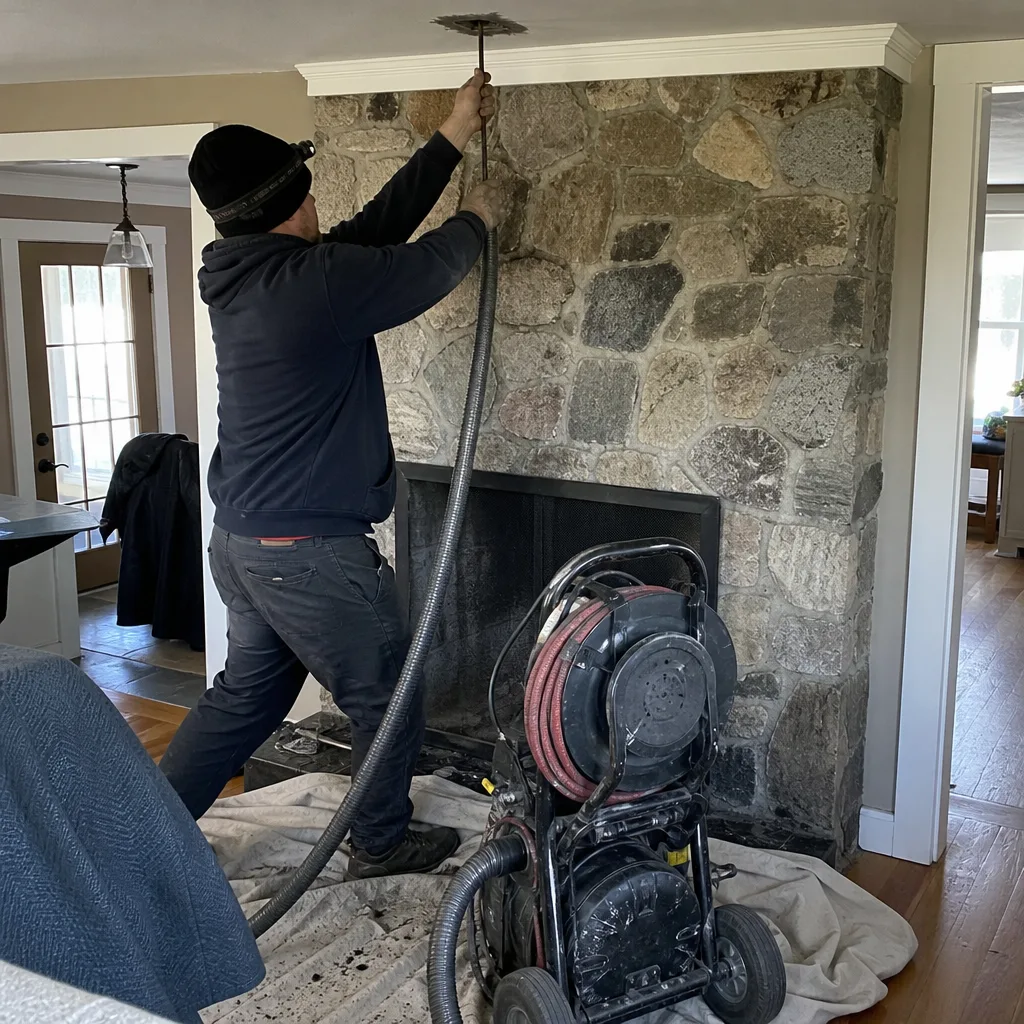
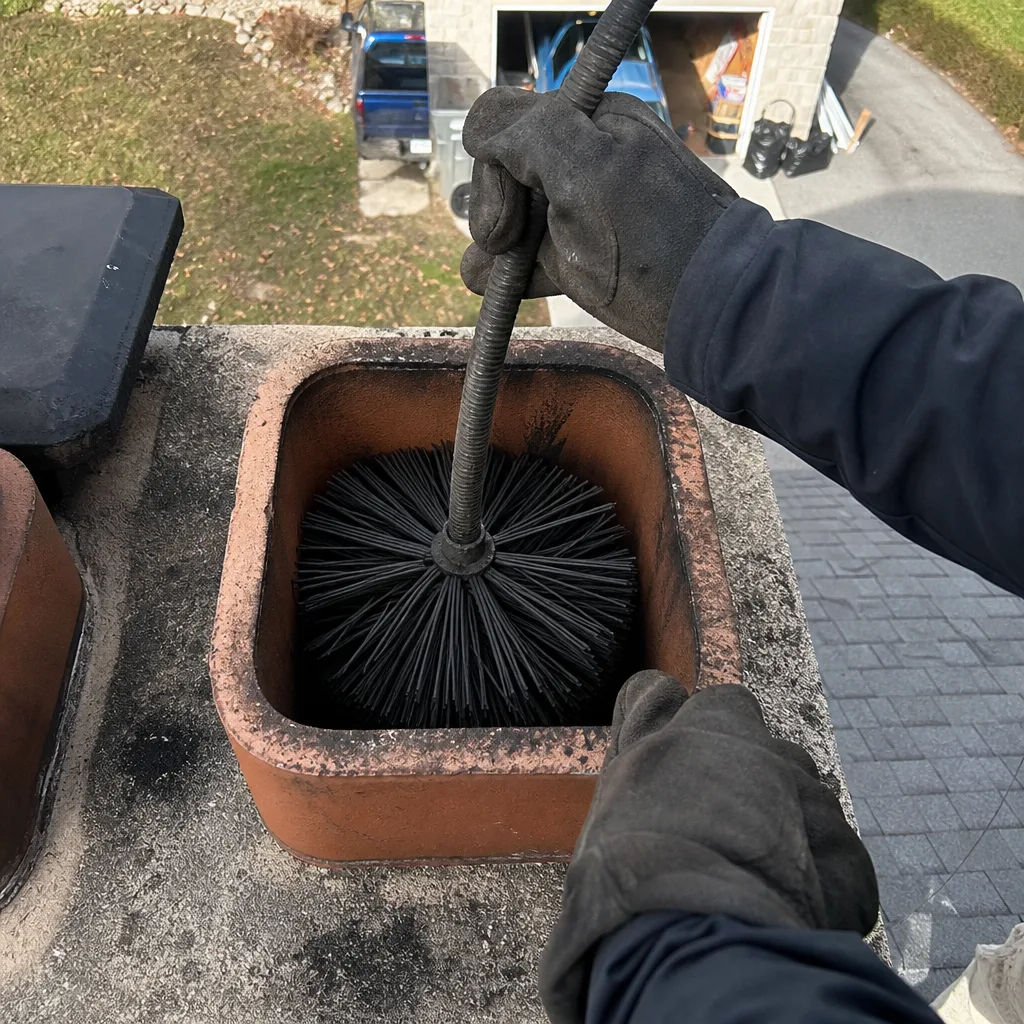
- Full mechanical sweep of the flue. Using professional-grade rotary brushes and a HEPA-equipped vacuum system, the technician removes creosote and debris from the flue liner walls, smoke chamber, and smoke shelf. All waste is contained; nothing ends up on your furniture or hearth floor. For Class II creosote – the harder, flaky type – we use brush systems sized to the liner diameter, which for most Haverhill homes means either a 6-inch or 8-inch round liner or a rectangular clay-tile liner in an older masonry stack.
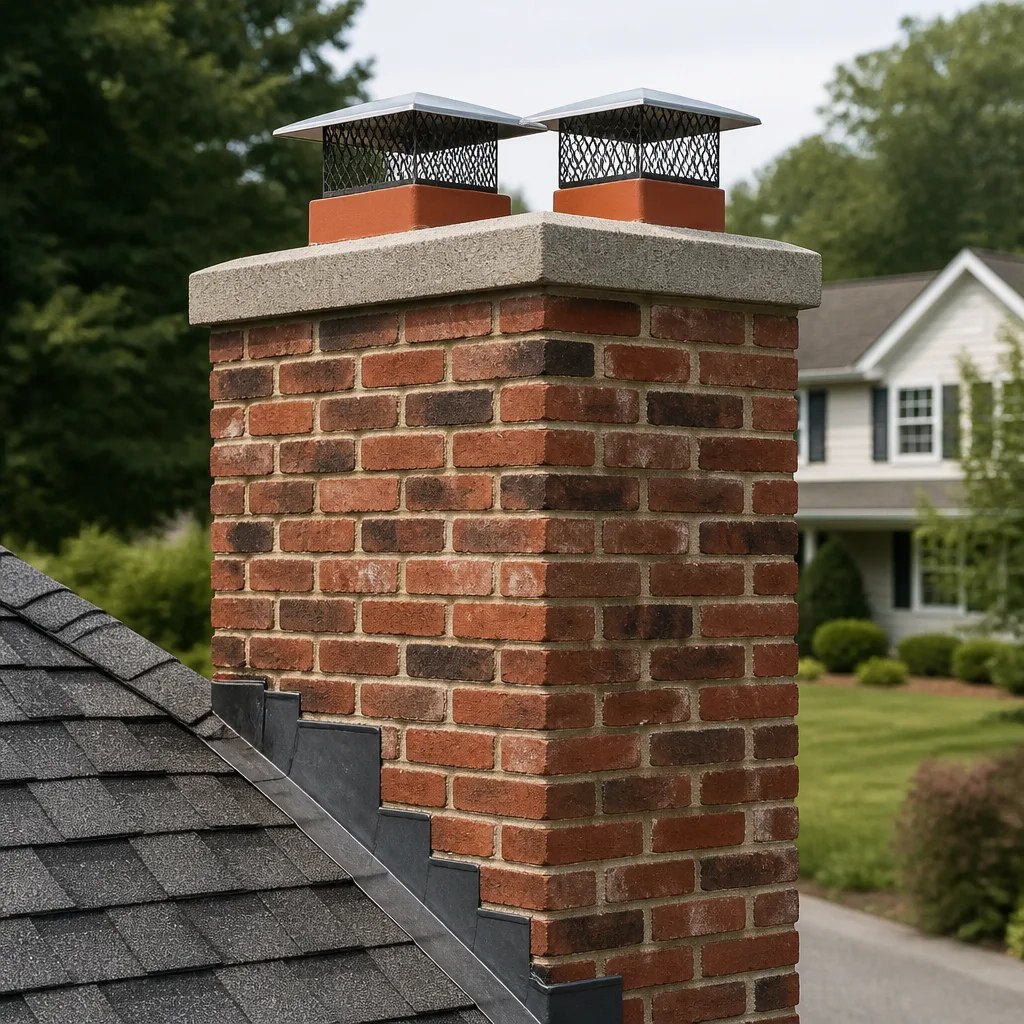
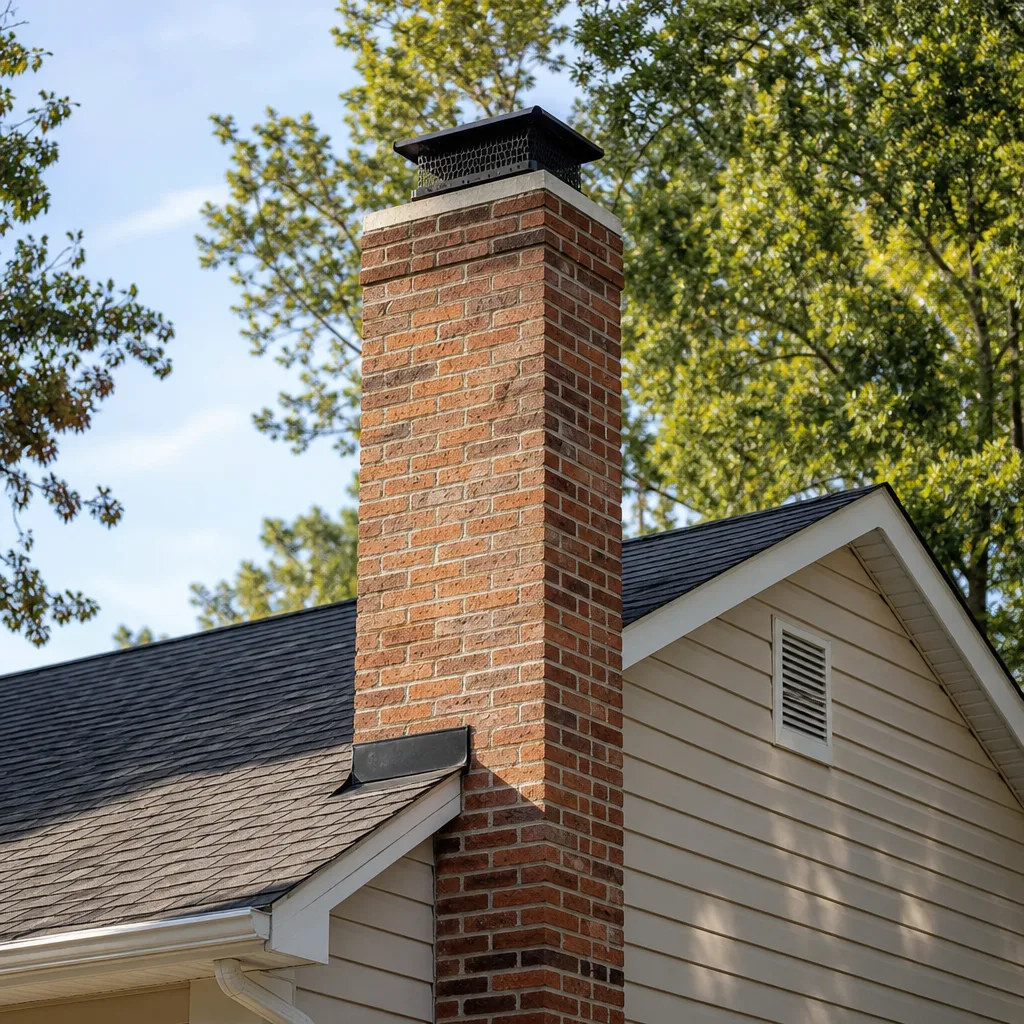
- Post-sweep visual check and firebox cleanup. After the sweep, the technician does a final visual of the firebox interior, the damper function, and the cap condition from ground level. If the cap shows early corrosion or the crown shows surface cracking, that gets noted in writing – not as a sales pitch, but as a documented finding you can act on now or monitor over time.
- Written report and photo record delivered. You receive a written report that covers the creosote class found, the liner condition, the damper and cap status, and any advisory notes. The photo archive stays on file with us as well. If your insurer or a future buyer asks for documentation, it exists and it’s specific.
 Before
 After
AfterAnnual Sweep Pricing in Haverhill
Annual sweep pricing in Haverhill runs between $179 and $349 for most residential chimneys, with the final number driven by three things: flue height, creosote class, and appliance type. The written price is set before the visit – not revised upward once the technician is inside your home.
| Service Scenario | Typical Price Range |
|---|---|
| Standard single-flue gas or wood fireplace sweep (up to 20 ft) | $179 – $229 |
| Single-flue wood fireplace or stove, moderate creosote (Class II) | $229 – $289 |
| Two-flue chimney or extended height (over 25 ft) | $289 – $349 |
| Class III creosote (glazed) – requires chemical treatment or mechanical removal beyond standard sweep | Quoted separately in writing after camera assessment |
Camera-scan inspection and the documented photo record are included in every visit at every price point – they’re not an add-on. If we arrive and the flue shows Class III creosote that requires a treatment protocol beyond a standard sweep, we stop, explain what we found, and give you a new written price before any additional work begins. You’re never billed for something you didn’t agree to in writing first.
If you’ve already received a written estimate from another company, bring it to us. We offer a free second opinion on any written estimate – no appointment needed, no obligation.
For an exact quote on your specific chimney, call (351) 444-9705. Estimates are free and the price won’t change between the quote and the visit.
What Haverhill’s Climate Does to Chimneys
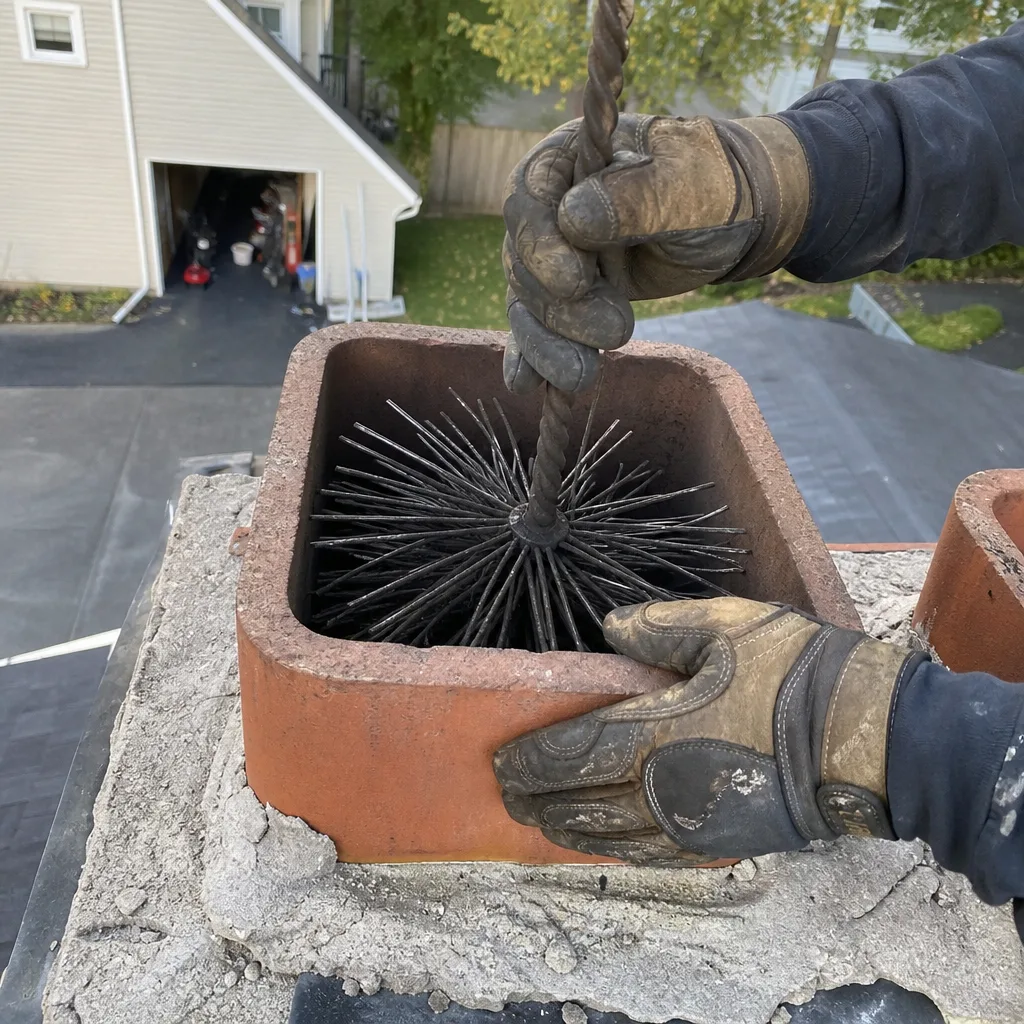
Haverhill sits on the Merrimack River in a zone that gets genuine freeze-thaw cycling from November through March. That cycling is hard on masonry. Water enters hairline cracks in the mortar or crown, freezes, expands, and widens the crack. By spring, what looked like a minor surface issue in October is a significant joint failure. Over the 38,000+ chimneys we’ve inspected and cleaned since 2009, we consistently see accelerated crown spalling and mortar joint deterioration in Haverhill homes with chimneys that face north or are partially shaded – conditions common in the Bradford Hill and Pentucket Lake neighborhoods.
We also see a specific pattern with older Haverhill homes that still have original clay-tile liners. Those tiles were laid in the 1940s through 1960s and are now at or past their functional lifespan. A camera scan catches offset joints and cracked tiles that a flashlight inspection simply misses. If you’re burning wood in a chimney with an original clay-tile liner and no modern documentation of its condition, the annual sweep is the right starting point – and the camera footage is what tells you whether the liner needs attention or can go another season safely.
Materials like Gelco chimney caps and Olympia Chimney liner components are part of what we stock and install when repairs come out of an inspection. We source through Haven’s buying network to keep material costs from inflating the final number on repairs that follow a sweep.
FAQs – Annual Sweep in Haverhill
How often does a chimney need to be swept in Haverhill?
Once per year is the NFPA 211 standard for any chimney in regular use, and that applies across Haverhill whether you’re burning wood in a Bradford Victorian or running a gas insert in a newer build near Route 125. If you’re burning more than three cords of wood in a season, or burning unseasoned wood, you may need a mid-season sweep as well – seasoned hardwood burns cleaner and produces less creosote than wet or green wood. Call (351) 444-9705 if you’re not sure what your usage pattern calls for; we can tell you after a quick conversation, not after charging you for a visit.
What’s the difference between a sweep and an inspection?
A sweep removes creosote and debris from the flue liner, smoke chamber, and firebox. An inspection documents the condition of those same components – cracks, joint failures, cap condition, damper function. At Level Two Chimney Haverhill, every annual sweep includes a camera-scan inspection under NFPA 211 Level 2 as a default, so you’re not choosing between the two. The camera goes in before the brushes do, and the photos come out with you at the end. Some companies charge separately for inspection; we include it because the sweep without the documentation isn’t actually useful to a homeowner who needs a record.
Is an annual sweep required by Massachusetts law or homeowner insurance?
Massachusetts doesn’t impose a statutory annual sweep requirement on residential homeowners, but most standard homeowner insurance policies in the state include a clause requiring that the fireplace or heating appliance be properly maintained. “Properly maintained” is typically interpreted by adjusters to mean annually inspected and cleaned in accordance with NFPA 211. If a chimney fire occurs and there’s no documentation of a recent sweep, the claim can be complicated. A written sweep report with a photo record – what you get from every Level Two visit – is the documentation that satisfies that requirement. Call (351) 444-9705 if your insurer has asked for specific documentation and you want to confirm what our report covers.
Can you sweep a chimney that hasn’t been cleaned in several years?
Yes, and we do it regularly in Haverhill. Chimneys that haven’t been swept in three to five years often show Class II or Class III creosote, heavier debris buildup, and sometimes nesting material from birds or squirrels. The camera scan tells us what’s in there before the brushes go in, which lets us quote the right scope up front. If the buildup is heavy enough to require more than a standard sweep, you’ll know that before we start – not after. The price will be written down and agreed to first, always.
Key Takeaways
- Annual sweep pricing in Haverhill runs $179-$349 for most homes; the written price is set before the visit.
- Every Level Two sweep includes a camera-scan inspection (NFPA 211 Level 2) and a documented photo record – included, not added on.
- The 365-Day Done Right Promise covers every job; if it’s not right, we fix it.
- Haverhill’s freeze-thaw cycles accelerate crown and mortar damage; the annual sweep is when that gets caught and documented.
- Written price, written scope, and written warranty are delivered before anyone starts work – Haven Standard Clause 1.
- A free second opinion is available on any written estimate from a competitor.
- Live phone support is available 24/7 at (351) 444-9705.
The annual sweep is the one visit that keeps every other part of your chimney system honest. It’s where we find the issues before they become emergencies, and where the documentation record that protects your insurance claim and your home’s sale starts to build. Level Two Chimney Haverhill has been doing this work under the same written-price, camera-scan standard since 2009 – more than 38,000 chimneys inspected and cleaned with a documented record on every one. If your chimney in Haverhill is due, call (351) 444-9705 for a free estimate. A live person picks up, you’ll have a written price before any work starts, and the visit is backed by a 365-Day Done Right Promise. That’s the full offer, written plainly.
You can also learn more about our full range of services on our home page.
Written by Corrine Halstead, Owner at Level Two Chimney Haverhill, serving Haverhill.