
Last updated September 22, 2026
Level 1 sweep and inspection to the NFPA 211 annual standard - flue, crown, cap, and flashing checked and photographed
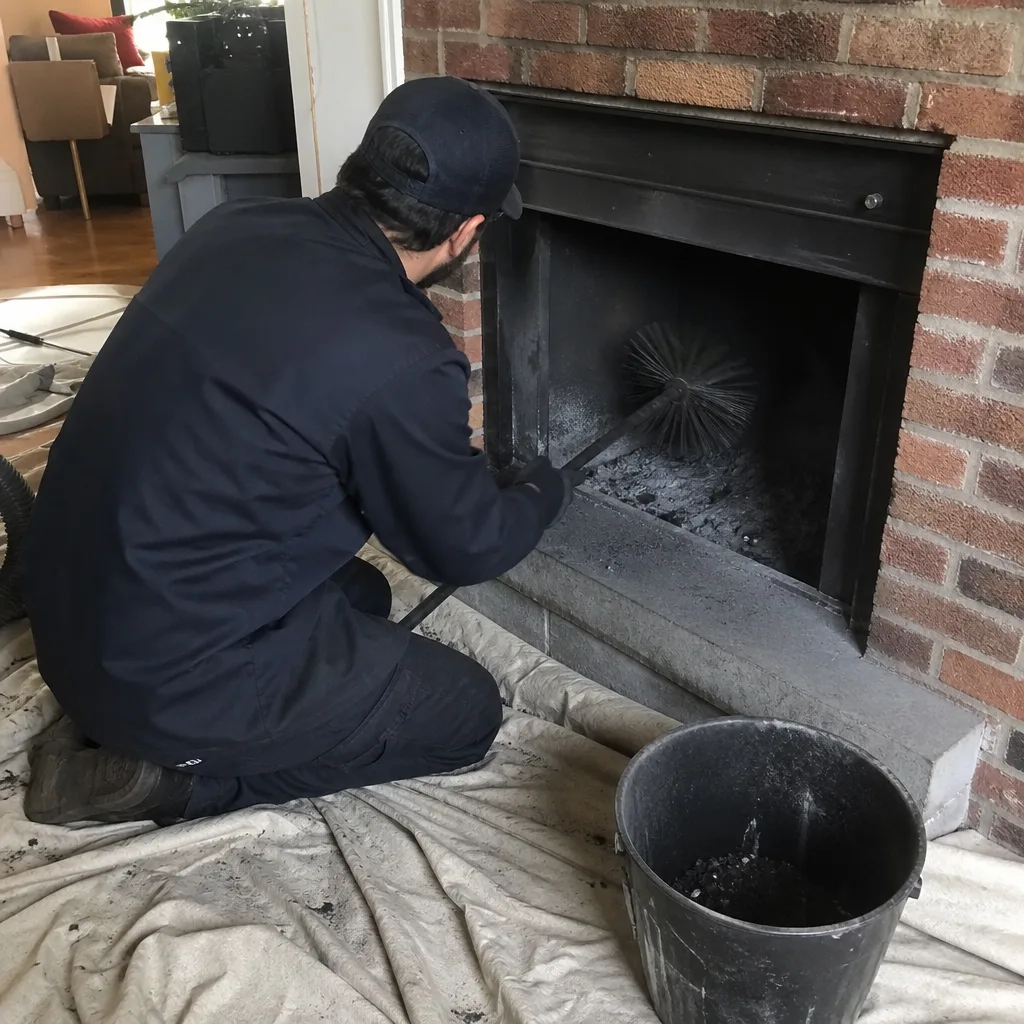
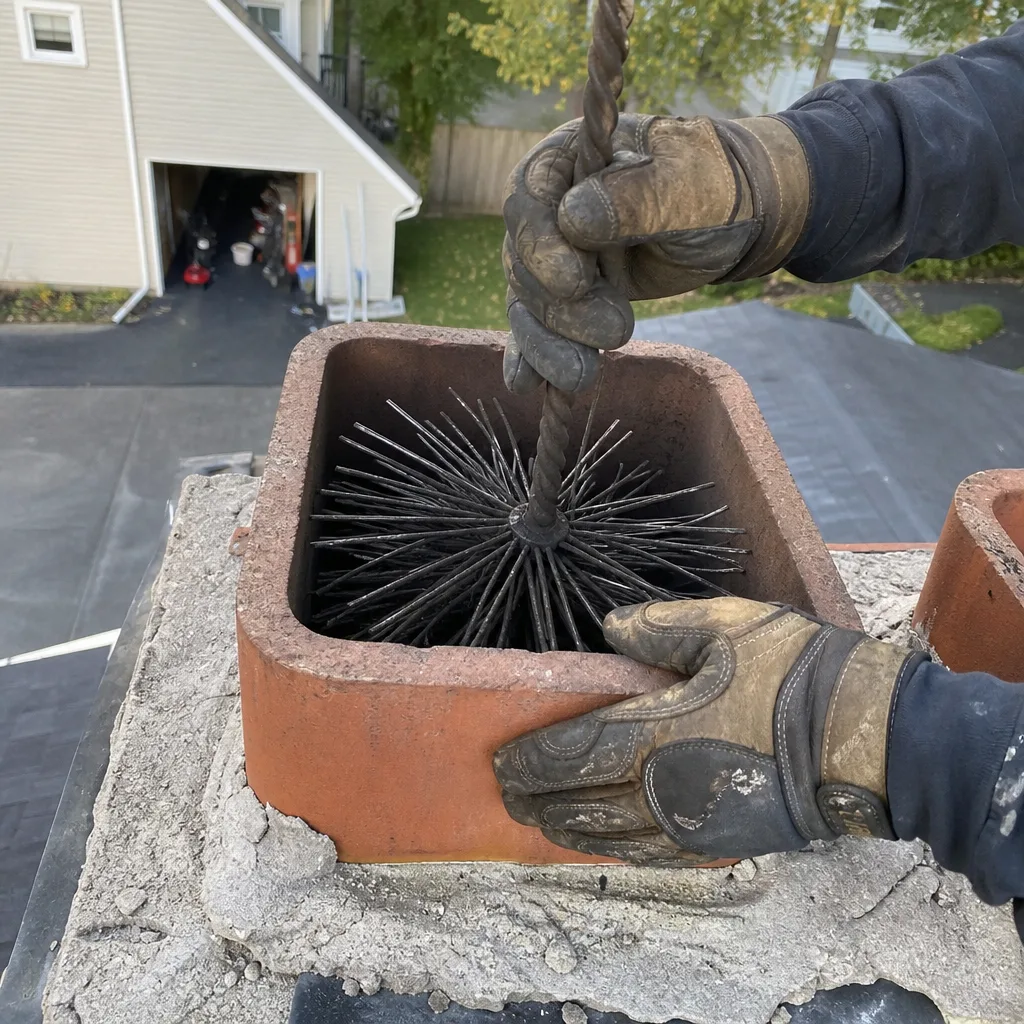
Chimney sweep logs do not sweep chimneys. They loosen some creosote - which then falls where a brush and vacuum still have to collect it.
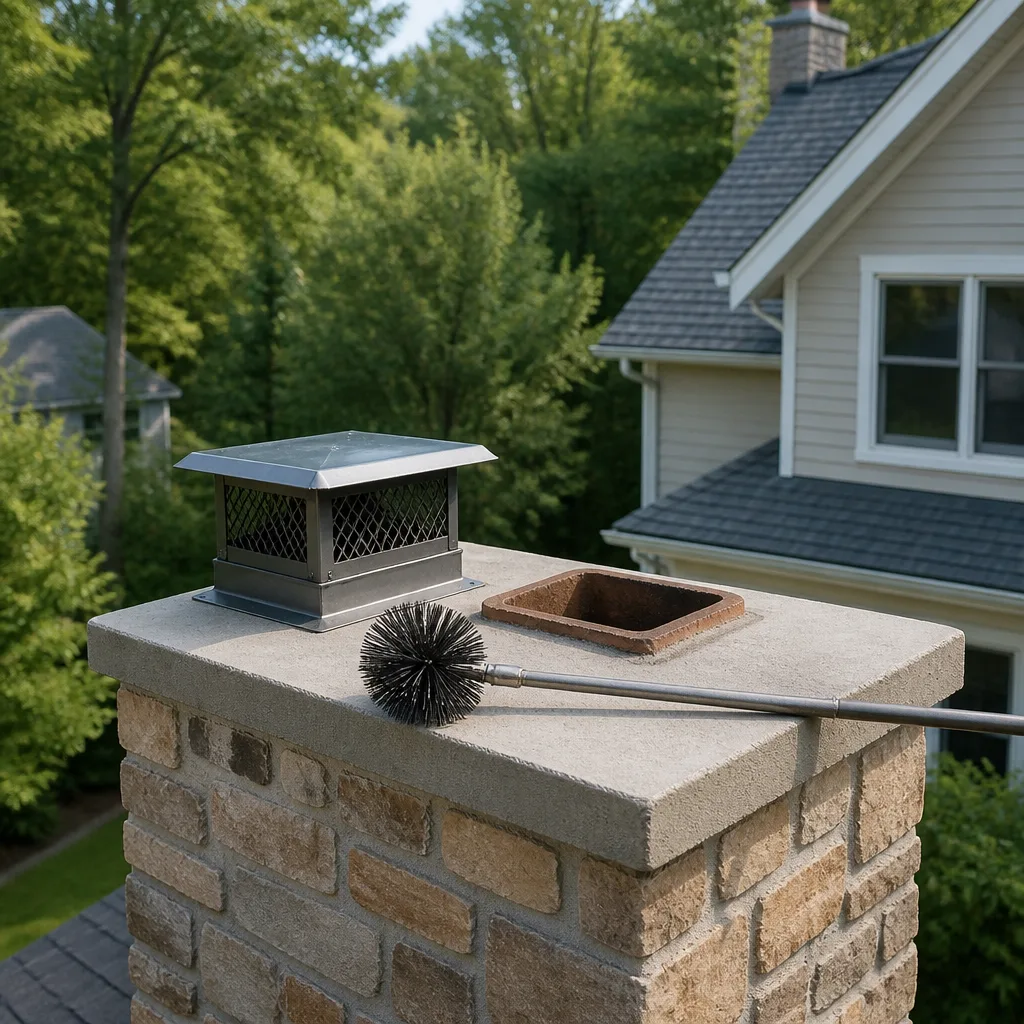
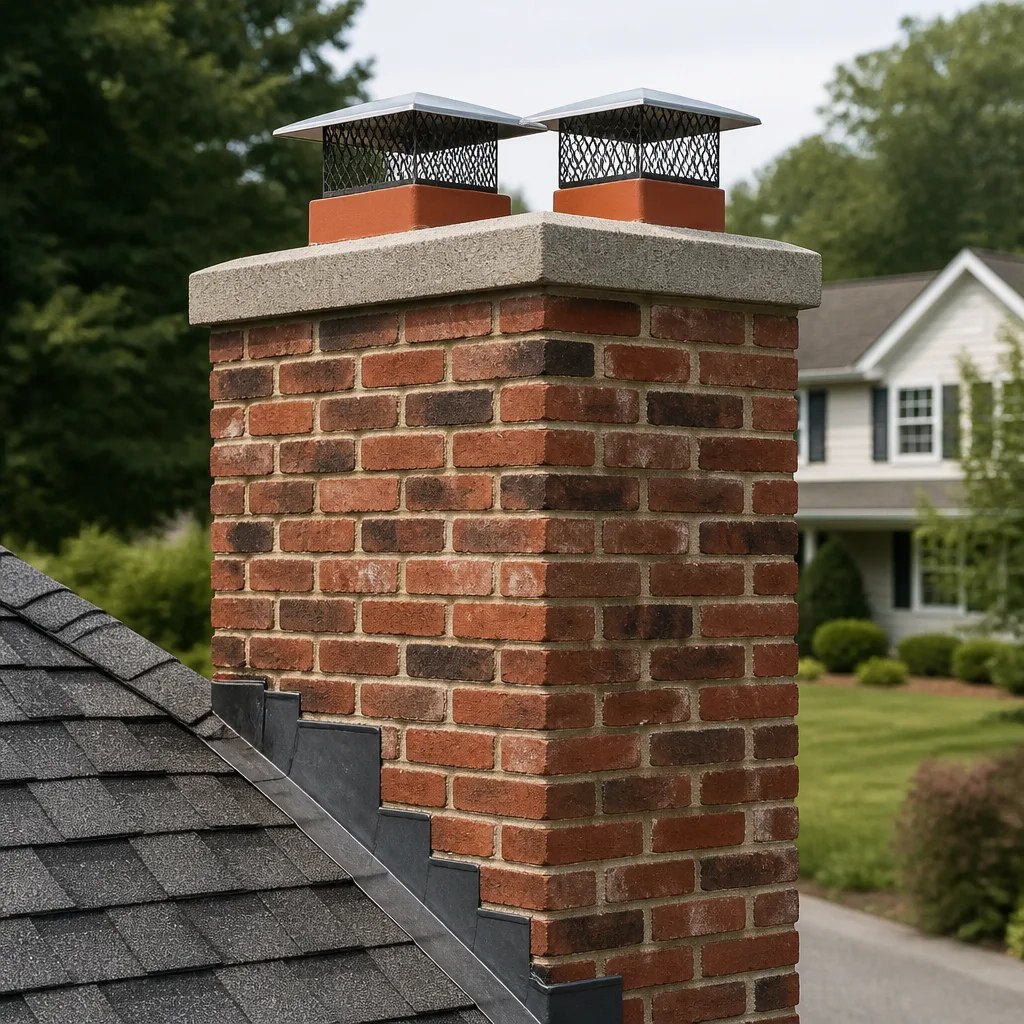
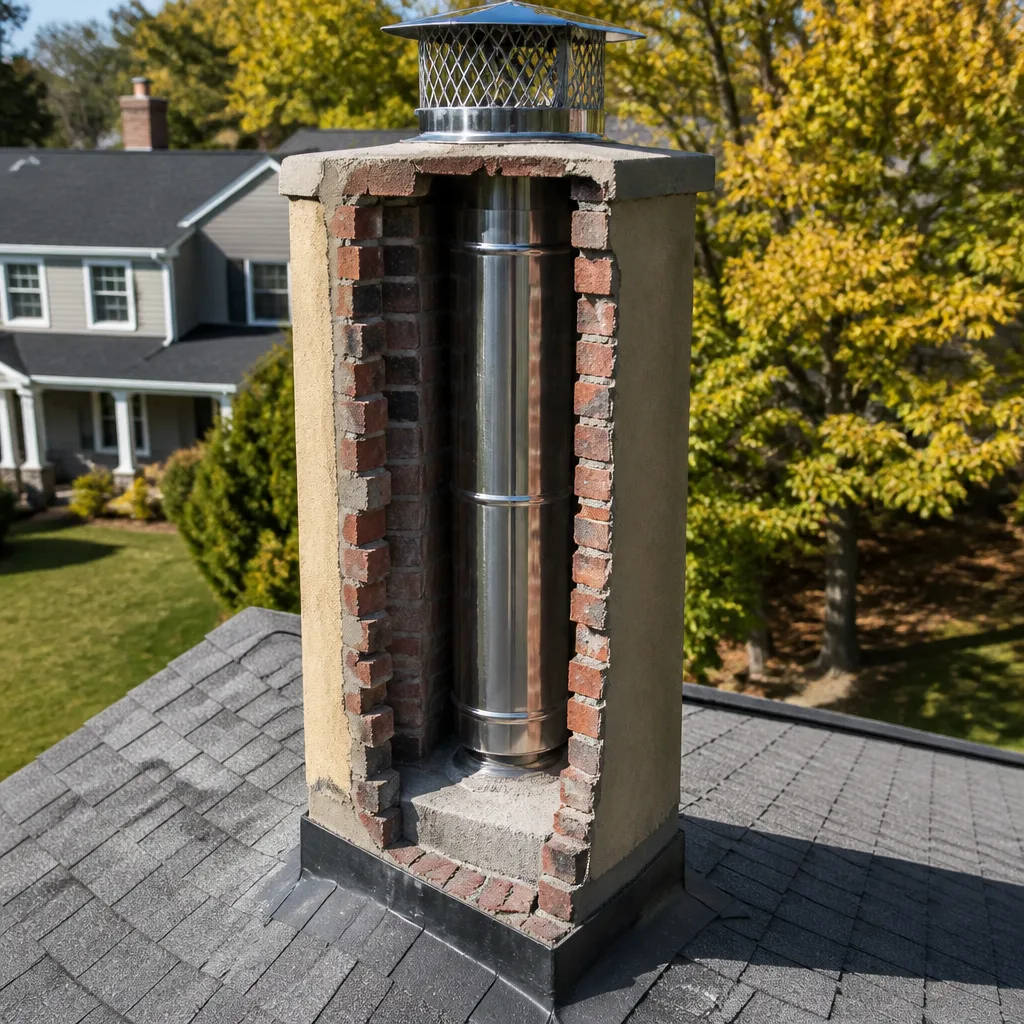
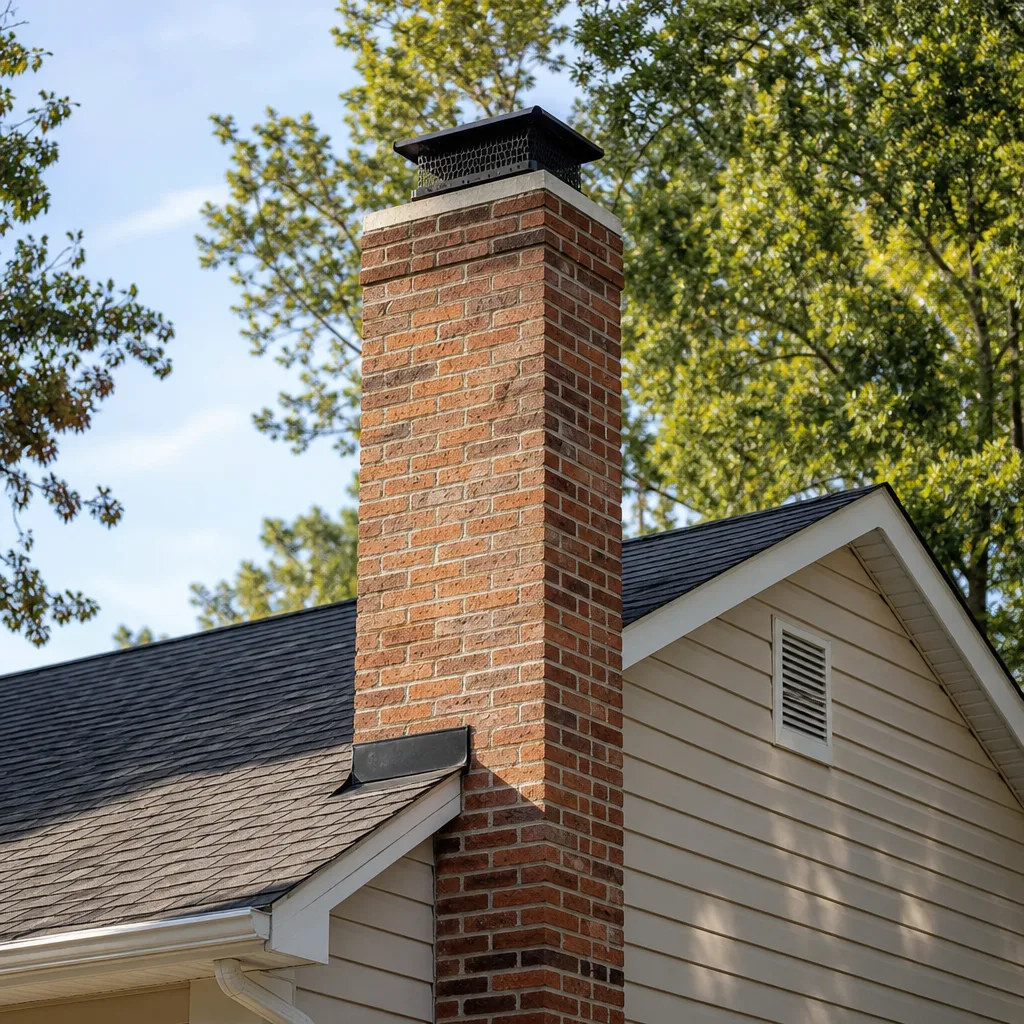
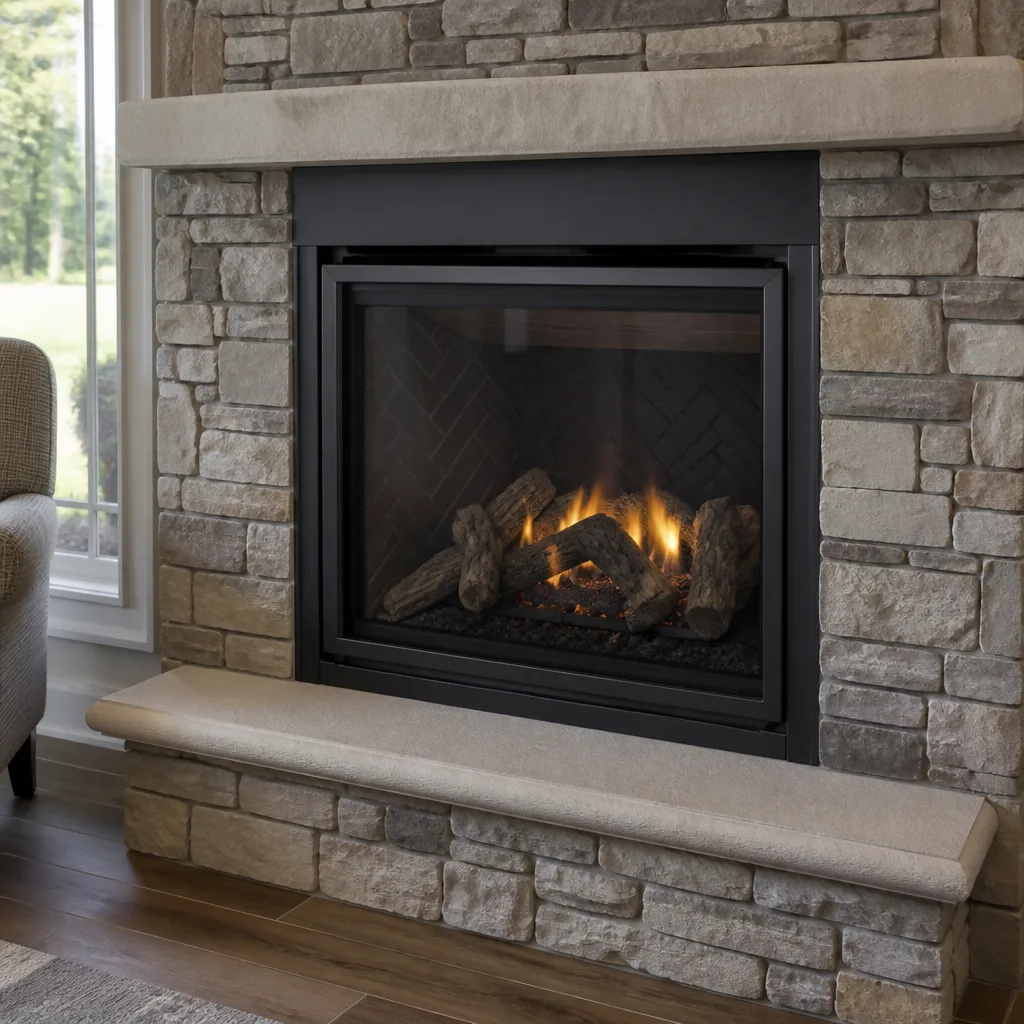
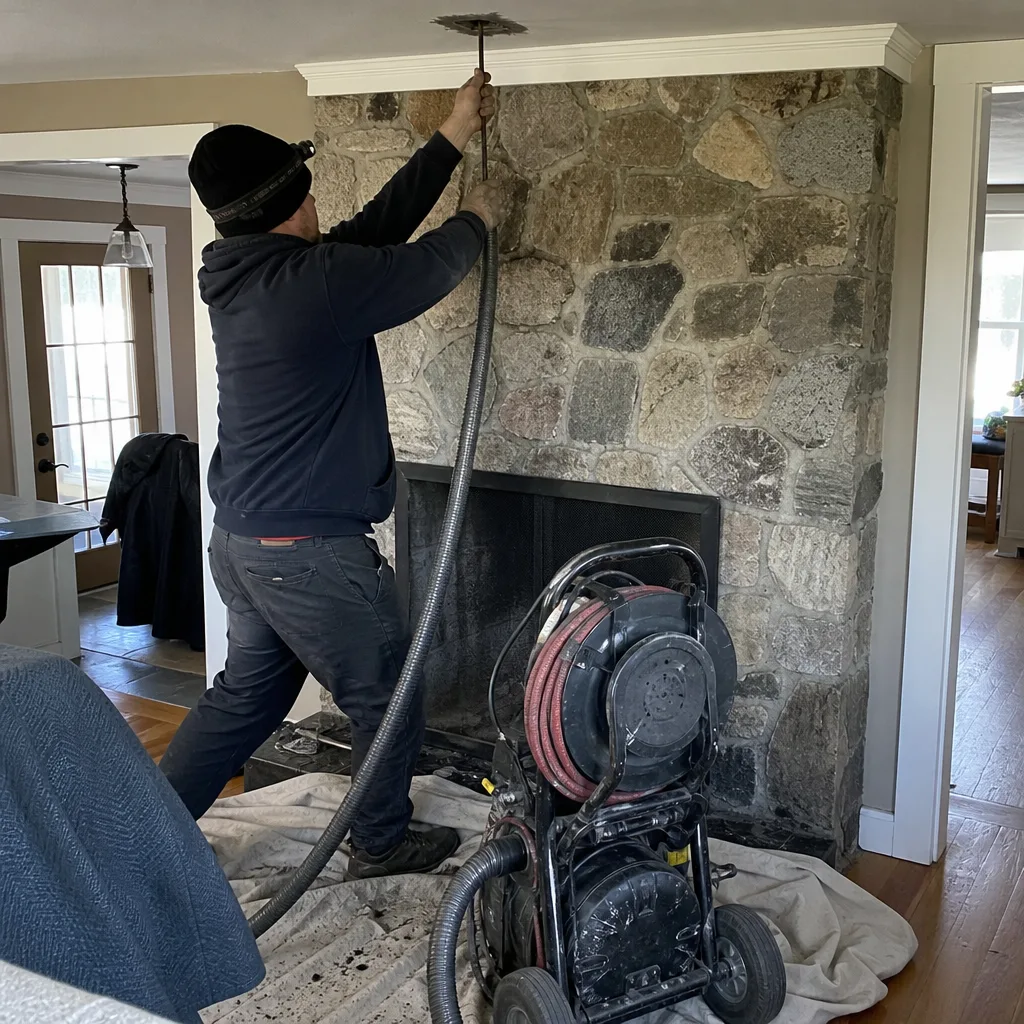 Before
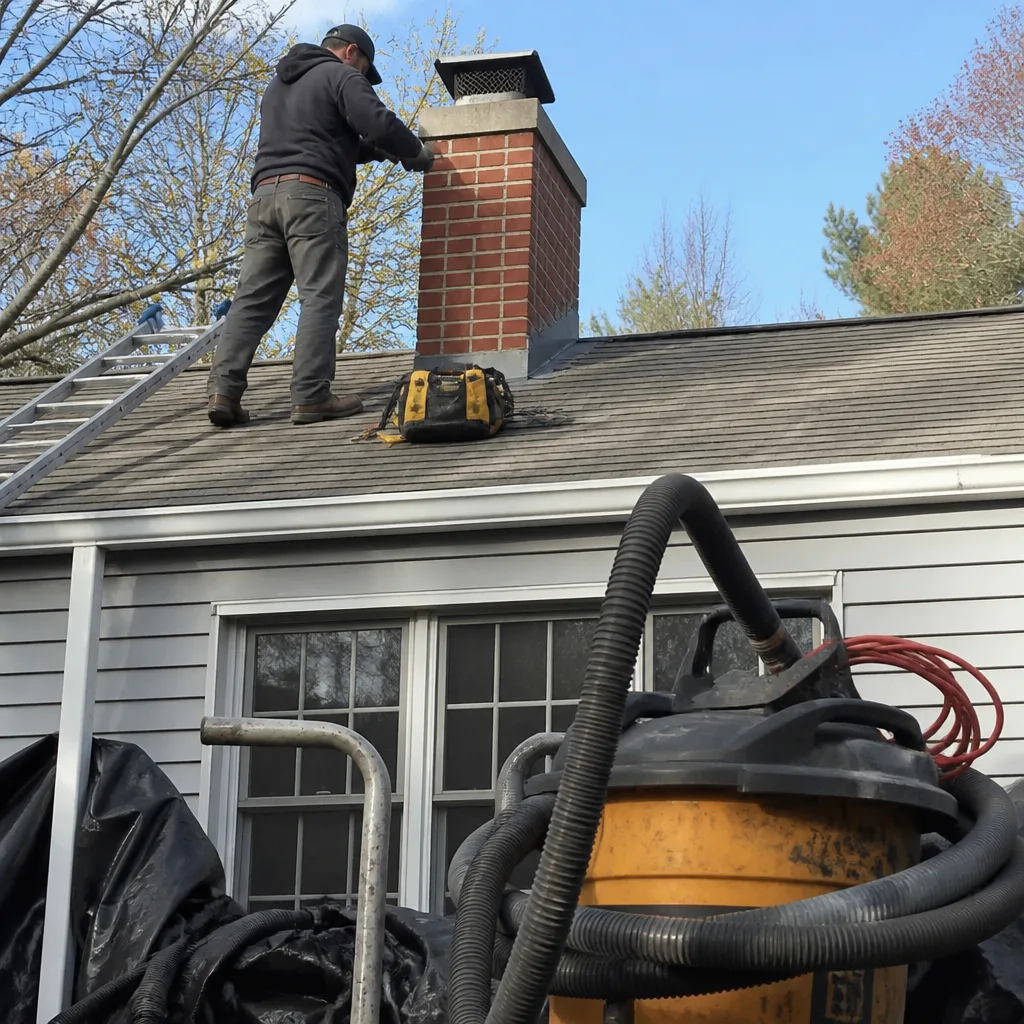 After
After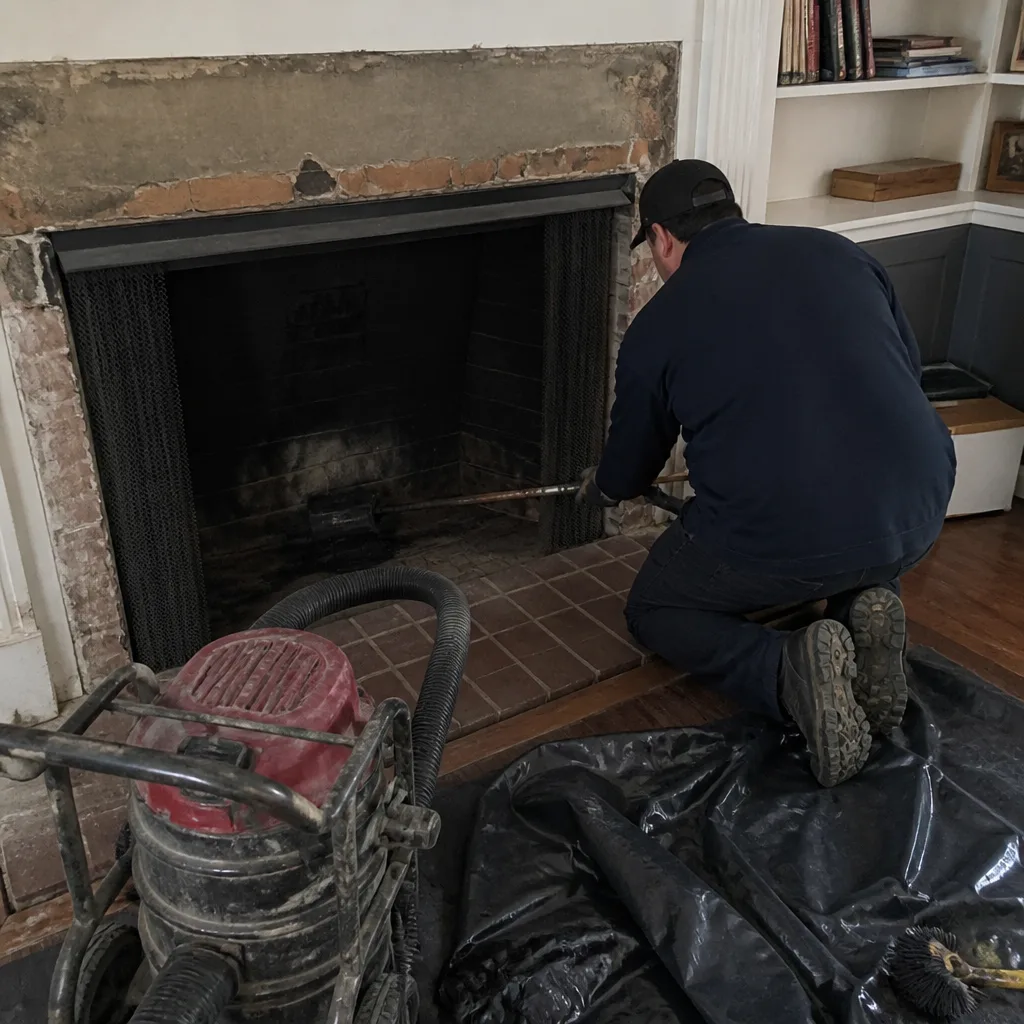 Before
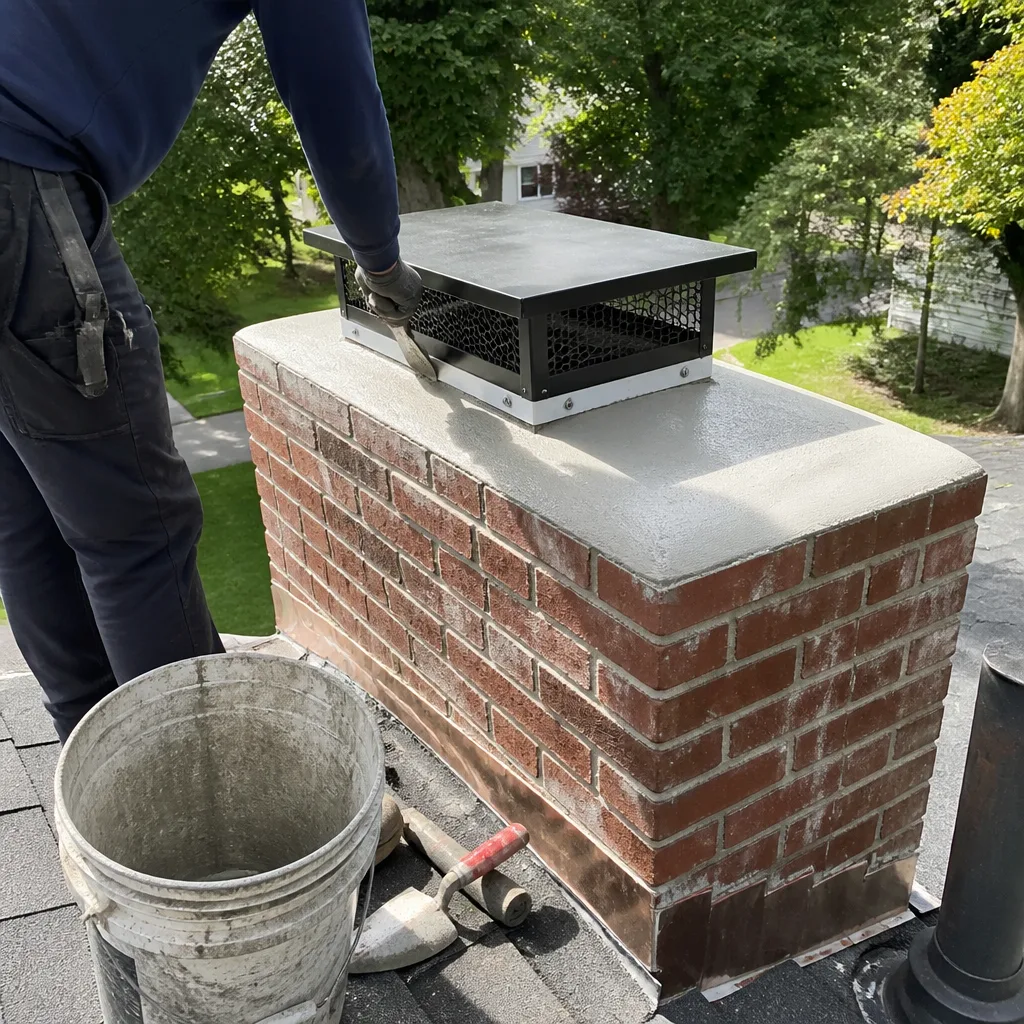 After
After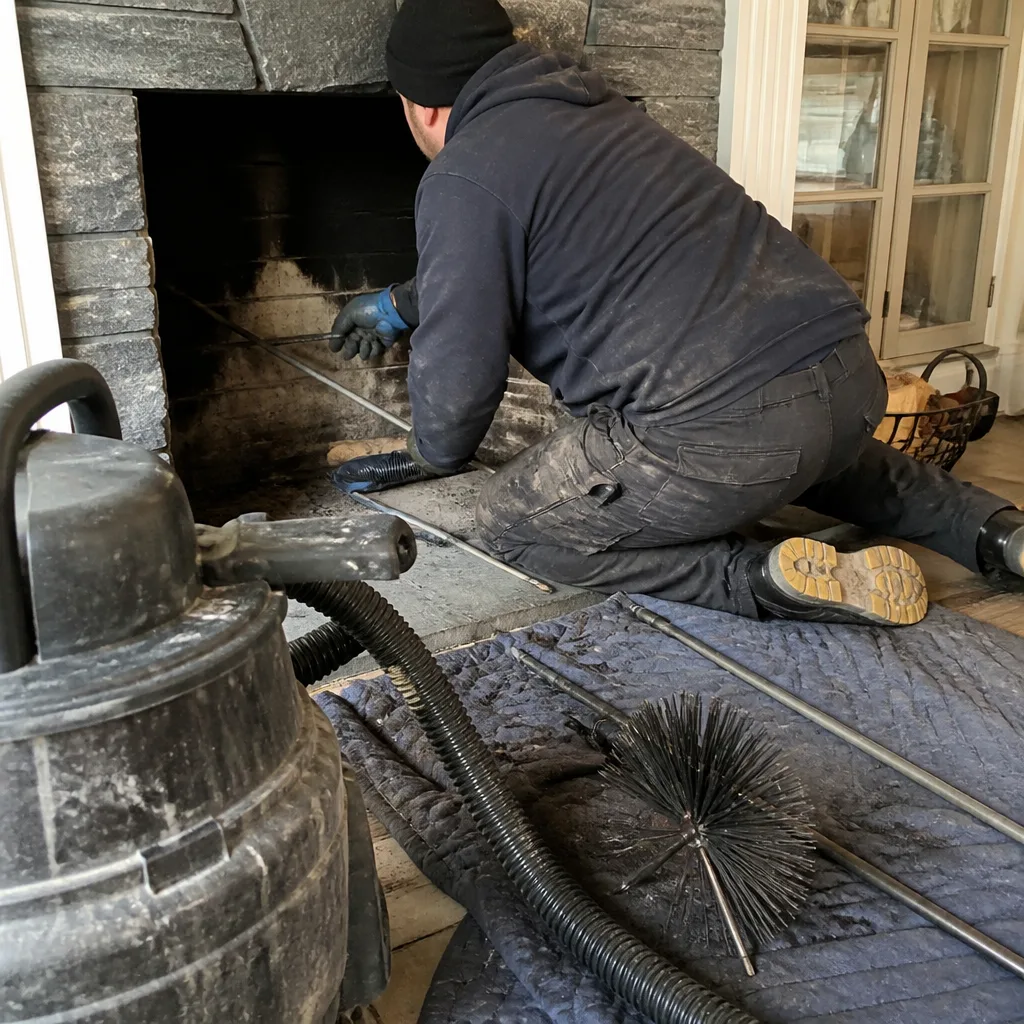 Before
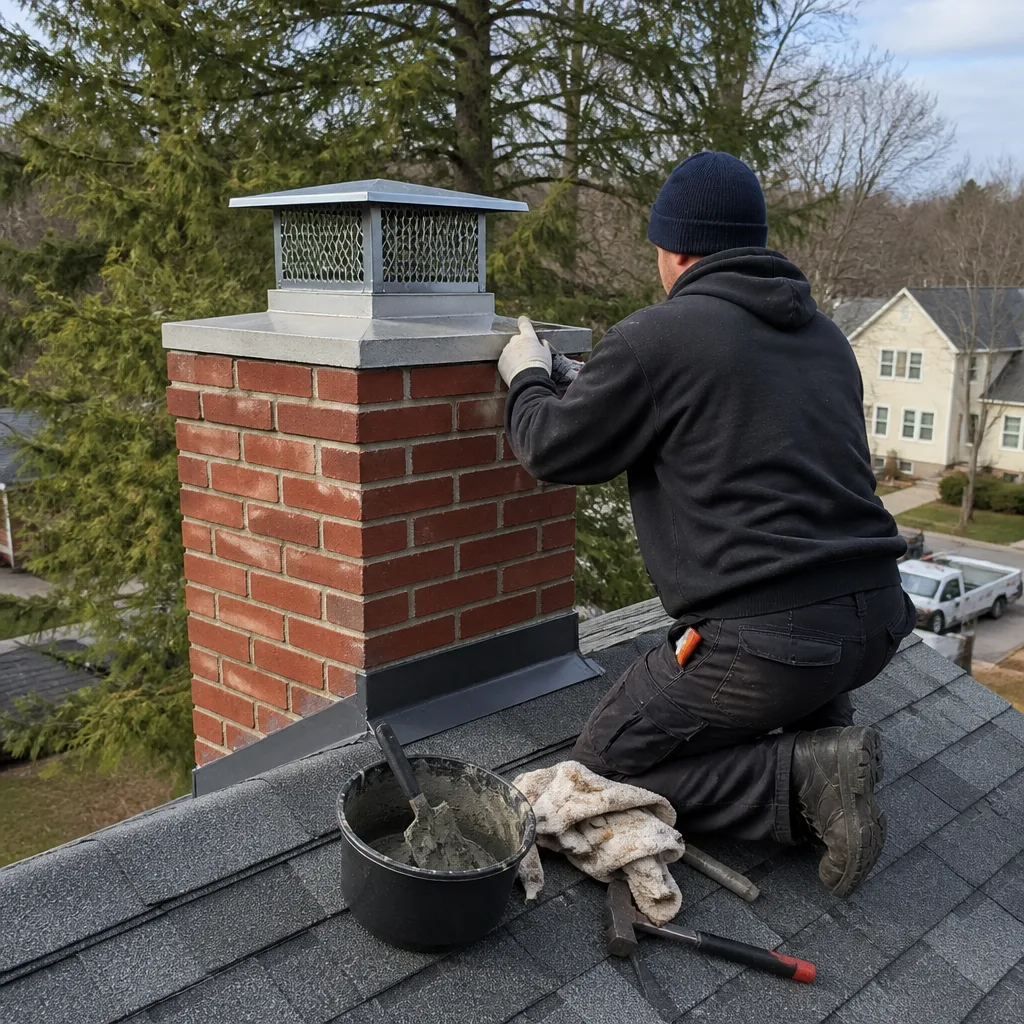 After
AfterChimney Cleaning Permits, Codes & Inspections in MA: What You Need to Know
Here’s the counterintuitive truth most Haverhill homeowners learn too late: the chimney sweep itself is permit-free, but the cracked liner that sweep discovers can trigger a building permit, an inspection, and a paper trail that follows your house to closing. We’ve been sweeping chimneys in Haverhill since 2009, and we’ve seen unpermitted liner jobs void insurance claims, stall real estate transactions, and turn routine home sales into legal headaches. This guide draws the exact line between what’s permit-free and what isn’t in Massachusetts, explains how Haverhill’s building department handles chimney work, and shows you how to protect yourself with documentation that holds up. For a deeper dive, see our Complete Guide to Chimney Cleaning in Haverhill.
Quick Answer
Chimney cleaning and standard Level 1 inspections do not require a building permit in Massachusetts. However, liner replacement, firebox rebuilds, structural repairs, and new cap installation on certain fuel-burning systems trigger permits under 780 CMR. Unpermitted work can void homeowner’s insurance claims and must be disclosed at resale, while a documented NFPA 211 Level 2 inspection creates a defensible record of your chimney’s condition.
Table of Contents
- Which Chimney Services Are Permit-Exempt in Massachusetts
- Which Chimney Work Requires a Building Permit in MA
- Understanding 780 CMR and NFPA 211 Standards
- How Haverhill’s Building Department Handles Chimney Permits
- How Unpermitted Work Affects Insurance and Home Sales
- How a Level 2 Inspection Report Protects You
- Common Mistakes to Avoid
- When to Call a Professional
- Frequently Asked Questions
- The Bottom Line
 Before
 After
AfterWhich Chimney Services Are Permit-Exempt in Massachusetts
Massachusetts draws a clear regulatory line between maintenance and modification. Routine chimney maintenance that doesn’t alter the structure, fuel type, or venting configuration of your system falls outside permitting requirements.
Here’s what you can schedule without pulling a building permit:
- Chimney sweeping and cleaning - removal of creosote, soot, and debris from the flue, smoke chamber, and firebox. This is classified as maintenance under 780 CMR and requires no municipal notification.
- Level 1 inspections - visual examination of readily accessible portions of the chimney exterior and interior, performed without special tools or equipment. Most annual inspections fall in this category.
- Level 2 inspections - camera-scan evaluation of the flue interior, including attics, crawl spaces, and basements. Despite the specialized equipment, this remains diagnostic, not constructive, work.
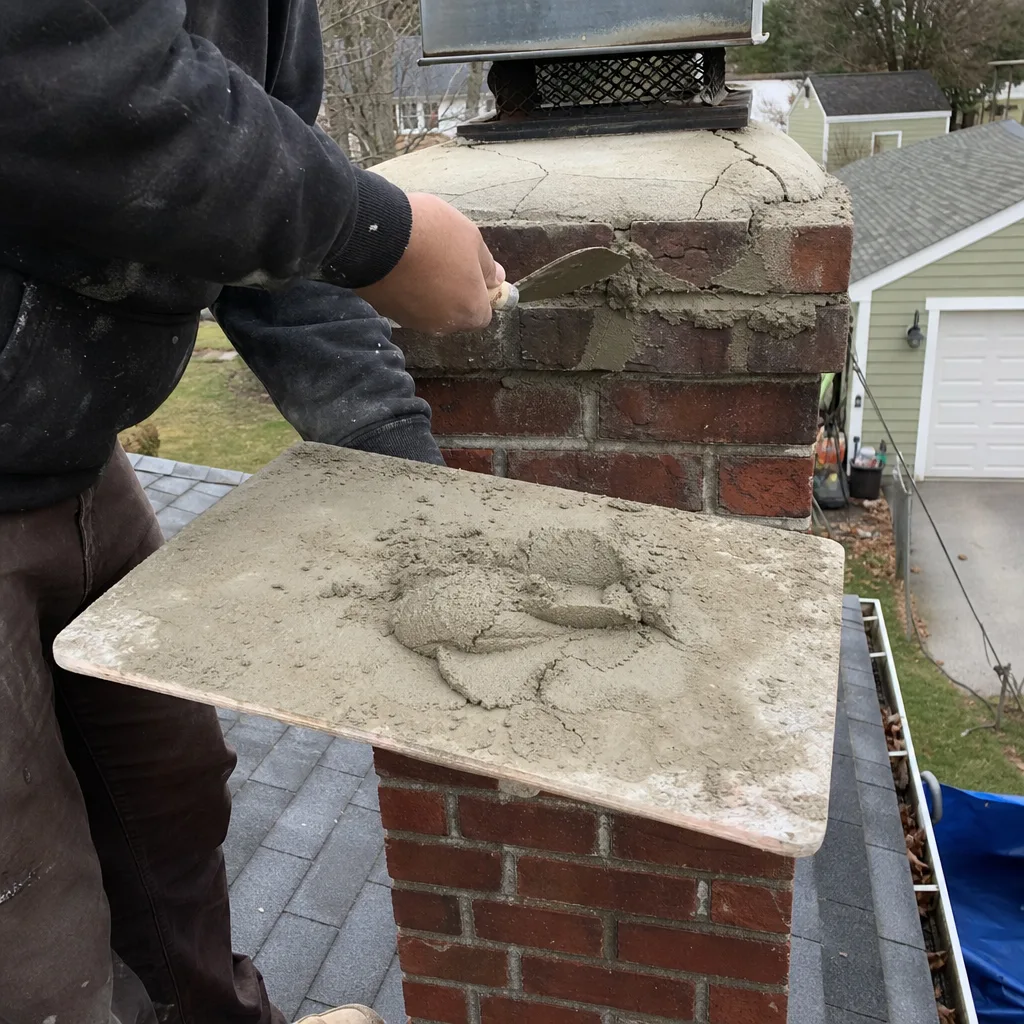
- Minor masonry repointing - replacement of deteriorated mortar joints on the chimney exterior, provided no structural elements are modified and the work doesn’t exceed 25% of the wall area (per 780 CMR 110.R5).
- Cap and spark arrestor replacement on existing systems - swapping a damaged cap for a like-for-like replacement, assuming no change to the flue opening or termination height.
In Haverhill, we’ve performed thousands of permit-exempt services across neighborhoods from Bradford to Riverside. The Merrimack Valley’s freeze-thaw cycles mean our sweeps often find spalling brick and deteriorated mortar that looks worse than it is. A Level 2 camera inspection tells us whether we’re looking at cosmetic maintenance or structural failure that crosses into permit territory.
The critical distinction: permit-exempt work cannot change the appliance, fuel type, flue liner material, or structural configuration. The moment your technician proposes replacing that cracked terracotta liner with a stainless steel DuraFlex liner, you’ve crossed the line.
Which Chimney Work Requires a Building Permit in MA
Massachusetts requires building permits for chimney work that affects life safety, structural integrity, or fuel conversion. The permit triggers an inspection by the local building official, who verifies compliance with 780 CMR and applicable NFPA standards.
Permit-required work includes:
- Liner replacement or installation - whether stainless steel, aluminum, or cast-in-place. This includes relining a deteriorated terracotta flue or installing a new liner in an unlined chimney. The permit ensures proper sizing per NFPA 31 (oil), 54 (gas), or 211 (solid fuel).
- Firebox rebuilds or modifications - reconstruction of the combustion chamber, throat, or smoke shelf. Even “like-for-like” rebuilds require permits because firebox dimensions affect draft and clearance.
- New chimney construction - masonry, metal, or factory-built chimney installations.
- Chimney height modifications - extending or reducing chimney height, which affects draft and termination clearances.
- Fuel conversions - switching from wood to gas, oil to pellet, or any change requiring different venting temperatures and corrosion resistance.
- Cap installation on new systems or modified terminations - when the cap is part of a new installation or changes the flue’s rain and spark protection in ways that affect draft.
- Structural repairs exceeding 25% of wall area - extensive rebuilds of spalled or leaning chimneys.
We’ve seen Haverhill homeowners skip permits on liner jobs to save $150-$400 in municipal fees. That savings evaporates when the unpermitted work is flagged in a pre-sale inspection, forcing a rush permit, late inspection, and potential rework. In one Bradford case, a homeowner’s insurance carrier denied a fire claim because a non-permitted liner installation created an improper connection to a wood stove. The $300 permit would have prevented a $47,000 dispute.
Materials matter for compliance. We source liners and components through Olympia Chimney, Famco, and Copperfield via our Haven buying network specifically to ensure every product carries the UL listing and sizing documentation Haverhill’s building inspector expects to see.
Understanding 780 CMR and NFPA 211 Standards
Two codes govern chimney work in Massachusetts: the state building code and the national fire safety standard. Understanding which applies when protects you from contractors who cite the wrong standard or skip requirements entirely.
780 CMR - Massachusetts State Building Code
780 CMR is the enforceable law. It adopts the International Building Code with Massachusetts amendments and specifies when permits are required, who can pull them, and what inspections must occur. For chimneys, key sections include:
- 780 CMR 13.00 - Mechanical systems, including chimney and venting requirements for heating appliances
- 780 CMR 110.R5 - Existing buildings, including repair thresholds that trigger permits
- 780 CMR 16.00 - Energy conservation, affecting combustion air requirements
Permits under 780 CMR are issued by the local building department, not the state. In Haverhill, this means the City of Haverhill Building Department on Summer Street.
NFPA 211 - Standard for Chimneys, Fireplaces, Vents, and Solid Fuel-Burning Appliances
NFPA 211 is the inspection and maintenance standard. While not itself law, 780 CMR references it by adoption, and insurance companies treat it as the benchmark for “reasonable care.” The standard defines three inspection levels:
- Level 1 - Annual inspection for systems with no changes, accessible without special tools
- Level 2 - Required at property transfer, after chimney fire or weather event, or when changing appliance type; includes camera inspection of flue interior
- Level 3 - Destructive inspection when concealed hazards are suspected; involves removing building materials to access hidden chimney components
Level Two Chimney Co. is named for the inspection standard we made our default in 2009 - years before insurers or regulators required it. Clause 4 of the Haven Standard mandates a documented photo record on every job, creating a timestamped archive that references NFPA 211 criteria. When a code question arises, our reports show exactly what the camera saw, where it was measured, and how it compared to standard.
The Merrimack Valley’s coastal climate adds local relevance. Haverhill chimneys endure more freeze-thaw cycles than western Massachusetts systems, accelerating liner deterioration and mortar degradation. A 780 CMR permit inspection verifies that repairs account for these conditions, not just generic code minimums.
How Haverhill’s Building Department Handles Chimney Permits
Haverhill’s process mirrors most Massachusetts municipalities but with specific local requirements that trip up contractors unfamiliar with the city. Knowing the steps helps you verify your contractor is following through.
Step 1: Application and Documentation
The permit applicant - typically the licensed contractor, not the homeowner - submits:
- Completed building permit application (available at Haverhill City Hall or online)
- Scope of work description, including appliance type, fuel, and liner specifications
- Manufacturer specifications for proposed liner or components (this is where our sourcing through Olympia Chimney and Famco matters - we have UL documentation ready)
- Site plan showing chimney location and clearances
- Homeowner authorization if the contractor is pulling the permit on your behalf
Step 2: Plan Review
Haverhill’s building inspector reviews for compliance with 780 CMR, NFPA clearances, and local zoning. For liner jobs, this includes verifying proper sizing: a liner too small restricts draft; too large allows excessive condensation, particularly with gas appliances in Haverhill’s cold shoulder seasons.
Step 3: Permit Issuance and Fee
Residential chimney permits in Haverhill typically run $150-$400 depending on scope, with separate fees for plan review and inspection. The permit must be posted visibly at the job site.
Step 4: Work and Rough Inspection
For liner installations, the inspector examines the liner before it’s fully sealed, verifying proper connection to the appliance, adequate support, and required clearances to combustibles. Missing this inspection means concealed work cannot be verified.
Step 5: Final Inspection and Certificate of Completion
The building inspector performs a visual and operational check, issues a certificate of completion, and records the permit as closed. This certificate is what you’ll need for insurance records and resale disclosure.
Timeline reality: Haverhill’s building department typically issues permits within 5-10 business days for straightforward chimney work, with inspections scheduled within 3-5 days of request. Rush permits are available for emergencies but cost more. We coordinate permit pulls as part of our project management - it’s built into our written scope, not an afterthought.
How Unpermitted Work Affects Insurance and Home Sales
This is where the permit question becomes expensive. Unpermitted chimney work creates three distinct liability exposures that most homeowners discover only when it’s too late.
Insurance Claim Denial After Fire or CO Event
Homeowner’s insurance policies contain a maintenance and compliance clause. If a chimney fire originates in a non-permitted liner installation, or if carbon monoxide intrusion traces to an uninspected firebox rebuild, the carrier may deny the claim based on failure to comply with applicable building codes. We’ve reviewed competitor estimates where homeowners were told permits “aren’t necessary for a simple liner.” That contractor won’t be at the deposition. You will.
Massachusetts courts have upheld claim denials where unpermitted work contributed to loss. The permit isn’t bureaucratic box-checking - it’s evidence that a qualified inspector verified the work met safety standards.
Title Disclosure Obligations
Massachusetts requires sellers to disclose known defects and unpermitted work on the Property Transfer Notification Certification. Unpermitted chimney repairs must be disclosed, or the seller faces fraud liability. Even if you didn’t know the work was unpermitted, a buyer’s inspection will reveal the absence of permit records in Haverhill’s online database.
The typical remediation: retroactive permitting, which requires exposing concealed work for inspection, potential rework, and payment of double fees. We’ve seen this add $2,000-$5,000 to what should have been a routine sale.
Mortgage and Appraisal Complications
Lenders and appraisers increasingly flag unpermitted work. FHA and VA loans require code compliance verification. A pending chimney permit issue can delay closing or reduce appraised value.
Our recommendation: before listing a Haverhill home, have us perform a Level 2 inspection and verify permit history against city records. We can identify unpermitted work, estimate remediation cost, and provide the documented record that protects your disclosure. Our 38,000+ completed jobs since 2009 include hundreds of pre-sale inspections that prevented closing surprises.
How a Level 2 Inspection Report Protects You
Documentation is your defense when permit questions arise months or years after work is complete. A proper Level 2 inspection report creates a contemporaneous record that inspectors, insurers, and courts treat as credible evidence.
What a defensible report includes:
- Date-stamped photographs of all accessible chimney components - exterior crown, cap, brick condition, flue interior from top and bottom, smoke chamber, firebox, damper assembly, and hearth clearances
- Camera-scan video or image sequence of the flue liner - showing cracks, gaps, creosote accumulation, or deterioration with measurement references
- Written condition assessment against NFPA 211 criteria - not “looks good” but “liner shows no visible cracks or spalling per NFPA 211 14.2.1”
- Clearance measurements to combustibles - documented with photos showing the measuring tool in frame
- Recommendations prioritized by urgency - what requires immediate action, what should be monitored, what is informational
- Written price for recommended work, if any - before any work begins, per Haven Standard Clause 1
Clause 4 of the Haven Standard requires this documentation on every job we’ve performed since 2009. When a Haverhill homeowner calls us because a buyer’s inspector questioned their chimney condition, we pull the archive and provide the dated record. In several cases, our decade-old reports have resolved disputes that would otherwise have required destructive investigation.
The report also functions as a baseline. If your chimney is clean and sound today, next year’s comparison shows whether deterioration is accelerating. In Haverhill’s climate, that trend data helps distinguish between normal aging and the accelerated damage that signals a systemic problem.
We deliver reports electronically with permanent cloud backup. Hard copies are available on request. Every report is searchable by address and date, and we maintain records indefinitely - not the two or three years some competitors keep.
Common Mistakes to Avoid
- Assuming your sweep will handle permits. Most chimney sweeps are not licensed construction supervisors and cannot pull building permits. Verify your contractor’s license status with Haverhill’s building department before work begins.
- Accepting “permits aren’t required for this” without verification. We’ve heard this from competitors proposing full liner replacements. Check directly with the City of Haverhill Building Department - a two-minute call that can save thousands.
- Skipping the rough inspection. For liner jobs, the rough inspection before concealment is critical. Some contractors pressure homeowners to “save time” by skipping it. The final inspection cannot verify what it cannot see.
- Disposing of permit documentation. Keep certificates of completion with your deed and disclosure records. Digital copies should be backed up independently of your contractor.
- Hiring based on lowest price without permit verification. Unpermitted work is often cheaper because it skips fees, inspections, and proper documentation. The true cost appears later.
- Failing to match liner material to fuel type. A stainless steel liner appropriate for wood burning may fail prematurely with gas condensation. Haverhill’s cold-start gas appliances are particularly hard on improperly specified liners.
- Neglecting to verify your technician’s background check and license display. Haven Standard Clause 3 requires verified crews with license numbers visible. Ask to see it.
When to Call a Professional
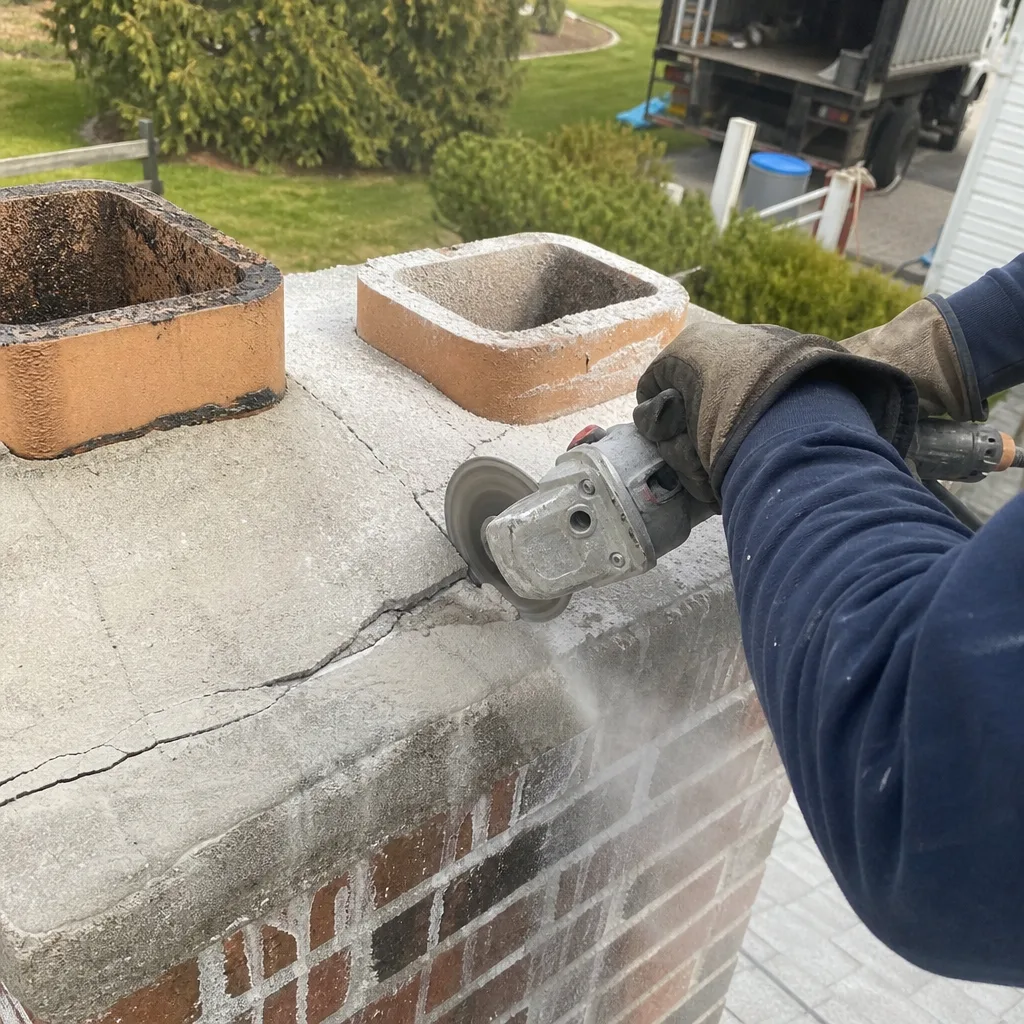
Call a certified chimney professional when your annual inspection reveals anything beyond routine creosote, when you’re buying or selling a home in Haverhill, after a chimney fire or severe weather event, or when you smell smoke, notice drafting problems, or see visible deterioration of brick, mortar, or liner.
Specifically, you need professional evaluation before any work that might trigger permitting - liner replacement, firebox repair, or structural rebuild. A qualified technician can tell you definitively whether your scope requires municipal involvement and can coordinate the permit process if it does.
Level Two Chimney Haverhill offers free estimates in Haverhill - call (351) 444-9705. Every estimate includes a written price, written scope, and written warranty before any work starts. Explore our more guides & resources for additional homeowner tips. We pull permits when required, coordinate inspections, and archive the documentation under Haven Standard Clause 4. If you’ve received a competitor’s written estimate, our Free Second Opinion will verify whether permits were accounted for and whether the proposed scope meets code.
Frequently Asked Questions
No. Routine chimney cleaning and sweeping are classified as maintenance under 780 CMR and do not require a building permit anywhere in Massachusetts, including Haverhill. The sweep removes creosote and debris without altering the chimney’s structure, fuel type, or venting configuration. Call (351) 444-9705 for an exact quote - estimates are free.
Stainless steel liner replacement in the Haverhill market typically ranges from $2,800 to $5,500 depending on flue height, diameter, number of appliance connections, and whether the installation requires demolition of the existing terracotta. This price includes the permit and inspection coordination. We provide a written price before work starts - never a range that balloons later. Call (351) 444-9705 for a specific quote based on your chimney’s camera inspection.
If your terracotta liner is cracked, spalled, or missing sections, cleaning alone is insufficient and potentially dangerous - combustion gases and creosote can leak through liner gaps into wall cavities. Our camera inspection shows you exactly what we see, with measurements and video. If the liner is intact with only surface glazing, a professional chimney cleaning may be all you need. We will not recommend replacement without camera evidence you can review yourself, and we’ll tell you plainly when work can safely wait.
NFPA 211 recommends annual inspection for all chimneys, fireplaces, and vents. In Haverhill, the Merrimack Valley’s freeze-thaw cycles and coastal moisture accelerate liner and masonry deterioration, making annual inspection particularly important for older homes in neighborhoods like Bradford and Mount Washington. If you burn wood more than three times weekly, consider inspection and sweeping annually or after every cord of wood burned.
Class I and II creosote accumulates with each burn, eventually restricting draft and creating a combustible lining. A chimney fire can reach 2,000°F, cracking liners and igniting adjacent framing. Carbon monoxide, an odorless byproduct of incomplete combustion, can leak through liner defects and accumulate in living spaces. These are genuine hazards, not scare tactics - but they’re also preventable with routine maintenance. The 365-Day Done Right Promise on our work means if it’s not done right, we make it right.
Homeowners can pull permits for work on their own residence, but the work must still be performed by or under the direct supervision of a licensed construction supervisor. For liner installation and structural work, most homeowners benefit from having their contractor pull the permit - the contractor knows the documentation requirements, coordinates inspections, and assumes responsibility for code compliance. If a contractor refuses to pull permits or suggests you “don’t need to bother,” that’s a red flag.
Contact the City of Haverhill Building Department at City Hall on Summer Street, or search the city’s online permit database using your address. A properly closed permit shows both rough and final inspection approvals with the inspector’s signature. We provide permit numbers and inspection dates on every job, and we follow up to confirm closure. If you’re buying a home, this verification should be standard due diligence - we include it in our pre-purchase fireplace and chimney inspections.
The Bottom Line
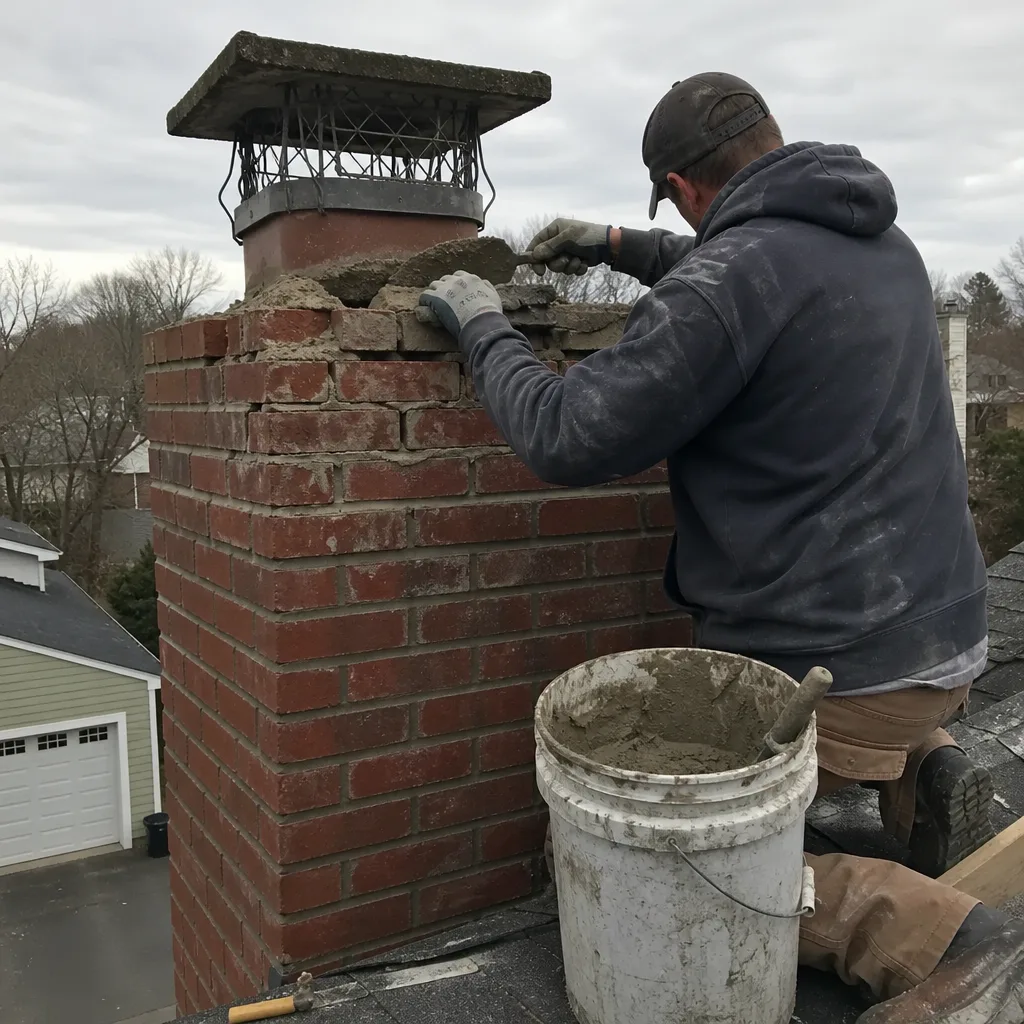
Chimney cleaning itself is permit-free in Massachusetts, but the repairs it reveals often aren’t. The critical line runs between maintenance and modification: sweep the flue without paperwork, but replace the liner, rebuild the firebox, or convert fuels with proper permits under 780 CMR. Unpermitted work saves nothing - it voids insurance coverage, complicates home sales, and transfers liability to you. A documented NFPA 211 Level 2 inspection from a qualified provider creates the record that protects your interests when questions arise years later. In Haverhill’s climate, with its freeze-thaw stress on masonry and liner systems, that documentation isn’t optional diligence - it’s essential protection for your home and your liability.
Written by Corrine Halstead, Owner at Level Two Chimney Haverhill, serving Haverhill since 2009.