
Level 1 sweep and inspection to the NFPA 211 annual standard - flue, crown, cap, and flashing checked and photographed
Chimney sweep logs do not sweep chimneys. They loosen some creosote - which then falls where a brush and vacuum still have to collect it.
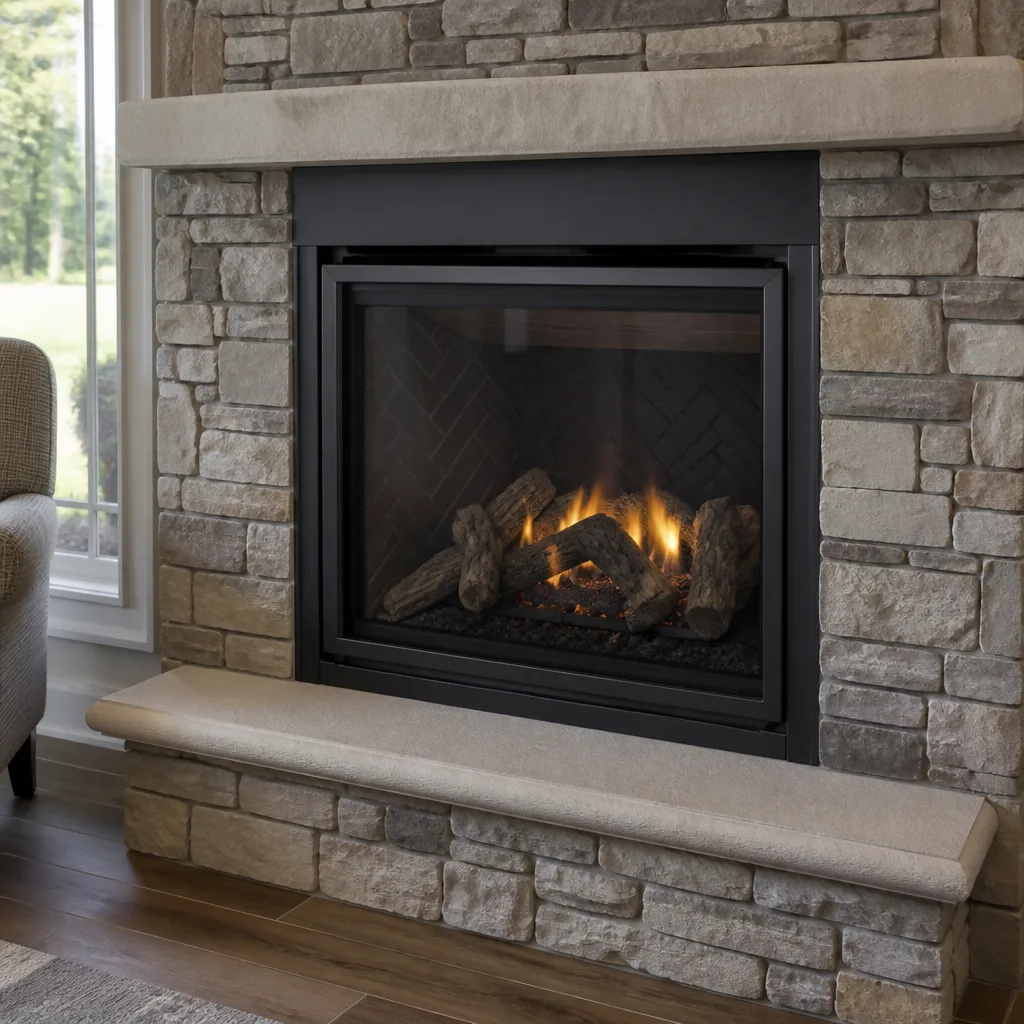
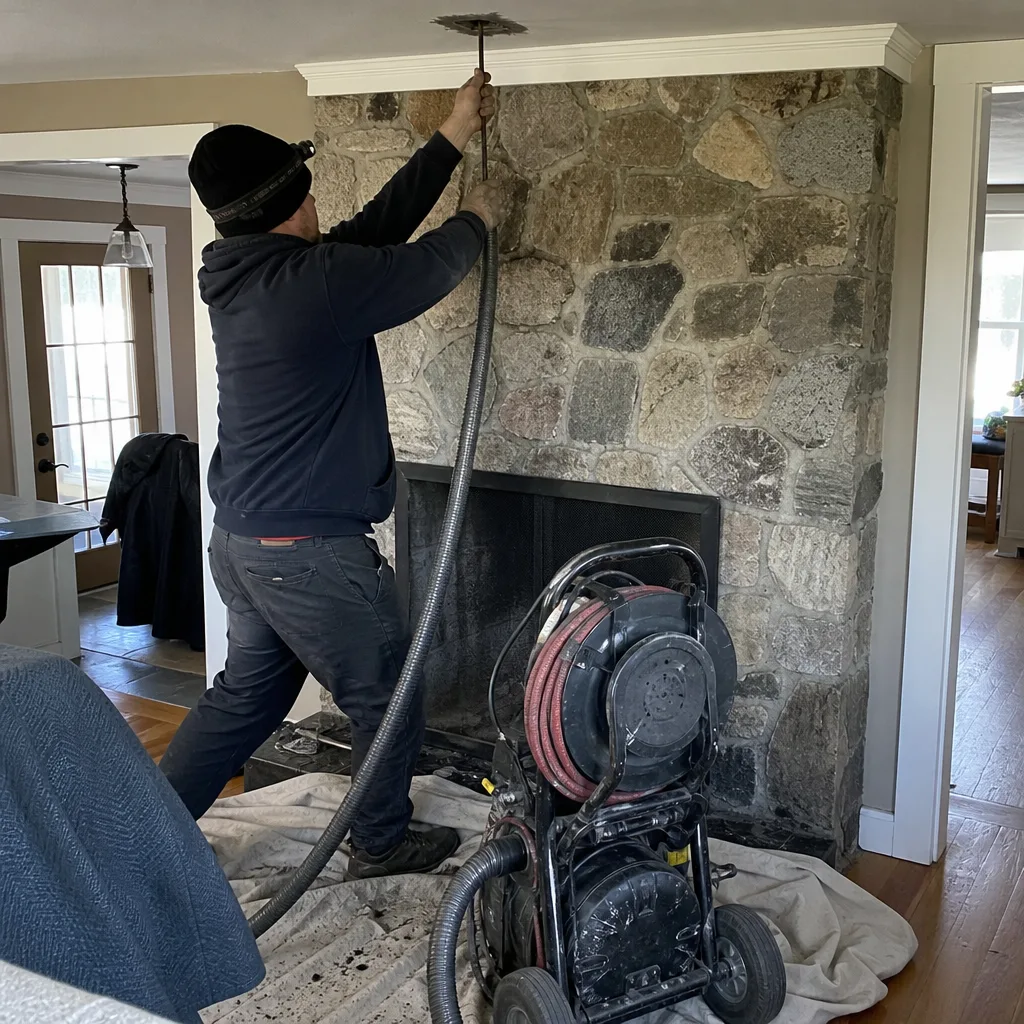 Before
 After
After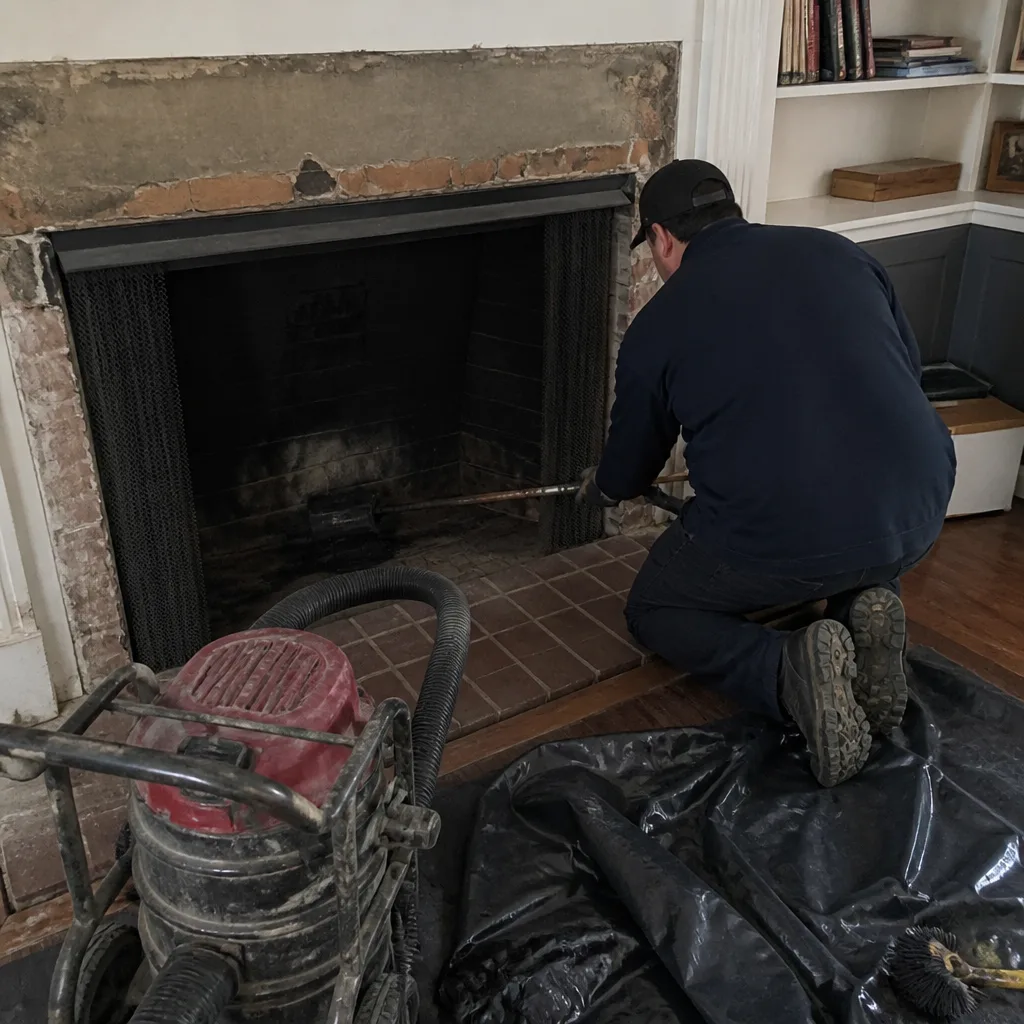 Before
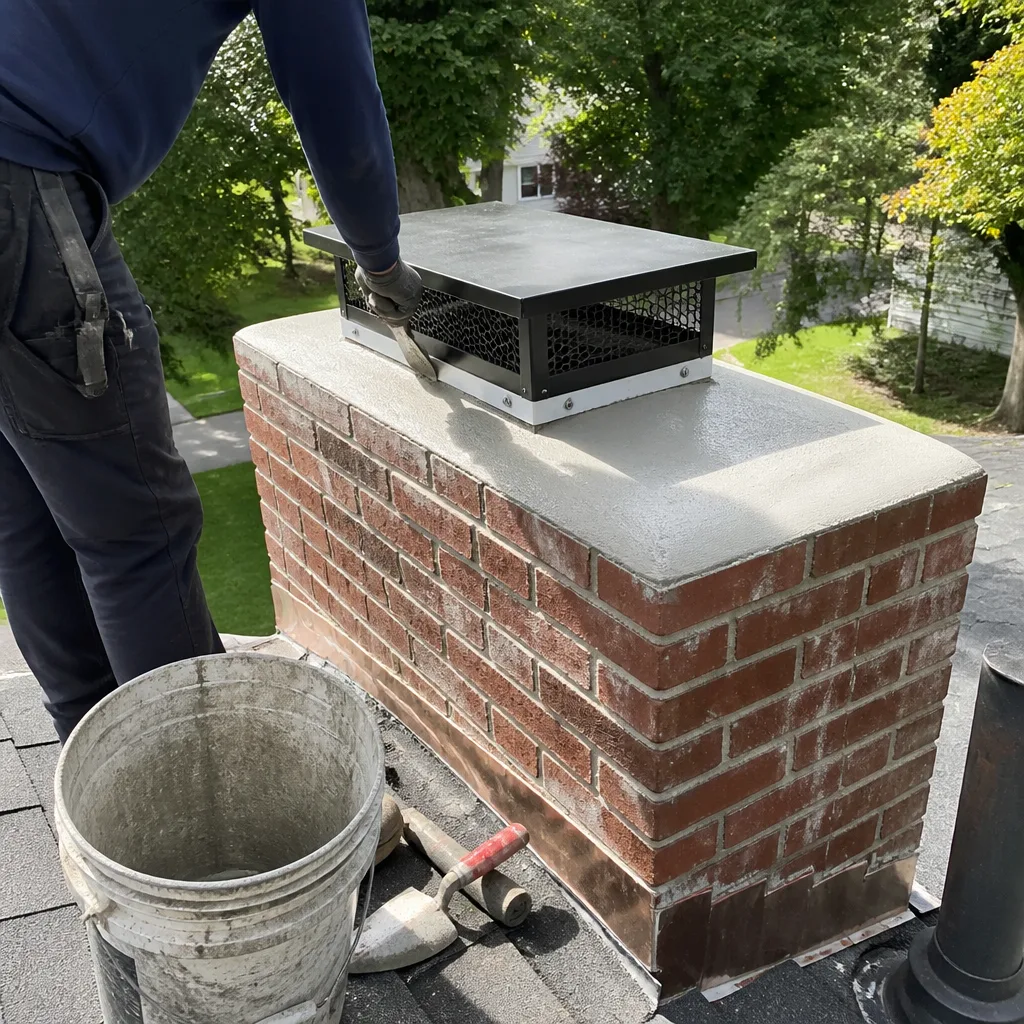 After
After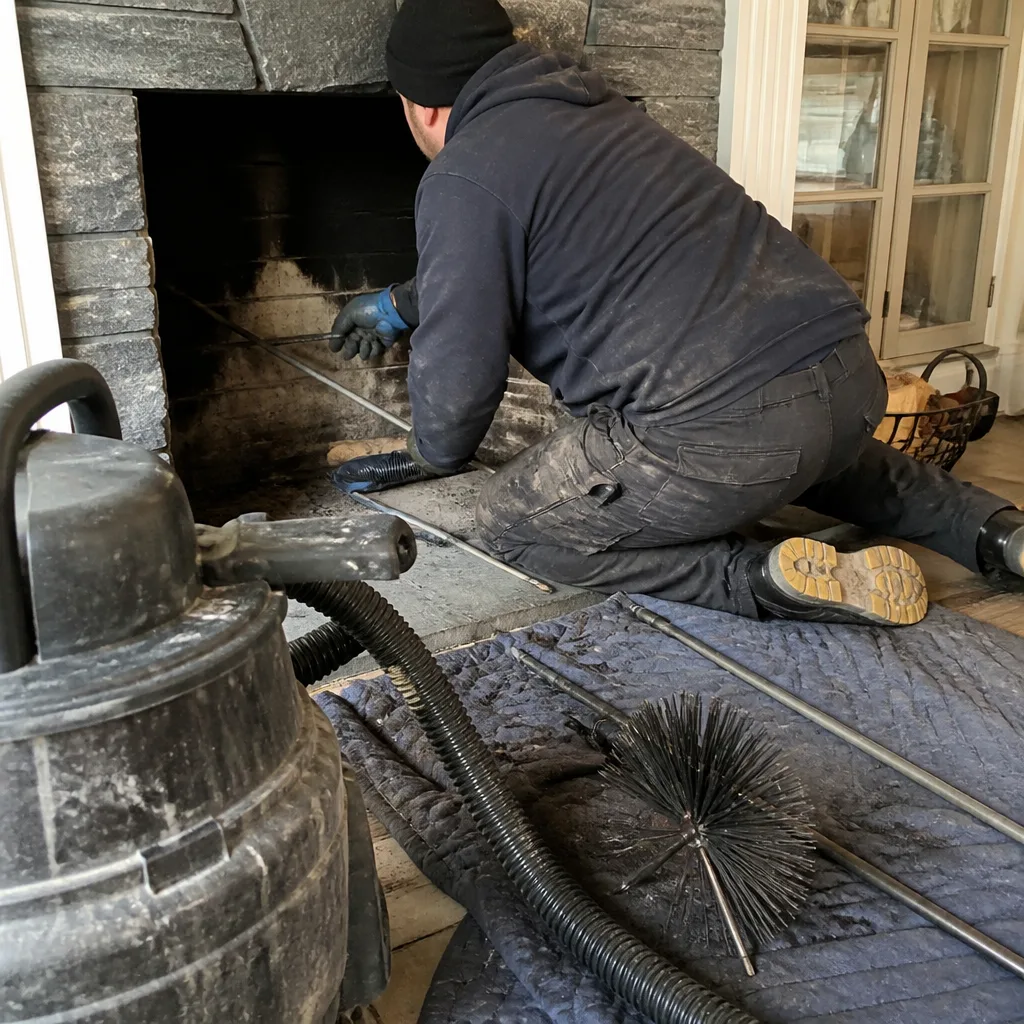 Before
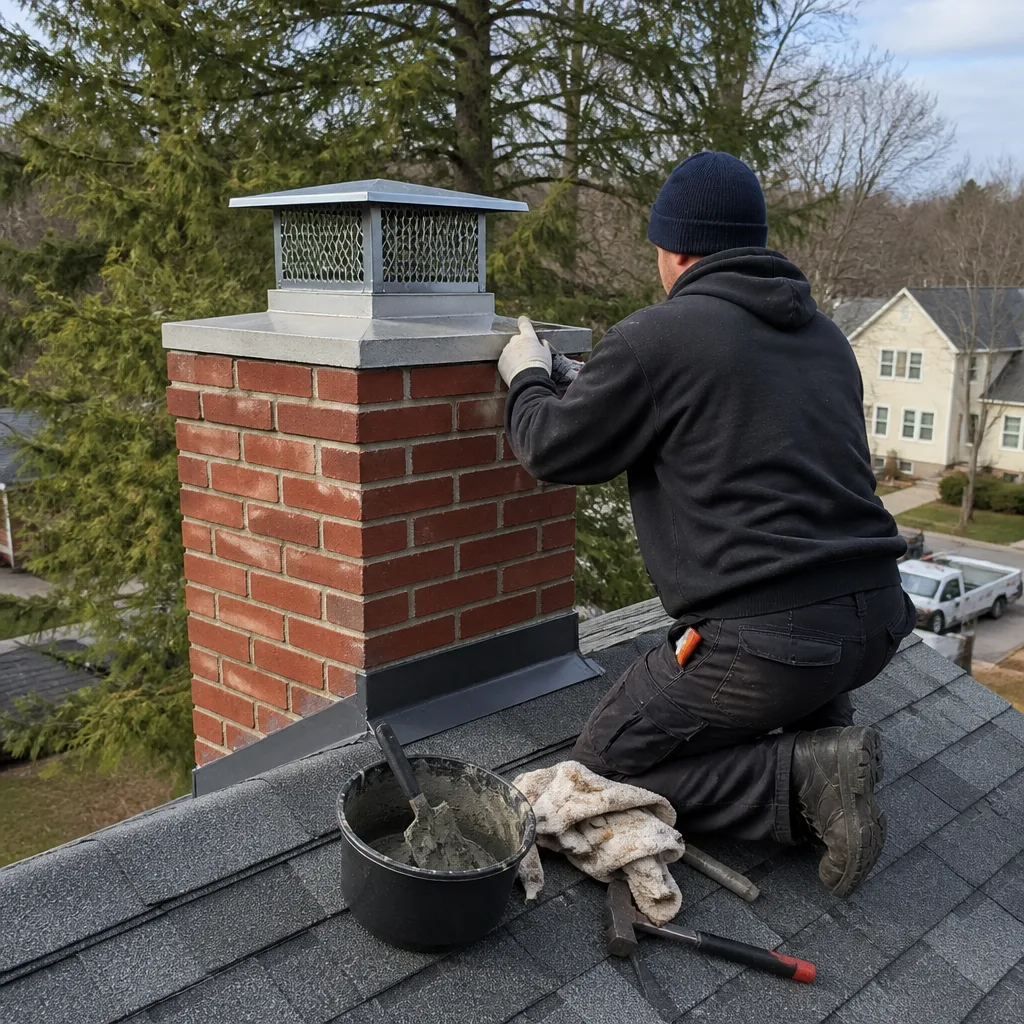 After
AfterSoot Removal in Haverhill, MA
Soot removal in Haverhill typically runs $149 to $349, depending on how much has built up inside your flue, firebox, and smoke chamber. Most jobs are completed in a single visit, and every one starts with a written price before anyone touches a brush. If you want to skip straight to scheduling, call (351) 444-9705 – a live person answers 24 hours a day, 7 days a week.
Soot is the fine black or gray powder that settles on every interior surface a fire touches: the firebox walls, the damper frame, the smoke shelf, and the lower reaches of the flue liner. It looks harmless compared to the thick, tarry creosote that gets most of the headlines, but soot carries its own problems. Unchecked accumulation restricts airflow, accelerates masonry corrosion, and – in a firebox or smoke chamber with any crack in the liner – seeps into living spaces and stains ceilings and walls. In older Haverhill homes, particularly the brick colonials and cape-style houses common in Bradford and Pentucket neighborhoods, we find that soot collects faster in shorter flues where draft pressure is lower than in taller Victorian-era chimneys.
Level Two Chimney Haverhill has been doing this work since 2009. Every soot removal visit is part of our broader Chimney Cleaning & Sweep in Haverhill practice, which means it includes a camera-scan inspection of the flue liner, a documented photo record handed to you when the job is done, and a 365-Day Done Right Promise stamped on every invoice. This is what the Haven Standard requires, and it’s what we’ve delivered on more than 38,000 chimney visits.
When You Need Soot Removal
Some situations make the need obvious. Others are easy to overlook until the problem is bigger than it had to be. Here’s what to watch for:
- Visible black powder or staining inside the firebox. A thin gray film after a single fire is normal. Thick black buildup on the firebox floor, back wall, or damper frame means enough soot has accumulated to restrict airflow and start corroding the mortar joints underneath.
- Smoke smell that lingers in the room after the fire is out. In Haverhill winters, when temperatures drop into the teens and you’re running the fireplace daily, soot accumulation in the smoke shelf and smoke chamber can trap odors and push them back into living areas long after the fire is cold.
- Dark staining on the exterior masonry above the firebox opening. If soot is rolling out instead of going up the flue, the chimney is telling you the draft is compromised – often because the flue is partially blocked by soot or debris.
- More than one full burning season since your last cleaning. NFPA 211 recommends annual inspection and cleaning for any chimney in active use. Haverhill sees enough cold months that a fireplace used October through March accumulates a full season of soot by spring.
- You’ve just bought the house. We see this regularly in the Bradford Hill and Silver Hill areas of Haverhill – buyers close on a home, light the first fire of the season, and discover the previous owner hadn’t had the chimney cleaned in years. A soot removal and Level 2 camera inspection before that first fire is a straightforward way to know exactly what you own.
- Recent smoke or odor complaints after a repair or remodel. Sealants, mortar work, or even fresh paint near the firebox can mix with soot residue and produce sharp odors when the fireplace heats up. We can identify the source and clean what needs cleaning.
Our Soot Removal Process
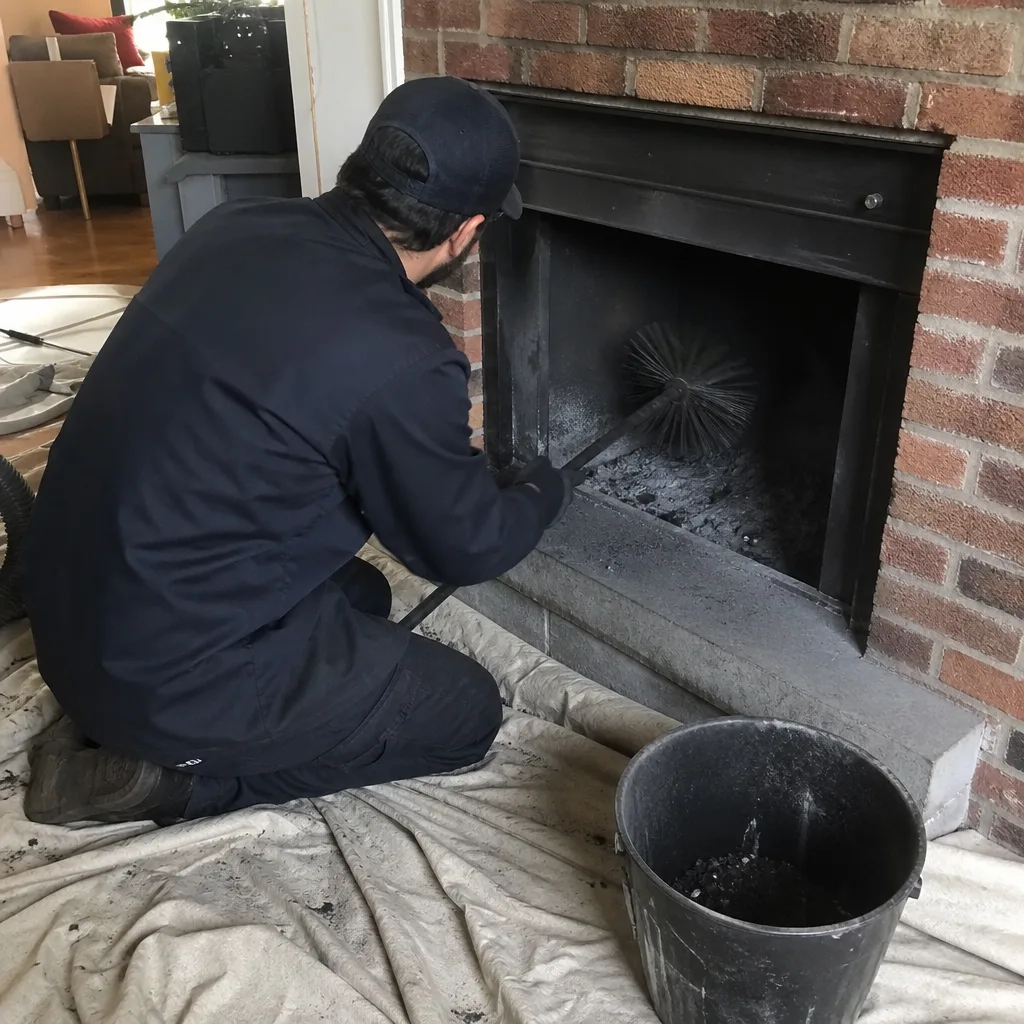
We don’t show up with a brush and a can-do attitude and call it a day. Every Chimney Cleaning & Sweep services visit follows a documented sequence so that nothing gets missed and you have a written record of what was found and what was done.
- Written price before work starts. This is Haven Standard Clause 1 – “Have it in writing.” Before a single piece of drop cloth goes down, you have a written scope of work, a written price, and a written warranty in your hand. No surprises when the invoice arrives.
- Pre-cleaning camera scan of the flue liner (NFPA 211 Level 2). A video camera goes down the flue from the firebox or the top of the chimney. This tells us how much soot is present, where it’s concentrated, and whether there’s any liner damage – cracks, spalling, or mortar joint failure – that soot may be hiding. Skipping this step means cleaning a flue whose condition you don’t actually know.
- Firebox and smoke chamber preparation. We seal the firebox opening with a drop cloth and set up HEPA-filtered vacuum containment before any brushing starts. In Haverhill homes, especially older wood-framed capes and colonials where the firebox sits against a shared interior wall, containing the soot before it becomes airborne is not optional.
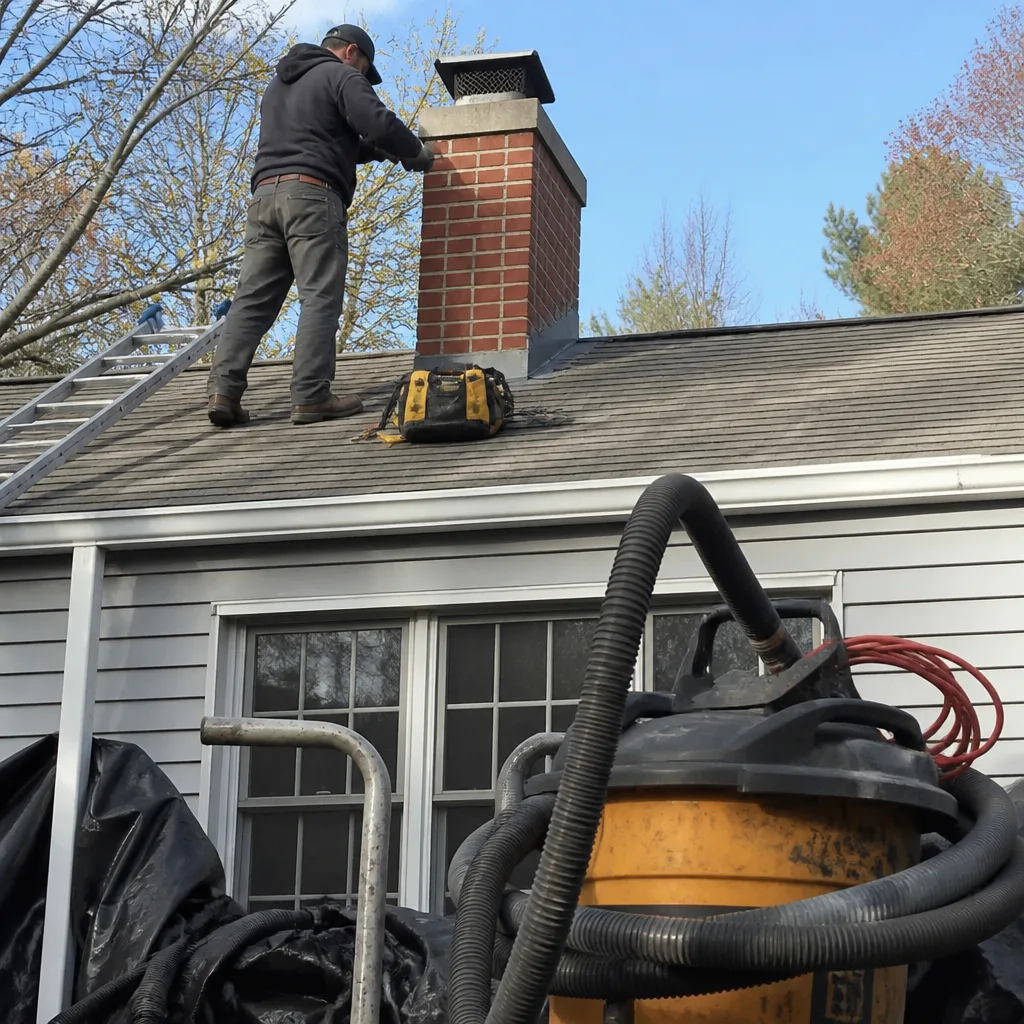
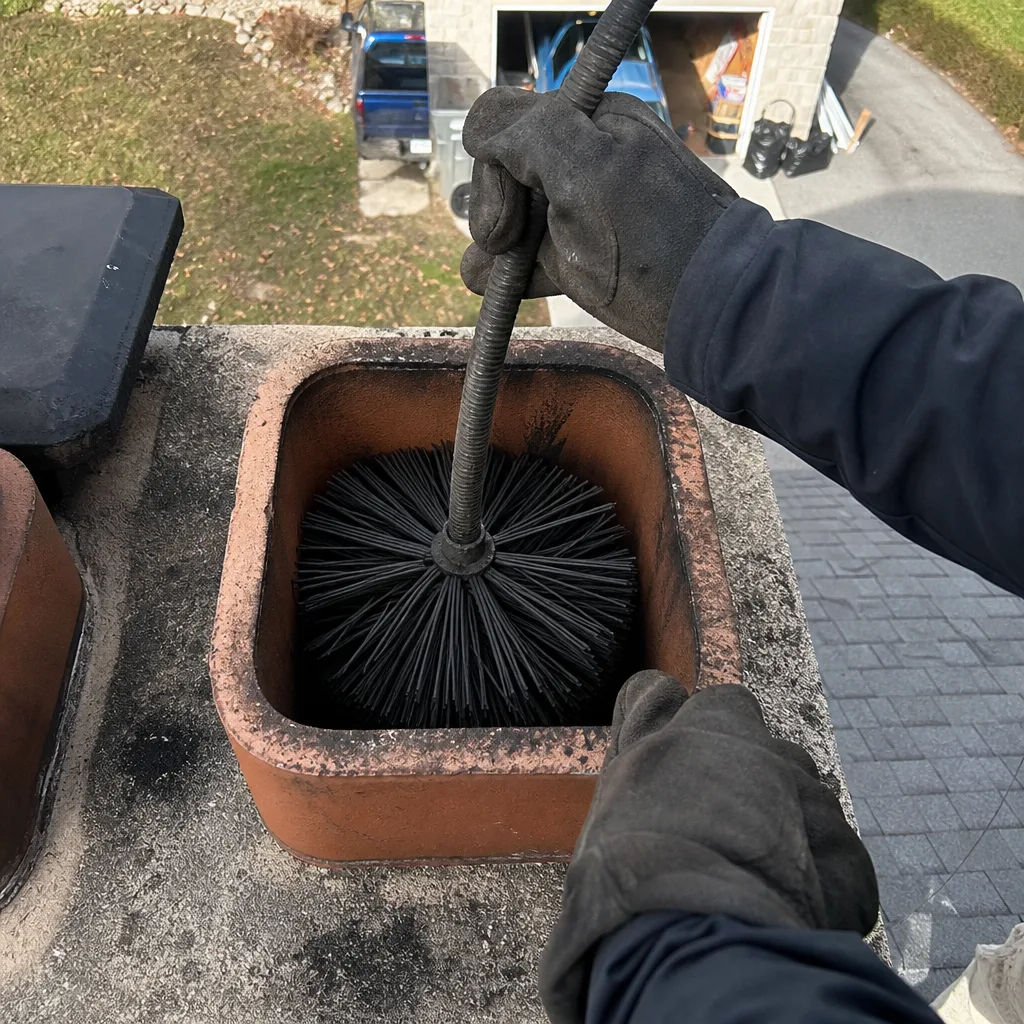
- Mechanical brush cleaning of the flue, smoke chamber, and smoke shelf. Rotary or push-pull chimney brushes sized to your flue liner dimensions – typically round liners from 6 to 8 inches in diameter or rectangular terra cotta tile liners – are worked from the top down. The smoke chamber and smoke shelf receive separate attention because soot compacts heavily in those cavities and a single pass with a brush isn’t enough.
- Vacuuming and surface wipe-down of the firebox. Once the loosened soot has dropped to the firebox floor and ash pit, we vacuum it out completely. The firebox walls and damper frame are wiped so you can see the masonry condition – and so we can photograph it accurately for your record.
- Post-cleaning documentation and written handoff. Clause 4 of the Haven Standard requires a photo record on every job. You get images of the cleaned flue liner, the smoke chamber, the firebox, and the damper – before and after where the difference is visible – along with a written summary of what was found. If the camera scan revealed anything that needs follow-up, it’s noted in writing with a separate written price, not added verbally on the way out the door.
 Before
 After
AfterSoot Removal Pricing in Haverhill
Soot removal in Haverhill runs $149 to $349 for most residential fireplaces. That range covers the camera-scan inspection, mechanical cleaning of the flue and smoke chamber, vacuuming, and the documented photo record. It is not a base rate that grows after the technician arrives.
| Scope | Typical Price Range |
|---|---|
| Standard single-flue soot removal (gas or wood, clean to lightly soiled) | $149 – $199 |
| Moderate soot accumulation with smoke chamber cleaning | $199 – $269 |
| Heavy soot with smoke shelf buildup or second fireplace | $269 – $349 |
| Soot removal with Level 2 camera inspection and full photo report | Included in all visits above |
A few things push a job toward the higher end of those ranges. Flue height matters: a three-story Haverhill Victorian with a 40-foot flue takes longer to clean than a single-story ranch on the south side of the city. Flue liner type matters too – unlined chimneys or older terra cotta tile liners that have started to spall hold soot differently than a modern stainless DuraFlex liner. And the amount of soot itself matters: a fireplace used daily through a Haverhill winter accumulates more than one used for occasional ambiance.
If you’ve already received a written estimate from another company, bring it to us. We offer a free second opinion on any written estimate, and we’ll tell you plainly whether the scope and price are fair – or whether something was missed or padded.
Call (351) 444-9705 to get a written price before any work starts. That’s not a policy we apply selectively – it’s on every job, without exception.
What Soot Does to a Chimney Over Time
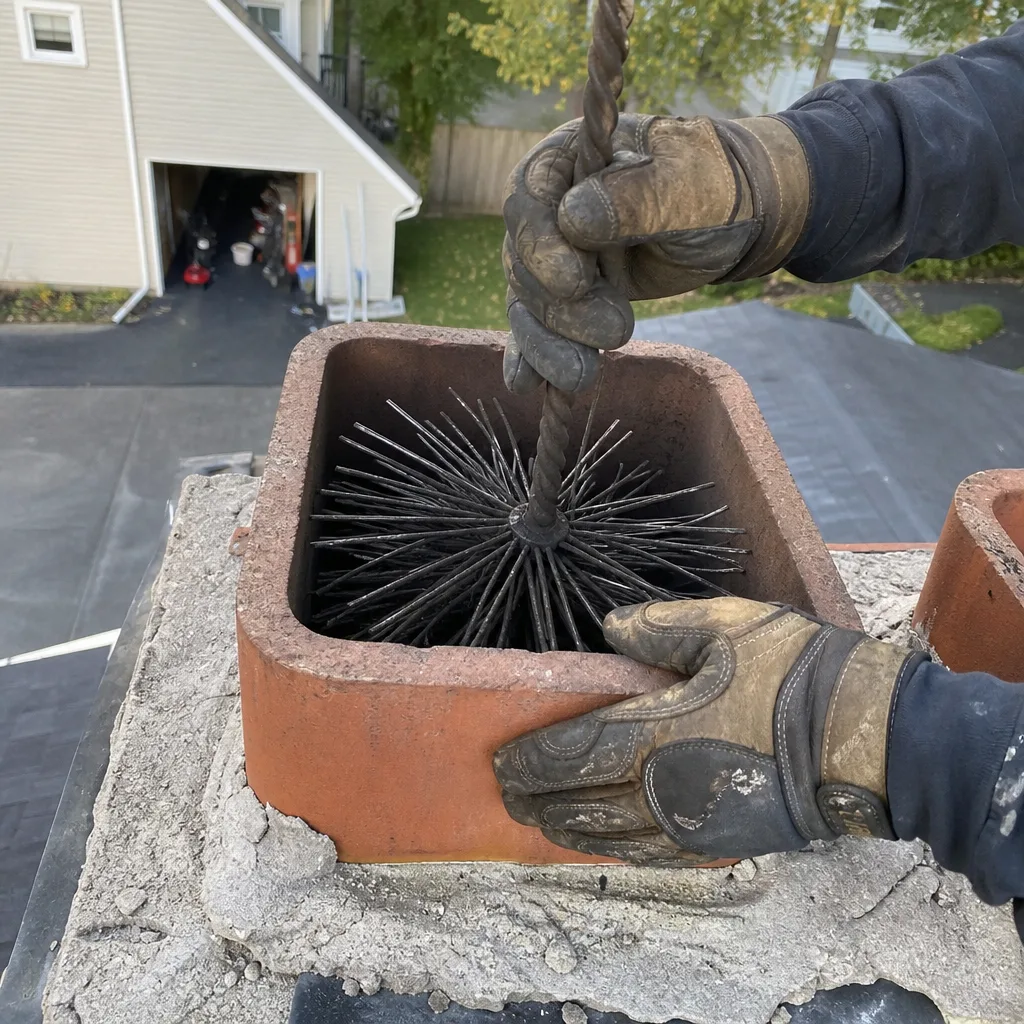
The chemistry of soot is worth understanding, not because it’s complicated, but because it explains why Annual Sweep removal matters and why “it looks fine” from the firebox opening isn’t a reliable assessment.
Soot is primarily unburned carbon particles, but it also contains sulfur compounds and water vapor that condense as the chimney cools. In the smoke chamber and lower flue – the sections of the chimney that cool fastest – those compounds combine to form a mildly acidic mixture that etches mortar joints and, in older brick chimneys, begins to soften the mortar between courses over multiple seasons. In Haverhill, where winters are genuinely cold and chimneys run through significant temperature swings from November to April, that freeze-thaw cycle accelerates the damage.
In a terra cotta tile-lined flue, which is the standard in most Haverhill homes built before 1980, soot that compresses in the tile joints can expand during a hot fire and crack the tile. The liner cracks don’t announce themselves from the firebox floor – which is exactly why the camera scan is part of every visit, not an optional upgrade. A cracked liner is a fire exposure and a carbon monoxide pathway; a clean chimney with a cracked liner is still a hazard.
Soot that migrates into the smoke shelf and smoke chamber cavity is also harder to see and harder to remove than the soot visible in the firebox. The smoke chamber in most older Haverhill masonry fireplaces is corbeled – meaning the masonry steps inward in angled courses rather than curving – and those horizontal ledges collect soot that a simple rod-and-brush run down the flue will not reach. Gelco-compatible smoke chamber parging applied after a thorough cleaning can smooth those corbeled surfaces and dramatically reduce future soot accumulation in that section.
Soot vs. Creosote: The Practical Difference
Homeowners often use “soot” and “creosote” interchangeably. They’re related but different, and the distinction affects what cleaning method is appropriate and how urgent the situation is.
Soot is the byproduct of any combustion – gas, wood, pellet – and is relatively easy to remove with mechanical brushing. Creosote is specifically a byproduct of wood combustion, formed when wood smoke condenses on the cooler surfaces of the flue before it fully vaporizes. It progresses through three classes. Class I creosote is dusty and flaky – close to soot in behavior. Class II is tar-like, sticky, and harder to remove. Class III is a dense, glazed deposit that requires chemical treatment before mechanical cleaning is possible – a safety concern that goes well beyond a brush and a vacuum.
When our camera scan identifies Class II or Class III creosote alongside soot, we note it in the written report and quote the additional work separately in writing before we proceed. We don’t make that call verbally on your porch.
FAQs – Soot Removal in Haverhill
How much does soot removal cost in Haverhill, MA?
Soot removal in Haverhill runs $149 to $349 for most residential fireplaces, with the camera-scan inspection and documented photo record included at every price point. What moves the number within that range is flue height, liner type, how much soot has accumulated, and whether the smoke chamber and smoke shelf need separate attention. You’ll have the exact written price before work begins – not after the technician is already inside. Call (351) 444-9705 and we’ll give you a straight number.
Is soot dangerous, and how quickly does it need to be removed?
Soot itself is not an immediate fire hazard the way Class III creosote is, but it’s not harmless either. Over time, soot’s acidic components corrode mortar joints and terra cotta tile liners. In a cracked flue, soot particles and combustion gases can enter living spaces – a carbon monoxide risk that’s invisible and odorless. NFPA 211 recommends inspection and cleaning annually for any chimney in regular use; in Haverhill, where heating season runs roughly October through April, that means once per year at minimum. If your firebox shows heavy accumulation or you’re noticing smoke smell after fires are out, don’t wait for the annual window – call and get it looked at.
Can I remove soot myself, or does it need a professional?
The firebox face and the visible portions of the firebox walls can be wiped down by a homeowner with a dry chemical sponge – available at most hardware stores. But cleaning the smoke chamber, smoke shelf, and flue liner is not a DIY job. The smoke shelf alone, which sits just above the damper, can hold a surprisingly large volume of compacted soot that drops straight into the firebox opening if disturbed without proper containment. More to the point, mechanical brushing without a camera scan first means you’re cleaning a flue whose liner condition you don’t know. A professional cleaning with a camera record tells you whether the liner is intact – which is the actual safety question behind the cleaning.
Does soot removal include a chimney inspection?
At Level Two Chimney Haverhill, yes – every visit includes a camera-scan inspection of the flue liner under NFPA 211 Level 2 standards and a documented photo record under Haven Standard Clause 4. That’s not a separate add-on billed after the fact; it’s part of what the written price covers. Some companies offer a “flashlight inspection” as their standard – a visual check from below that can’t see liner condition through a sooted flue. We made camera documentation the default starting in 2009 because a clean-looking flue from the firebox can have cracked tiles or mortar failures that only a camera reveals. If you’d like to learn more about what a full cleaning visit includes, visit our home page or read about our complete Chimney Cleaning & Sweep in Haverhill service.
Key Takeaways
- Soot removal in Haverhill runs $149 to $349, with a written price delivered before work starts on every job.
- Every visit includes an NFPA 211 Level 2 camera scan and a documented photo record – not an optional upgrade.
- Soot in the smoke chamber and smoke shelf is not visible from the firebox opening and requires professional tools to remove safely.
- Annual cleaning is the NFPA 211 standard for any chimney in active use; Haverhill’s long heating season makes that timeline realistic, not conservative.
- All work is backed by the 365-Day Done Right Promise. If it’s not done right, we make it right.
- A free second opinion is available on any written estimate from a competitor – bring it in and we’ll give you a plain assessment.
Schedule Soot Removal in Haverhill
If you’re in Haverhill and your firebox is showing soot buildup, call (351) 444-9705 for a free written estimate. Corrine Halstead’s team at Level Two Chimney Haverhill answers live around the clock – no voicemail, no web form queue. You’ll get a written price before anyone starts, a camera record of the flue when it’s done, and the 365-Day Done Right Promise on every invoice. That’s what 38,000-plus completed jobs looks like in practice.
Written by Corrine Halstead, Owner at Level Two Chimney Haverhill, serving Haverhill. Looking for Chimney Cleaning & Sweep Near Me in Haverhill, MA?