
Last updated September 22, 2026
Level 1 sweep and inspection to the NFPA 211 annual standard - flue, crown, cap, and flashing checked and photographed
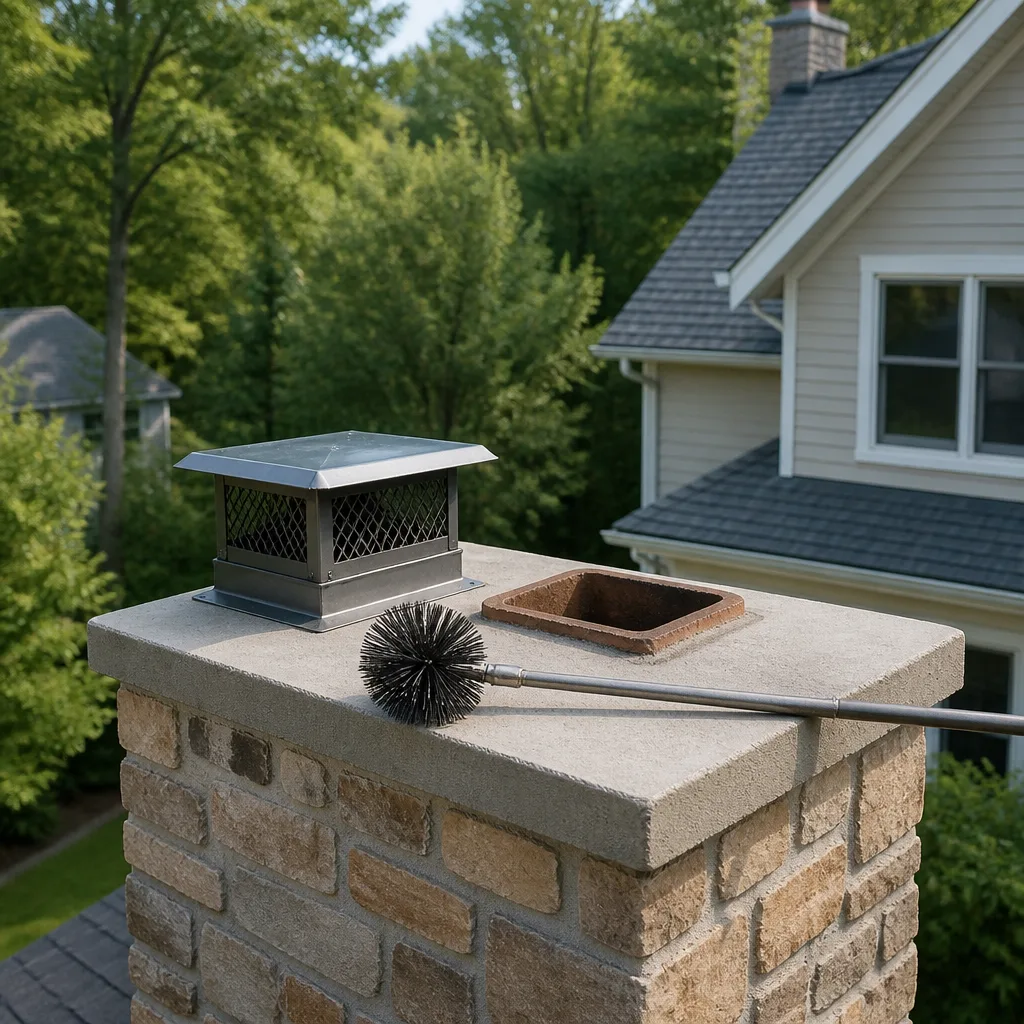
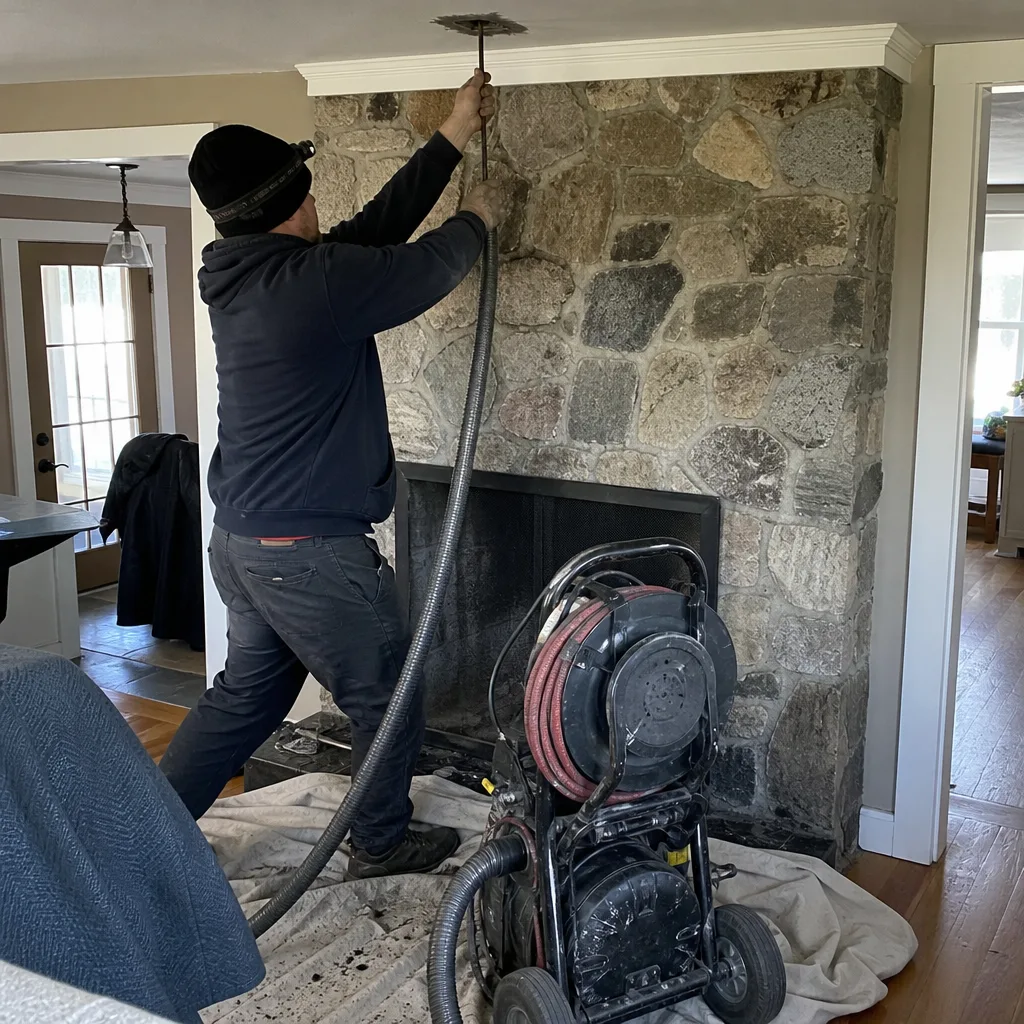
Chimney sweep logs do not sweep chimneys. They loosen some creosote - which then falls where a brush and vacuum still have to collect it.
 Before
 After
After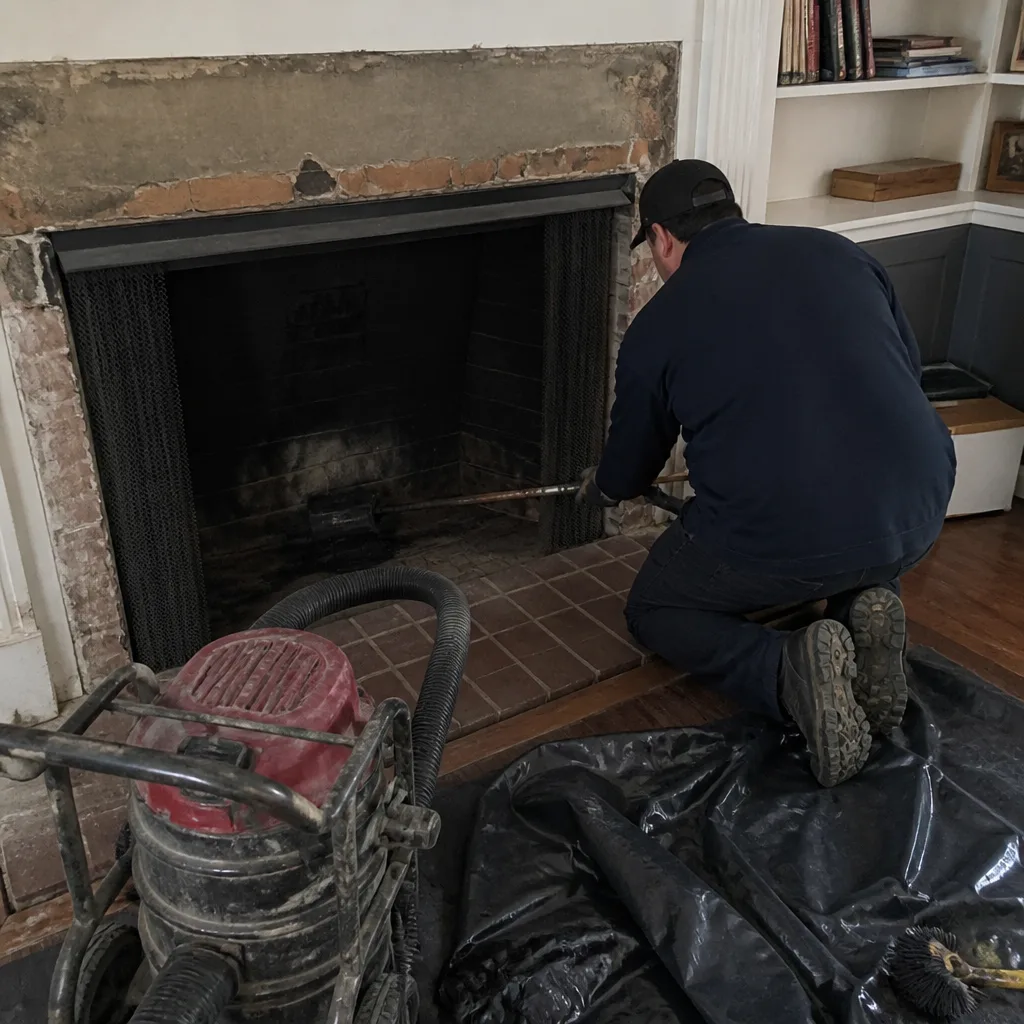 Before
 After
After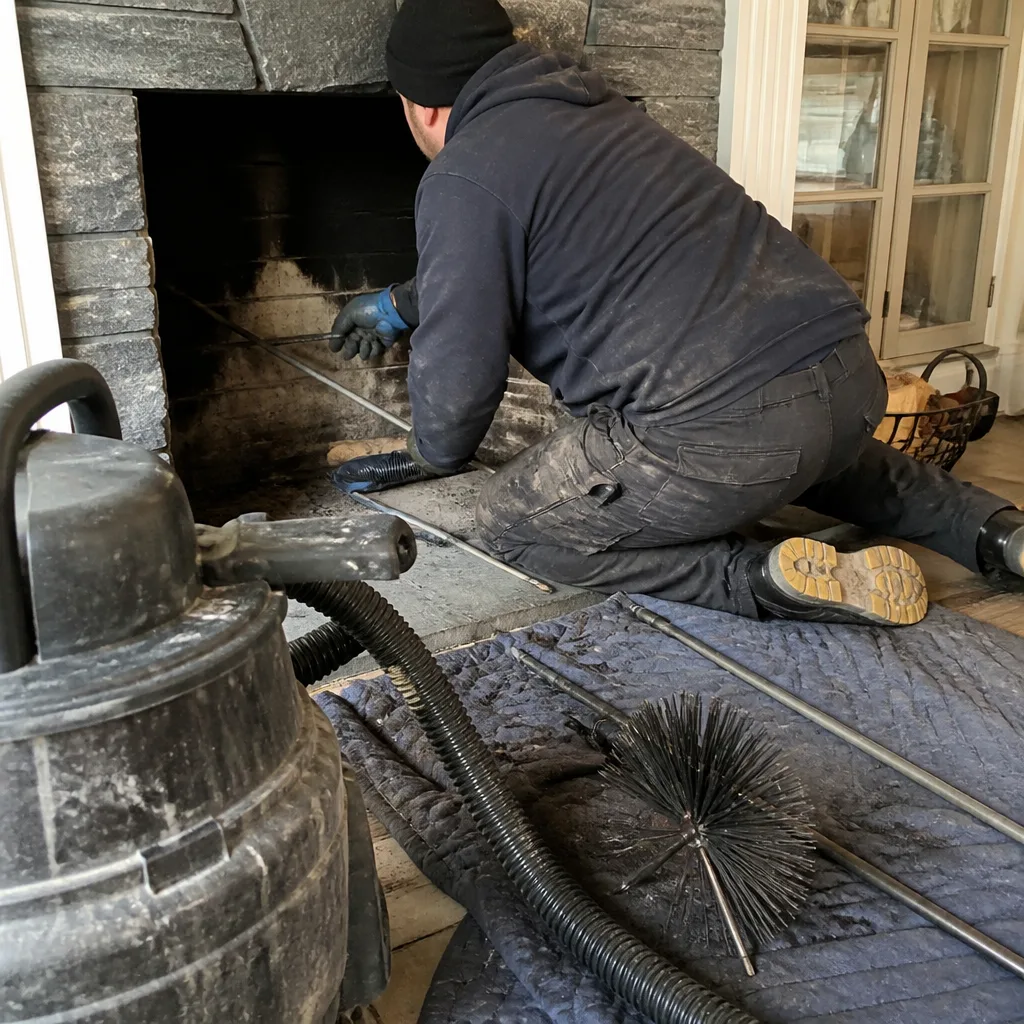 Before
 After
AfterSeasonal Chimney Cleaning Care for Haverhill: Year-Round Homeowner’s Guide
Scheduling your chimney cleaning in October puts you behind 60% of Haverhill’s fireplace owners fighting for the same two-week window - and the sweep who’s overbooked doesn’t bring the camera. We’ve been doing this in Haverhill since 2009, and the pattern never changes: fall appointments get rushed, spring appointments get documented. This guide maps what your flue actually experiences through freeze-thaw cycles, nesting season, and the hidden window when a Level 2 inspection with full camera documentation is genuinely available. You’ll learn when to book, what to watch for each season, and how to read whether your sweep is inspecting or just sweeping. For Chimney Cleaning & Sweep Maintenance Checklist for Haverhill Homeowners, see our detailed seasonal breakdown.
Quick Answer
The best chimney care schedule in Haverhill is: Level 2 camera inspection in April-May after winter damage is visible but before nesting season; crown and cap repairs in June-August during dry weather; cleaning completed by early September if you burn regularly; and mid-winter checks only when you notice performance changes or after weather events. A documented photo record from each season builds a timeline that makes damage patterns legible and supports insurance claims.
Table of Contents
- Spring (April-May): The Inspection Window That Matters
- Summer (June-August): Crown, Cap, and Early Intrusion
- Fall (September-October): The Overbooked Trap
- Winter (November-March): Freeze-Thaw and Mid-Season Monitoring
- Building Your Documented Inspection Record
- What Seasonal Chimney Care Costs in Haverhill
- Common Mistakes to Avoid
- When to Call a Professional
- Frequently Asked Questions
- The Bottom Line
 Before
 After
AfterSpring (April-May): The Inspection Window That Matters
Most Haverhill homeowners think fall is chimney season. They’re wrong about what’s most important.
April and May are the best months for a Chimney Cleaning & Sweep in Haverhill that includes a proper NFPA 211 Level 2 inspection. Here’s why this window is different from the rest of the year.
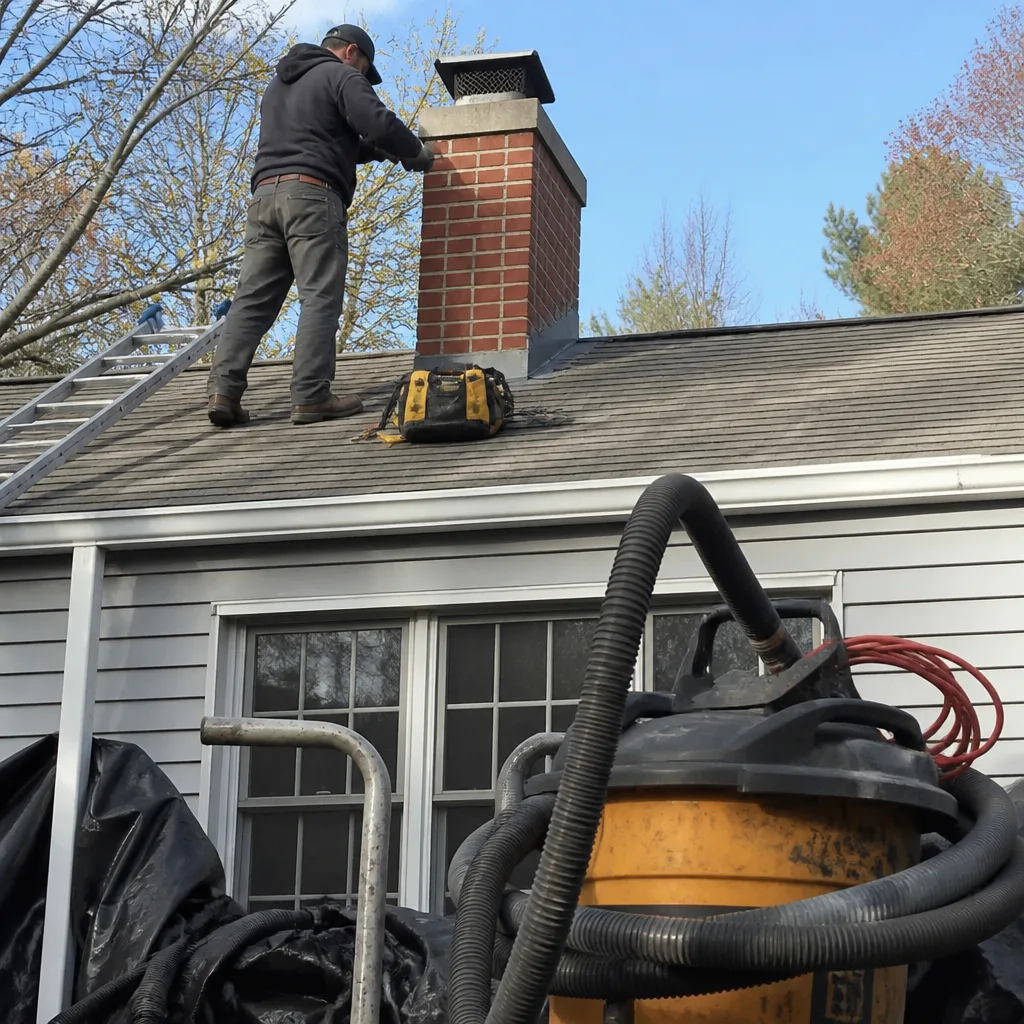
Winter damage is fresh and visible. Haverhill’s freeze-thaw cycle runs hard from January through March. Water enters hairline cracks in the crown or mortar joints, expands when it freezes, and widens those cracks with each cycle. By April, the damage is exposed but hasn’t been hidden by summer dust or fall debris. We can photograph spalling brick (surface flaking caused by water expansion), crown separation, and liner displacement with clear context. In October, that same crack might be six months older and harder to date.
Nesting season hasn’t peaked. Swifts, squirrels, and raccoons in the Merrimack Valley typically start active nesting in late May. An April inspection finds last year’s nesting remnants before new occupants block access. If we find animal damage to the cap or flue, there’s time to source materials and schedule repairs before summer heat makes crown work difficult.
Crews have time for documentation. This is the practical reason that matters most. In April, our technicians are running two to three jobs per day. In October, that number hits five or six. The camera goes down the flue on every job regardless - Clause 4 of the Haven Standard requires it - but in spring there’s time to review footage with the homeowner, explain what the images show, and write a detailed scope. In fall, that conversation gets compressed into “looks fine, sign here.”
What we check in spring:
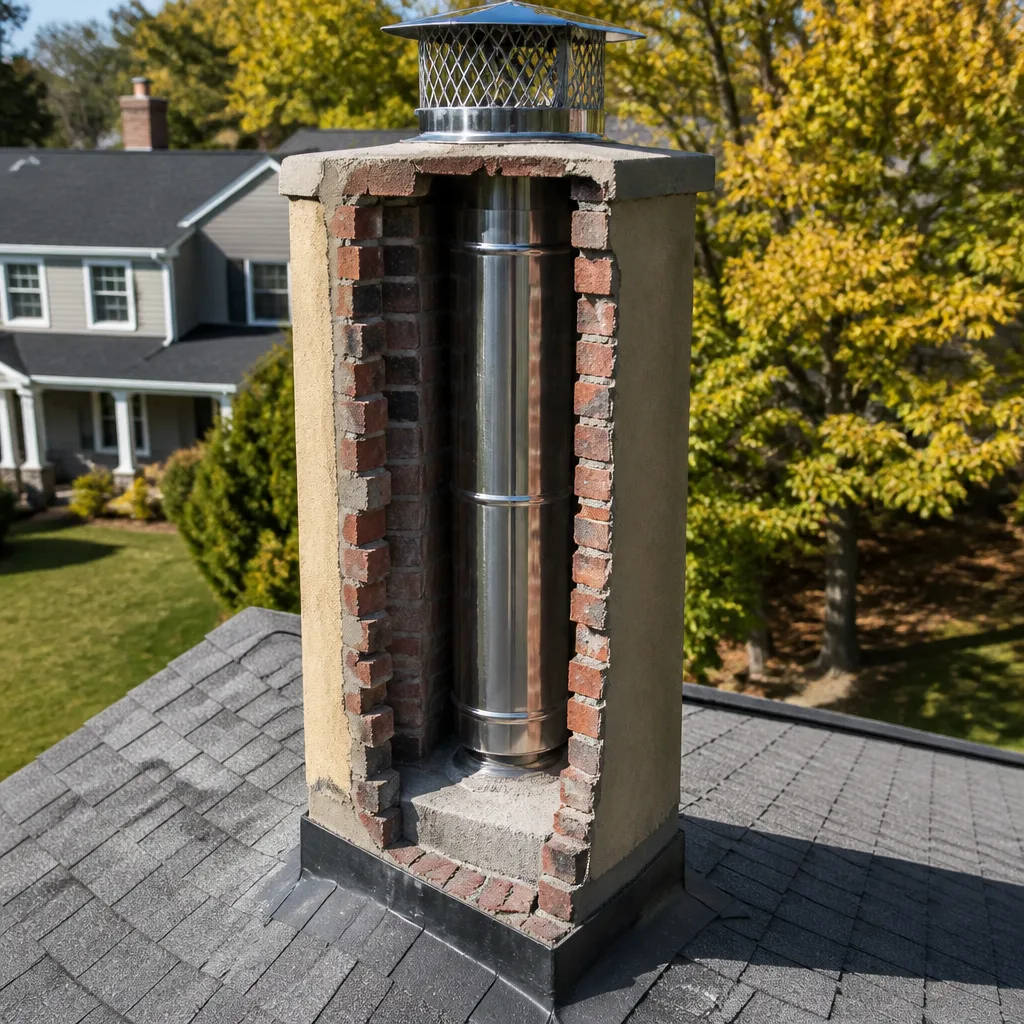
- Flue liner condition - looking for shifting, cracking, or corrosion from acidic condensation
- Crown integrity - checking for ponding, separation from the flue tile, or alligator cracking
- Smoke chamber - the area above the firebox and below the flue, often the most neglected space
- Exterior masonry - spalling, mortar joint erosion, and water staining patterns
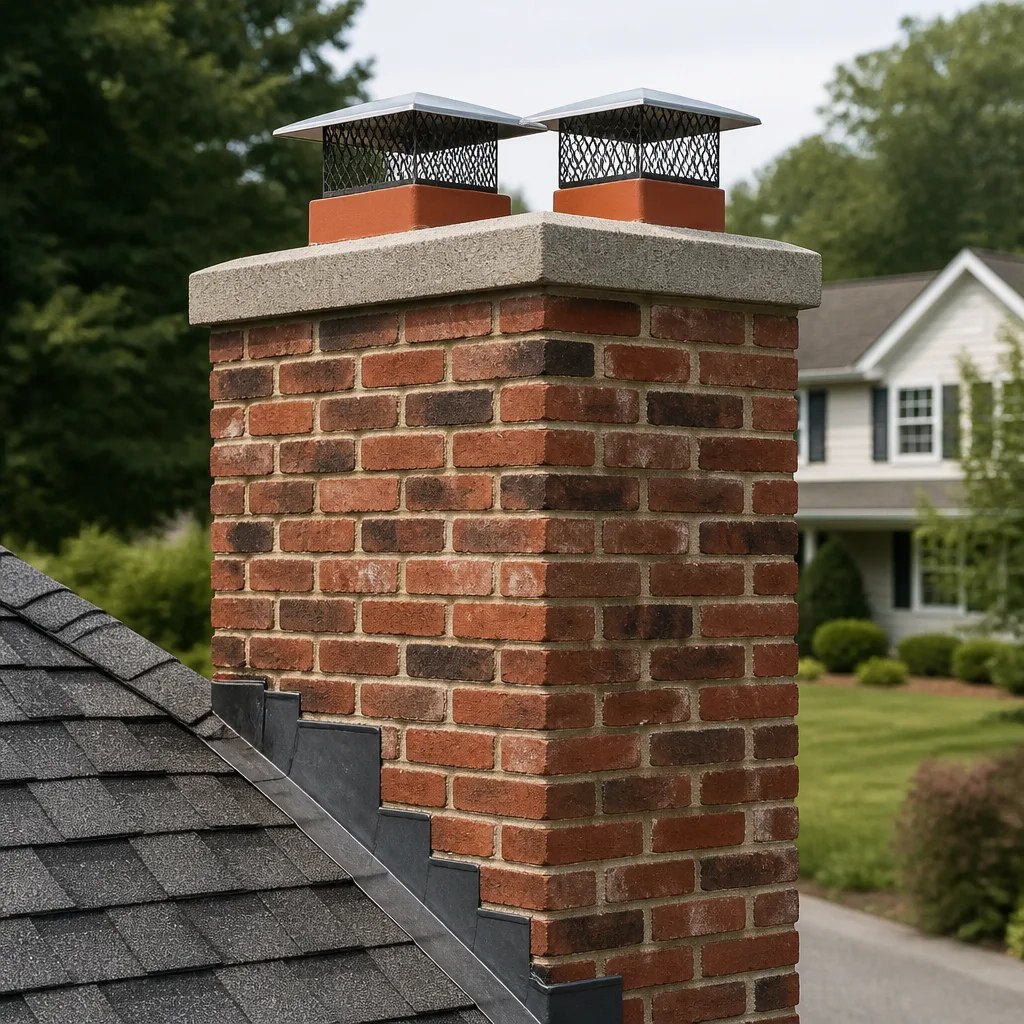
- Cap and spark arrestor - mesh condition, fastener integrity, proper overhang
- Firebox and damper - checking for cracked refractory panels or damper misalignment
Spring is also when we find the damage that Haverhill’s older housing stock hides well. Homes built between 1880 and 1940 in neighborhoods like Mount Washington and Ayers Village often have unlined chimneys or clay tile liners installed in the 1970s that are reaching end of service. A spring inspection gives you the full summer to plan liner replacement if needed, rather than discovering the problem when temperatures drop.
Summer (June-August): Crown, Cap, and Early Intrusion
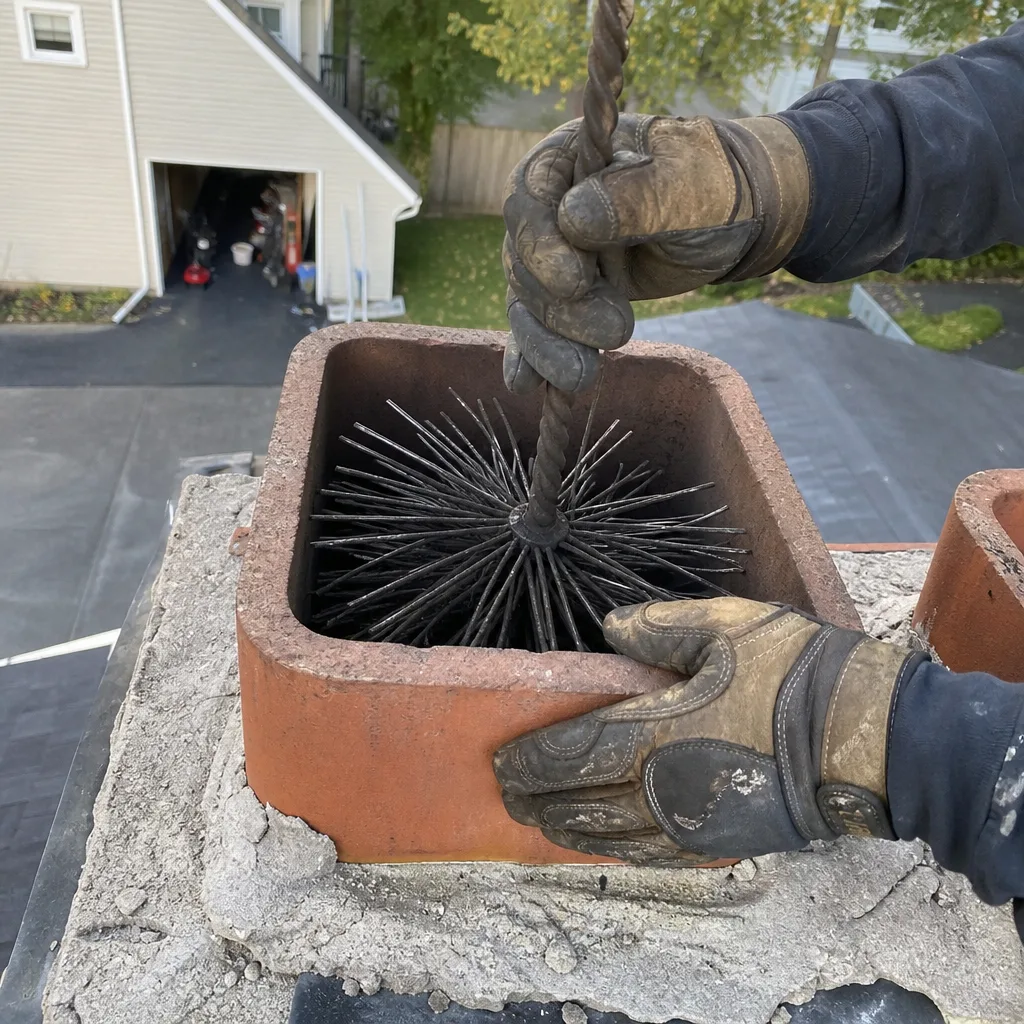
Summer is maintenance season, not inspection season - but only if you did the inspection in spring.
The work that should happen now is exterior and preventive. Haverhill’s summer humidity averages 70% in July, and afternoon thunderstorms are common. This is when crown sealant cures properly, when masonry repairs set without freeze risk, and when you can still catch animal intrusion before it becomes a full nest.
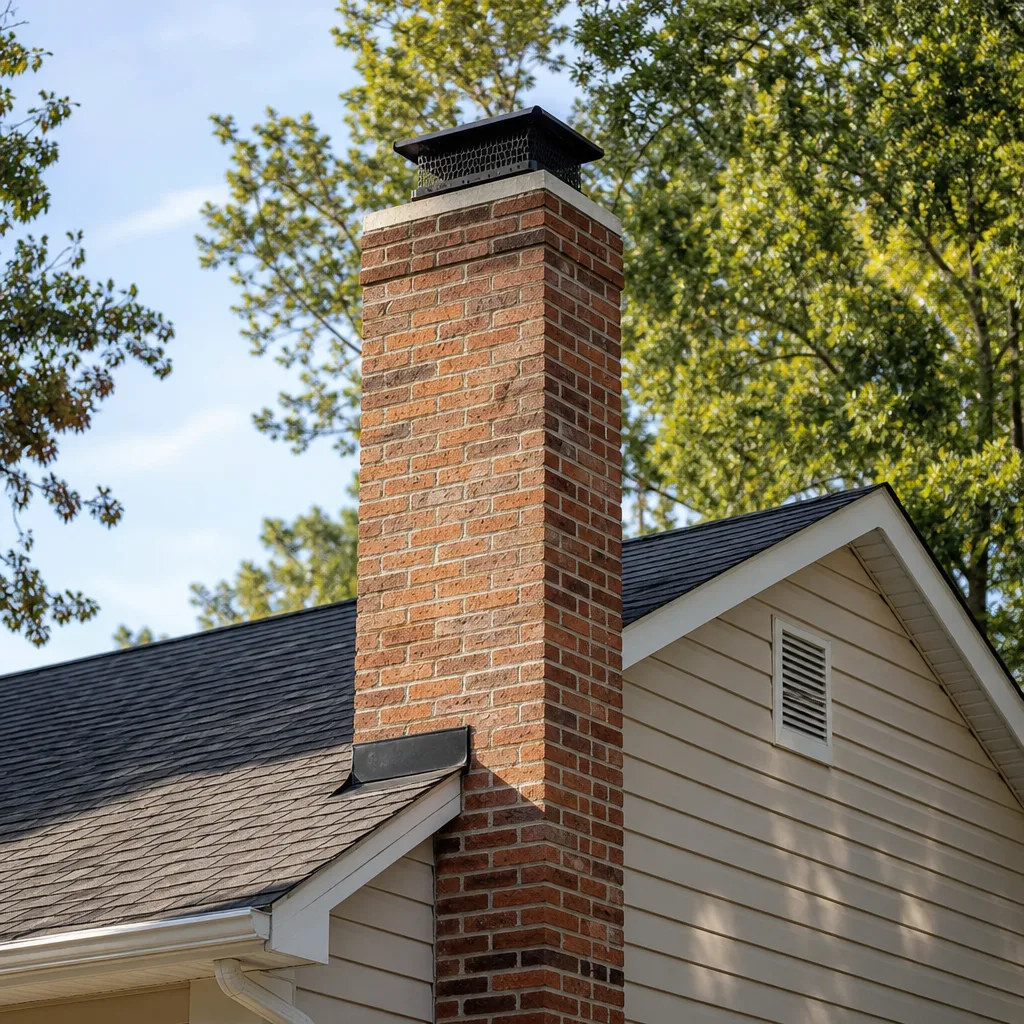
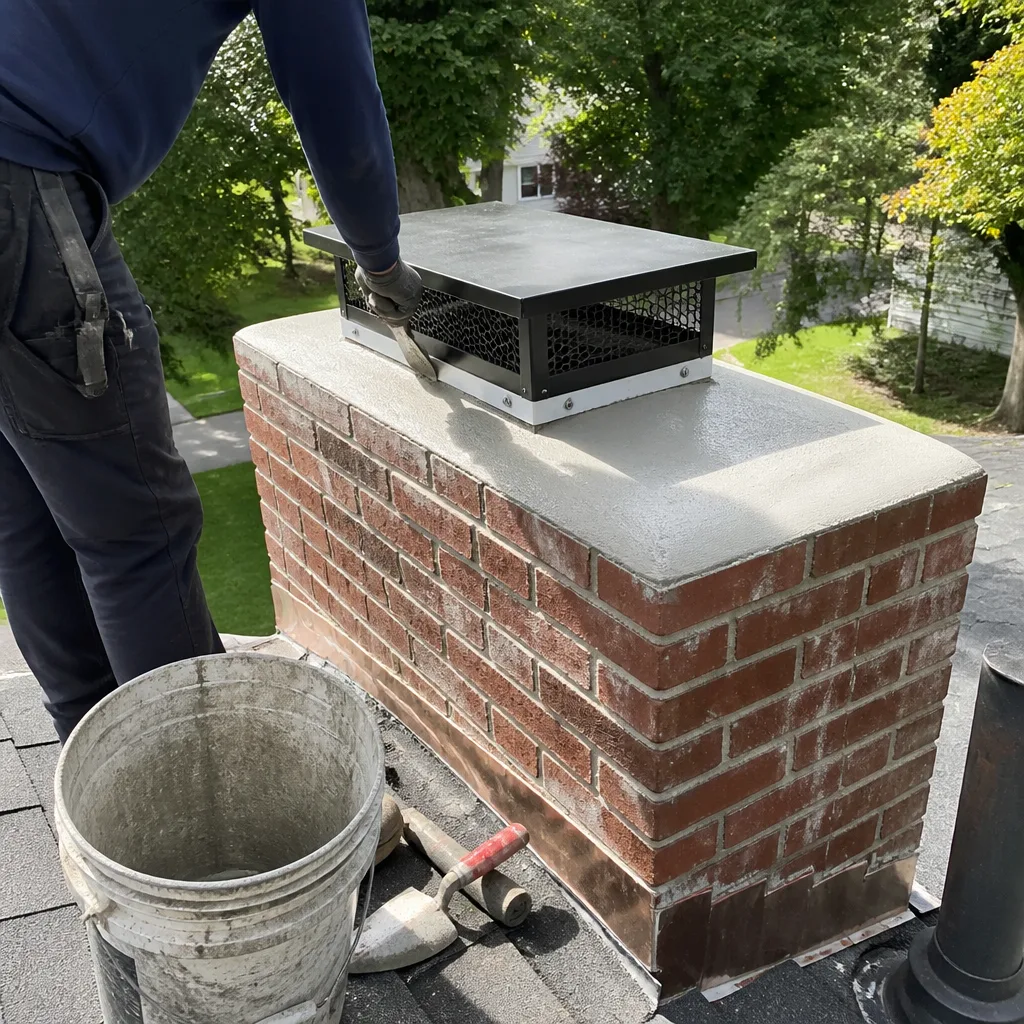
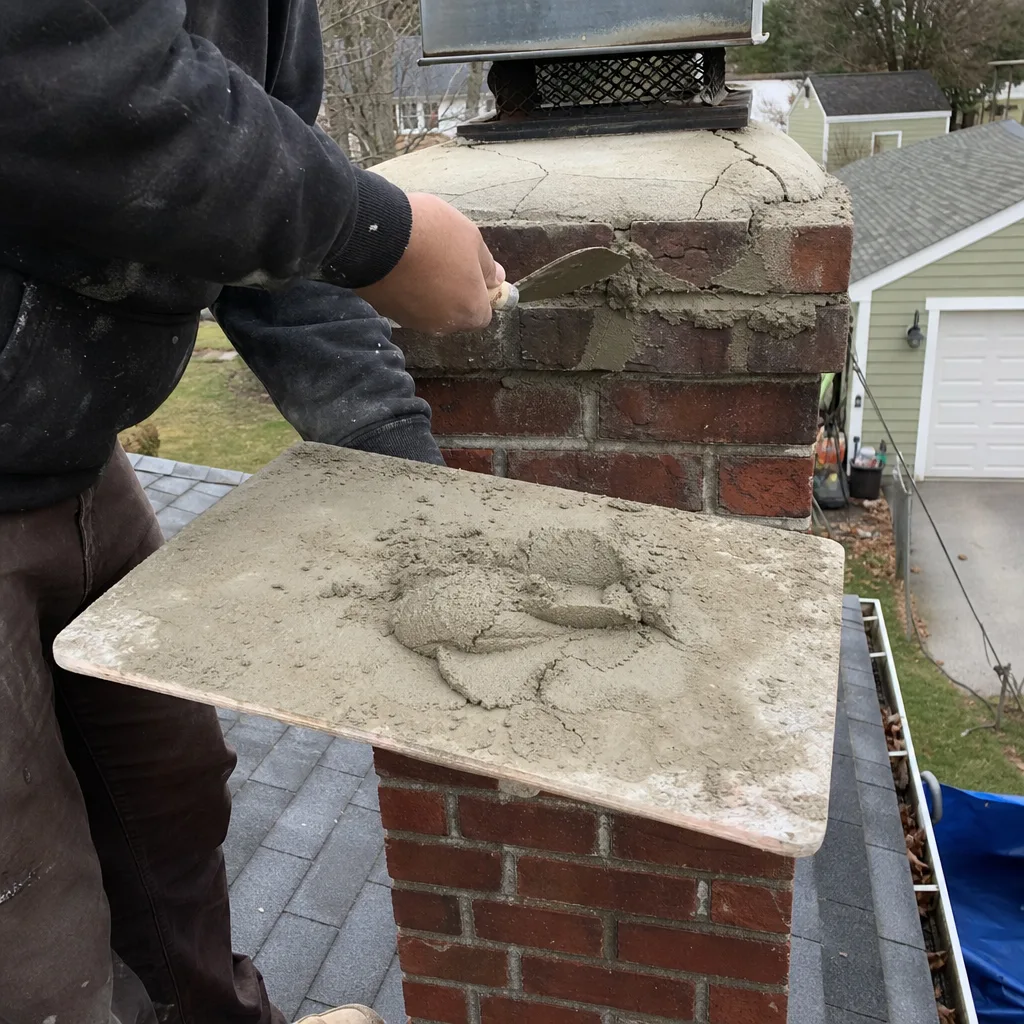
Crown and cap priorities. The crown is the concrete or mortar slab that tops your chimney, sloped to shed water. In Haverhill, we’ve found that crowns installed without proper overhang - the drip edge that keeps water from running down the masonry - fail in 7 to 10 years instead of 20. Summer is when we apply crown sealant products like those from HeatShield or replace deteriorated crowns entirely. The material needs 48 to 72 hours of dry weather to cure, which June and July reliably provide.
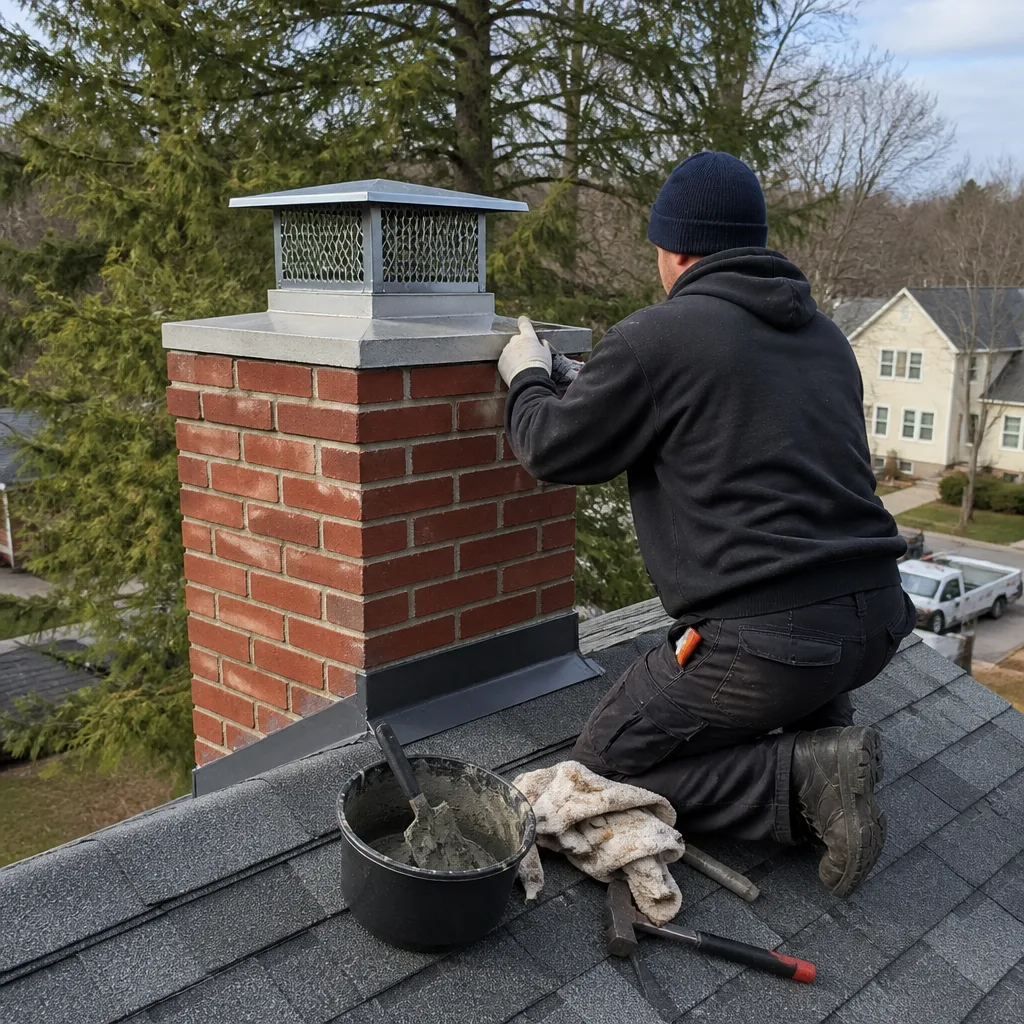
Cap function is more than keeping rain out. A proper cap with mesh sides keeps animals out while allowing exhaust to escape. In Bradford and the Rings Island area, we see more squirrel and raccoon intrusion than in denser neighborhoods because of tree canopy proximity. The cap mesh should be 5/8-inch for most applications - small enough for squirrels, large enough that creosote flakes don’t clog it.
What to monitor yourself in summer:
- Visible debris on the cap or around the chimney top - early sign of animal activity
- Water stains on interior walls near the chimney breast - cap or crown failure
- Musty odor when you open the damper - moisture accumulation, possible liner breach
- Efflorescence (white powder) on exterior brick - water moving through masonry, carrying salts
Summer is also the right time for Chimney Repair in Haverhill that was identified in spring. Masonry repointing, crown replacement, and cap installation all need dry conditions. If your spring inspection found Class III creosote - the hardened, tar-like accumulation that can’t be brushed out - summer is when we schedule chemical treatment or mechanical removal with proper ventilation time.
One pattern we’ve seen consistently: homeowners who skip spring inspection and wait for “chimney weather” in fall end up needing emergency repairs in November, when crown sealant won’t cure below 50 degrees and masonry work requires tenting and heating. The summer window isn’t optional for certain repairs. It’s the only practical time.
Fall (September-October): The Overbooked Trap
Everyone wants their chimney cleaned in October. That’s the problem.
In Haverhill, the first sustained cold snap typically hits in mid-October. Local hardware stores put firewood on display. Neighbors start burning. Suddenly every sweep in Essex County is booked three weeks out, and the quality of work predictably degrades.
How to tell if your fall quote was rushed. A proper chimney cleaning and inspection quote in Haverhill should include: the scope of work (sweep, inspection, or both), the inspection level (Level 1 visual or Level 2 camera), and a written price before anyone arrives. If you’re quoted over the phone without asking about appliance type, chimney height, or last service date, the price will change when the tech arrives - or worse, it won’t change and the scope will shrink to match.
Corners that get cut in peak season:
- Camera skipped - “we can see enough with a flashlight” - violating NFPA 211 Level 2 requirements
- No photo record - nothing to compare next year against
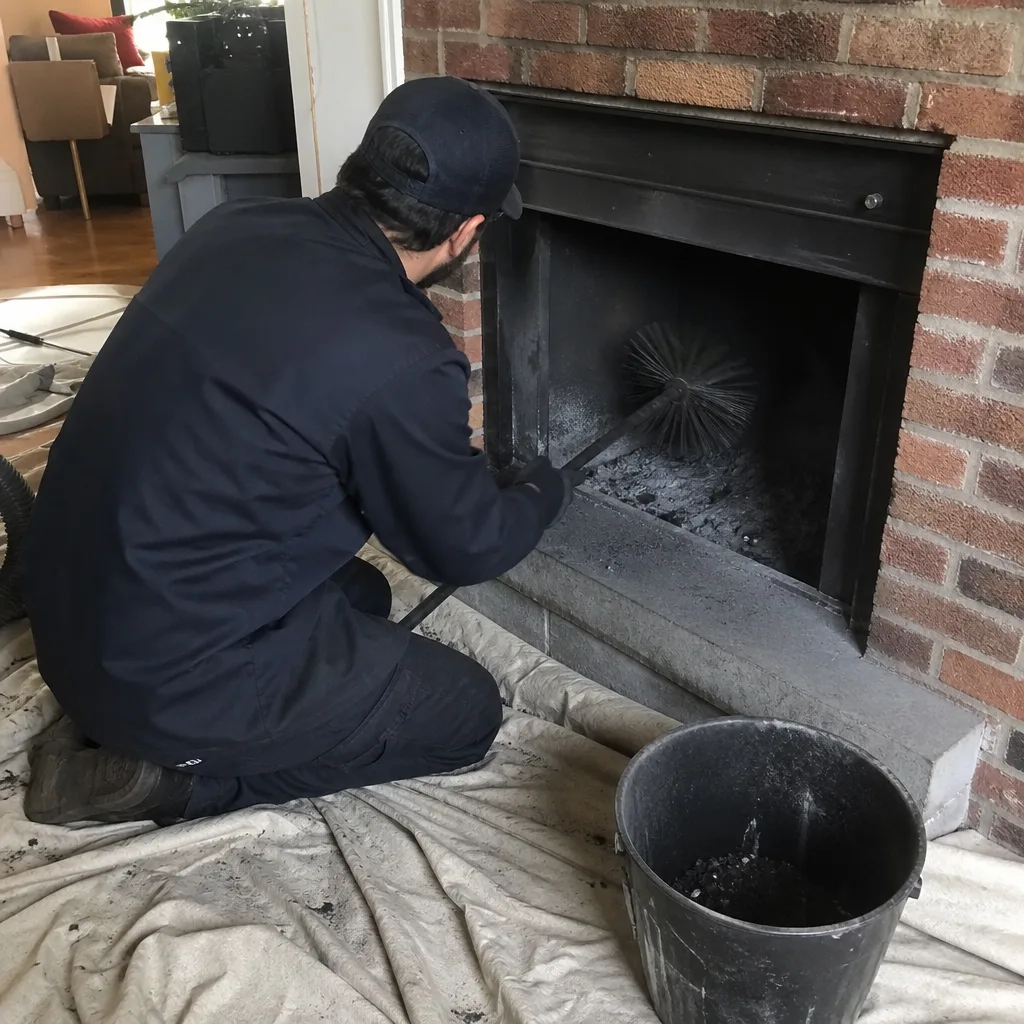
- Rushed cleaning - brush run through quickly, smoke chamber untouched, no debris removal from smoke shelf
- Deferred recommendations - damage noted verbally but not documented, so there’s no record for next season
- Vague scope - “chimney sweep” with no specification of what appliances are covered
If you must book in fall, book before Labor Day. Early September appointments in Haverhill still have reasonable availability, and the crew isn’t running on overtime hours yet. By Columbus Day, you’re in the surge.
The Haven Standard in fall: Clause 1 requires a written price, written scope, and written warranty before work starts. This matters most when everyone’s rushed. If a sweep can’t produce these three documents before scheduling, you’re not getting a documented inspection - you’re getting a brush run-through and a receipt.
We’ve completed more than 38,000 chimney inspections and cleanings since 2009, and the pattern is consistent: the fall jobs with callback issues are almost always the ones booked after October 15, when the technician’s fifth job of the day is your chimney at 6 PM in failing light.
Winter (November-March): Freeze-Thaw and Mid-Season Monitoring
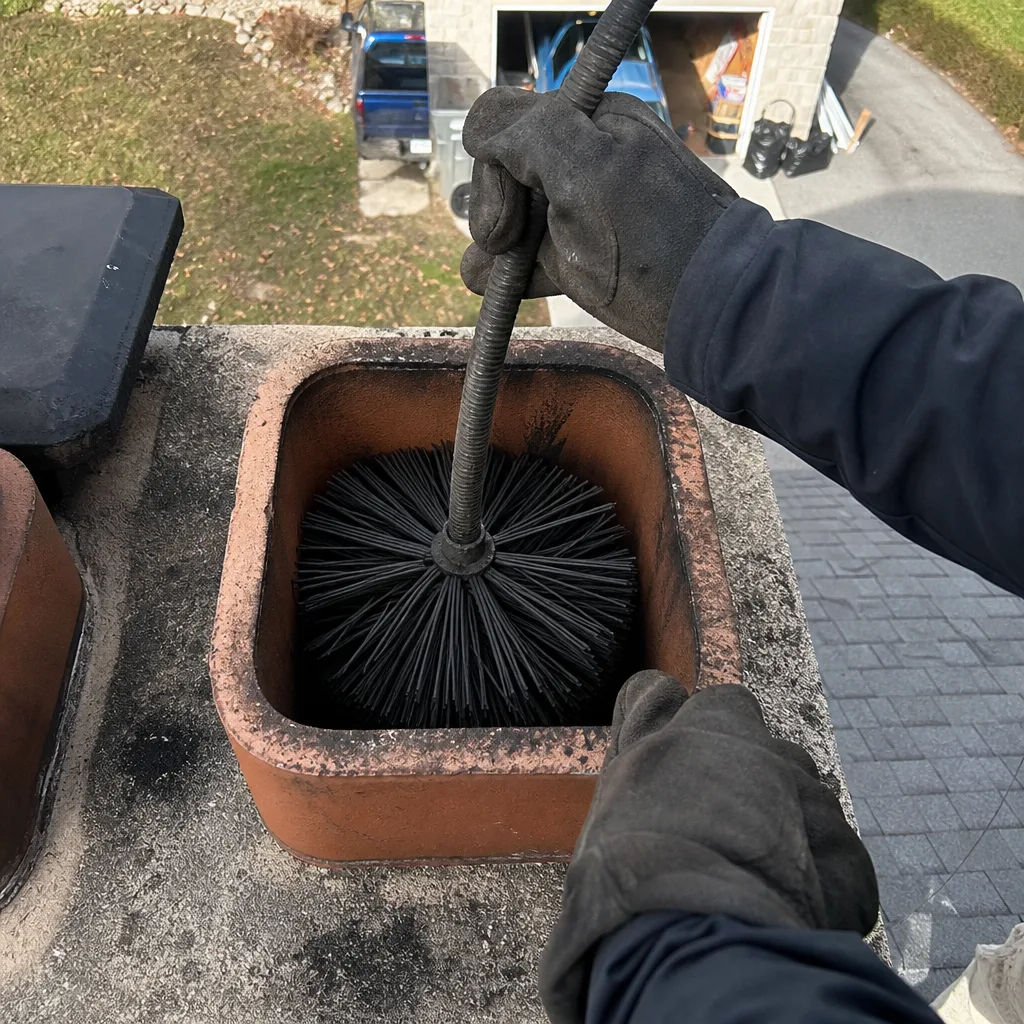
Haverhill’s winter chimney damage doesn’t happen in one storm. It accumulates across 40 to 60 freeze-thaw cycles, and the worst of it is invisible from the ground.
The Merrimack Valley averages 25 to 35 nights below 20°F each winter. Each time moisture in the masonry freezes, it expands about 9%. That expansion forces cracks wider, loosens mortar, and displaces flue tiles. When it thaws, water penetrates deeper. By March, a hairline crack from November can be a structural gap.
What to watch during burning season:
- Draft changes - smoke lingering in the firebox, difficulty starting fires, or smoke smell when the damper is closed
- New exterior staining - dark streaks on brick indicate water penetration; white efflorescence means water is moving through and evaporating
- Crown debris after storms - pieces of concrete or mortar on the roof mean crown deterioration
- Unusual sounds - clicking or popping can be liner expansion cracks opening and closing with temperature
When mid-winter inspection is warranted:
Most chimneys don’t need winter intervention. But certain conditions justify a call: after a chimney fire (indicated by sudden loud roaring, visible flames in the flue, or warped metal components); after significant ice dam or roof damage that may have affected the chimney structure; or when draft problems persist despite proper fuel and technique.
We don’t perform full cleanings in active winter weather - it’s unsafe for technicians and ineffective for creosote removal. But we do conduct emergency inspections with camera documentation when safety is in question. The photo record from that winter visit becomes part of your documented timeline, showing whether damage existed before or after a specific weather event.
In neighborhoods like Riverside and Groveland Street corridors, where homes sit closer to the Merrimack River, we see more freeze-thaw acceleration from higher ambient moisture. The river effect means these chimneys experience more cycles at the critical 28 to 32°F range where water freezes and thaws repeatedly in a single day.
Fireplace Services in Haverhill during winter should focus on safe operation, not major repair. Keep the damper fully open until ashes are cool. Burn only seasoned hardwood - moisture content below 20% - to minimize creosote formation. And if you didn’t get a spring or fall inspection, schedule one for April. Don’t wait for next October.
Building Your Documented Inspection Record
A single inspection tells you what your chimney looks like today. A series of documented inspections tells you how it’s changing - and that timeline has real value.
Since 2009, we’ve maintained photo records on every job under Haven Standard Clause 4. Not as an upgrade. As standard practice. Here’s what that documentation should include and why it matters beyond the immediate repair decision.
What proper documentation contains:
- Pre-work photos - exterior condition, firebox, damper position, any visible damage
- Camera footage - full flue scan from top to bottom, with timestamp and technician notation
- Post-cleaning photos - same angles as pre-work, showing change
- Written scope - what was done, what was found, what was recommended and why
- Written price - what you paid, with line items
- Written warranty - what is guaranteed and for how long
How documentation protects you. Insurance claims for chimney damage require evidence of pre-existing condition and maintenance history. A documented record showing annual inspections with no noted crown damage, followed by sudden spalling after a specific storm, supports a claim. A record showing no inspection for five years does not.
We’ve seen this work directly for Haverhill homeowners. In 2022, a customer in the Highlands neighborhood had documented photos from 2019, 2020, and 2021 showing progressive crown cracking. When ice dam damage in February 2022 accelerated the failure, the insurer covered full crown replacement because the timeline established that maintenance had been performed and the damage was sudden, not neglected.
Without that record, the same insurer would have classified it as long-term maintenance failure and denied the claim.
The documented record also prevents unnecessary work. When a new sweep recommends immediate liner replacement, your previous year’s photos show whether the “critical crack” existed then or is new. Corrine Halstead reviews every recommendation our team makes against prior documentation - if we can’t show change, we don’t recommend action.
What Seasonal Chimney Care Costs in Haverhill
Price transparency is Clause 1 of the Haven Standard. Here’s what seasonal chimney services cost in the Haverhill market, based on our 38,000+ jobs since 2009. For a detailed breakdown, see our Chimney Cleaning Cost Breakdown: The Haverhill Homeowner’s Reference for 2026.
| Service | Typical Range | Best Season | Notes |
|---|---|---|---|
| Level 1 Cleaning & Basic Inspection | $199-$279 | Any | Visual inspection, brush cleaning, debris removal |
| NFPA 211 Level 2 Inspection with Camera | $299-$449 | Spring (April-May) | Includes photo record, written scope, flue scan |
| Crown Sealant Application | $350-$650 | Summer (June-August) | Requires 48-72 hours dry cure time |
| Crown Rebuild | $1,200-$2,400 | Summer | Formed concrete with proper overhang and drip edge |
| Cap Replacement (standard mesh) | $285-$495 | Spring or Summer | Stainless steel, proper sizing for flue count |
| Class III Creosote Removal | $450-$850 | Spring or Summer | Chemical treatment or mechanical rotary removal |
| Flue Liner Repair (HeatShield) | $1,800-$3,500 | Summer | Ceramic resurfacing system, requires cure time |
| Full Stainless Liner (DuraFlex) | $2,800-$5,500 | Summer | Insulated, sized to appliance, with lifetime warranty |
These ranges reflect Haverhill’s market specifically - Essex County labor rates, material costs through our Haven buying network with DuraFlex, HeatShield, and Gelco, and the typical chimney configurations in local housing stock (mostly 1.5 to 2.5 story, masonry construction, 6- to 8-inch flues).
We deliver a written price before any work starts - always, on every job, no exceptions. Not an estimate that changes. A written price with a written scope and written warranty. If you have a competitor’s written quote, we provide a Free Second Opinion.
Common Mistakes to Avoid
- Booking in October without prior inspection. You join the surge, get rushed service, and miss the documentation that would have caught spring damage. In Haverhill, this is the single most expensive scheduling error homeowners make.
- Accepting a “cleaning” without specifying inspection level. A brush run-through with a flashlight look is not NFPA 211 Level 2. You need camera documentation to know your liner condition.
- Ignoring summer animal signs. Scratching sounds in June become a blocked flue in November. A $285 cap replacement in July prevents a $600 emergency call in January.
- Assuming new home purchase inspection covered the chimney. Standard home inspections in Massachusetts include a Level 1 visual from the bottom. They do not include camera documentation of the flue liner, which is where the dangerous damage hides.
- Skipping documentation to save $50. The photo record from this year’s visit is what proves next year’s damage is new. Without it, every problem looks like long-term neglect to insurers and buyers.
- Burning unseasoned wood to “save money.” Wood with moisture above 25% creates Class III creosote rapidly. In Haverhill’s cold snaps, that creosote can ignite. Seasoned hardwood costs more per cord but burns cleaner and safer.
- Waiting for visible exterior damage before calling. By the time you see spalling brick from the ground, water has been penetrating for multiple freeze-thaw cycles. The interior damage is already advanced.
When to Call a Professional
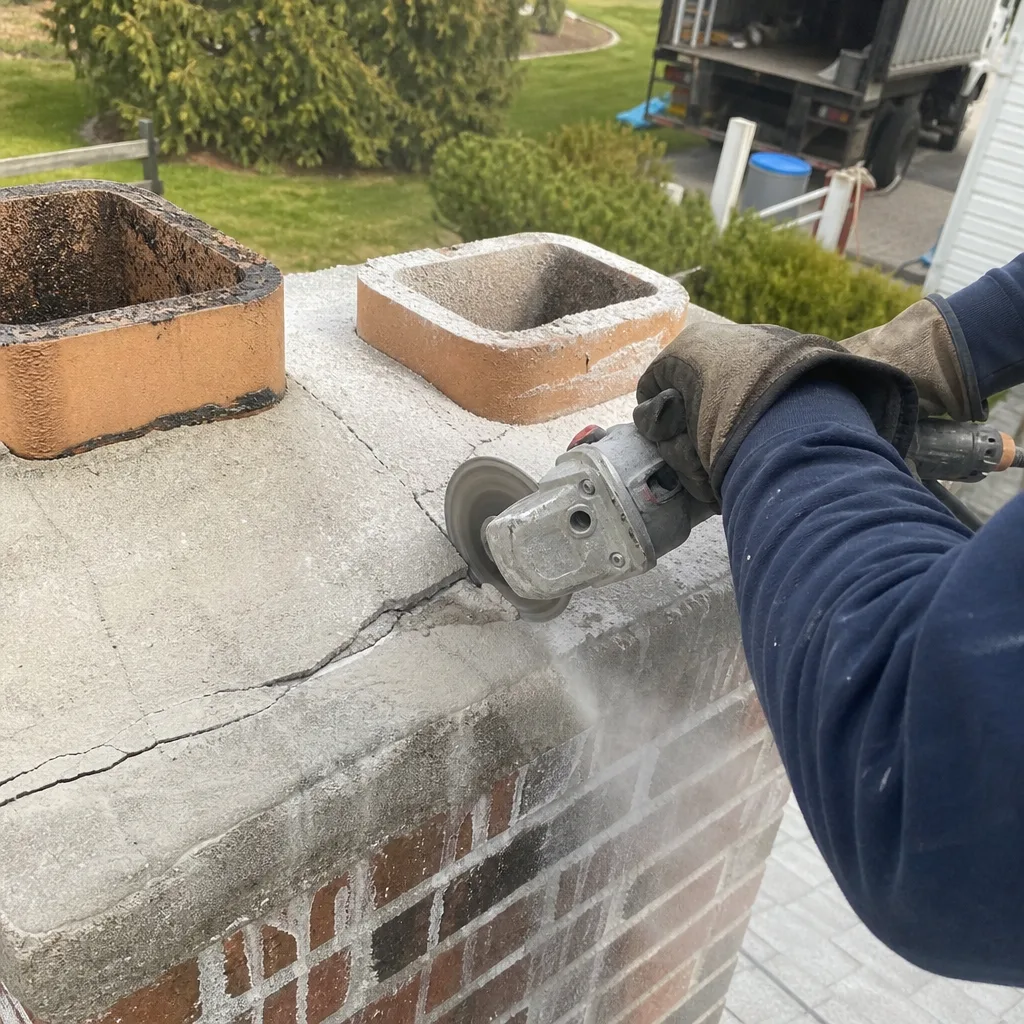
Call when you notice draft changes, unusual sounds, or visible exterior damage - don’t wait for annual schedule if symptoms appear. For more guides & resources on chimney care, visit our blog. Call after any chimney fire, even if it seemed minor; the liner may be cracked in ways you cannot see. Call before buying a home, since standard inspections miss flue damage. And call in April or May for your baseline inspection, when crews have time to do the work properly.
Level Two Chimney Haverhill offers free estimates in Haverhill - call (351) 444-9705. Every estimate includes a written price, written scope, and written warranty before any work is scheduled. Our background-checked, uniformed technicians arrive with license information, a named assignment, and a text when they’re on the way. Live phone support runs 24 hours a day, 7 days a week.
Frequently Asked Questions
A basic chimney cleaning and Level 1 visual inspection in Haverhill typically runs $199 to $279, while an NFPA 211 Level 2 inspection with full camera documentation ranges from $299 to $449. The price depends on chimney height, number of flues, and accessibility. We deliver a written price before any work starts - call (351) 444-9705 for an exact quote; estimates are free.
The National Fire Protection Association recommends annual inspection for all chimneys, and cleaning as needed based on creosote accumulation. Before scheduling, review Chimney Cleaning Permits, Codes & Inspections in MA: What You Need to Know. In Haverhill, if you burn regularly (more than three times weekly during heating season), annual cleaning is typically necessary. Occasional burners may extend to every two years if the Level 2 inspection shows minimal accumulation. Call (351) 444-9705 to schedule and we’ll tell you what your flue actually needs.
You should never accept a liner replacement recommendation without seeing camera footage of the damage and a written explanation of why repair isn’t sufficient. At Level Two Chimney Haverhill, we show you the crack, measure it, and explain whether HeatShield resurfacing or full replacement is appropriate. If you have prior documentation, we compare against it to prove the damage is new. Get a Free Second Opinion on any written estimate - call (351) 444-9705.
Skipped maintenance leads to three predictable outcomes: creosote accumulation increases chimney fire risk; moisture intrusion degrades masonry and liner; and small problems become expensive emergencies. In Haverhill’s freeze-thaw climate, a $350 crown sealant in summer becomes a $2,400 crown rebuild in winter. The 365-Day Done Right Promise covers our work, but it can’t cover damage from years of neglect.
You can remove superficial ash and debris from the firebox and check the damper operation, but flue cleaning and liner inspection require proper equipment and training. Class III creosote requires chemical or mechanical removal that is not DIY-appropriate. For safety, have a professional perform the flue work - we document what we find so you know the condition. Call (351) 444-9705 for a written quote.
Haverhill’s proximity to the Merrimack River and position in the Merrimack Valley creates higher winter humidity and more freeze-thaw cycles than areas farther from water. River-adjacent neighborhoods like Riverside and Rings Island see accelerated masonry degradation. The combination of cold air drainage down the valley and moisture from the river means chimneys here experience more thermal stress than those in drier, more elevated locations. Spring inspection is particularly important to catch this damage early.
The Bottom Line
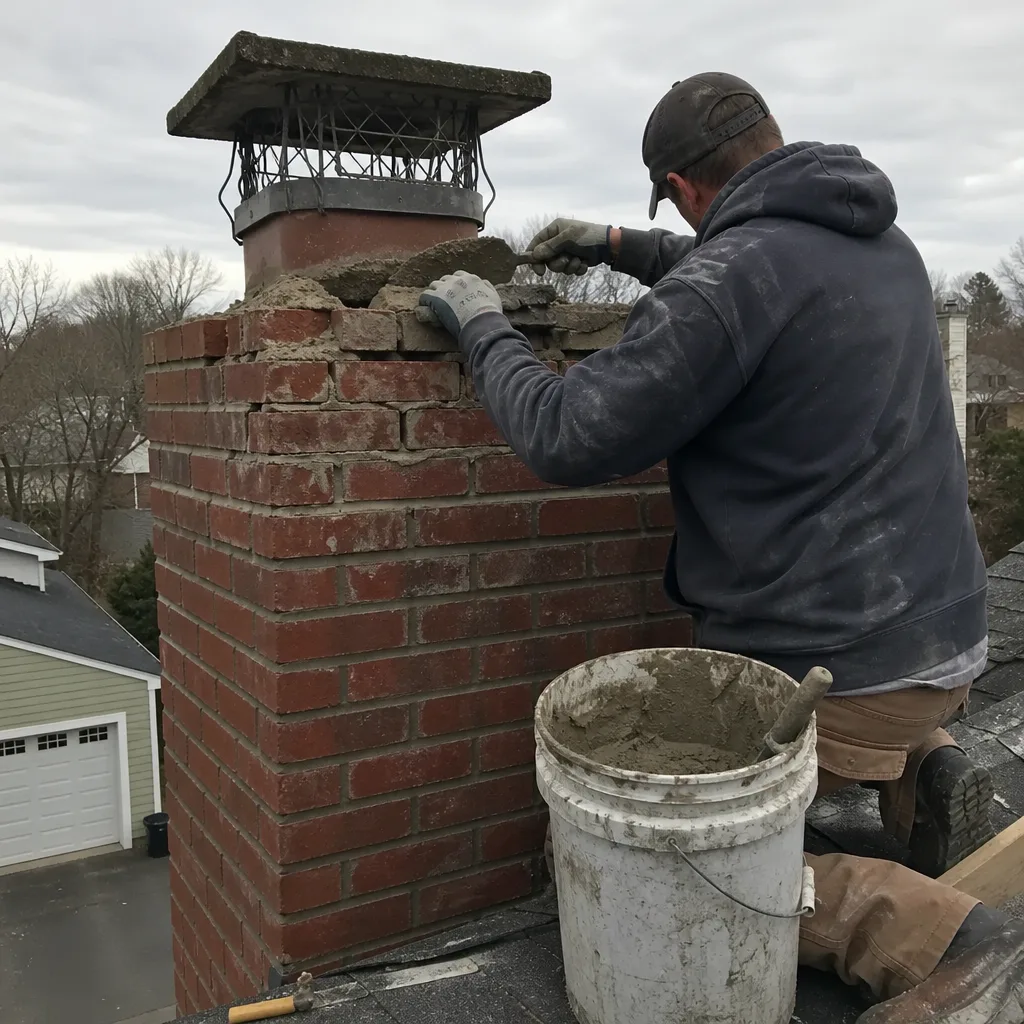
Chimney care in Haverhill follows the flue’s actual experience, not the calendar. Inspect in spring when damage is fresh and crews have time. Repair in summer when materials cure properly. Clean before the October surge. Monitor through winter for changes that matter. And build a documented record each year - photos, camera footage, written scope, written price - that makes your chimney’s history legible to insurers, buyers, and your future self. The homeowners who follow this schedule avoid emergency repairs, support legitimate claims, and know exactly what they own. The ones who wait for October get what the surge allows.
Level Two Chimney Haverhill home
Written by Corrine Halstead, Owner at Level Two Chimney Haverhill, serving Haverhill since 2009.